RBI Governor Shaktikanta Das Shares Solution For Countries In Debt Distress
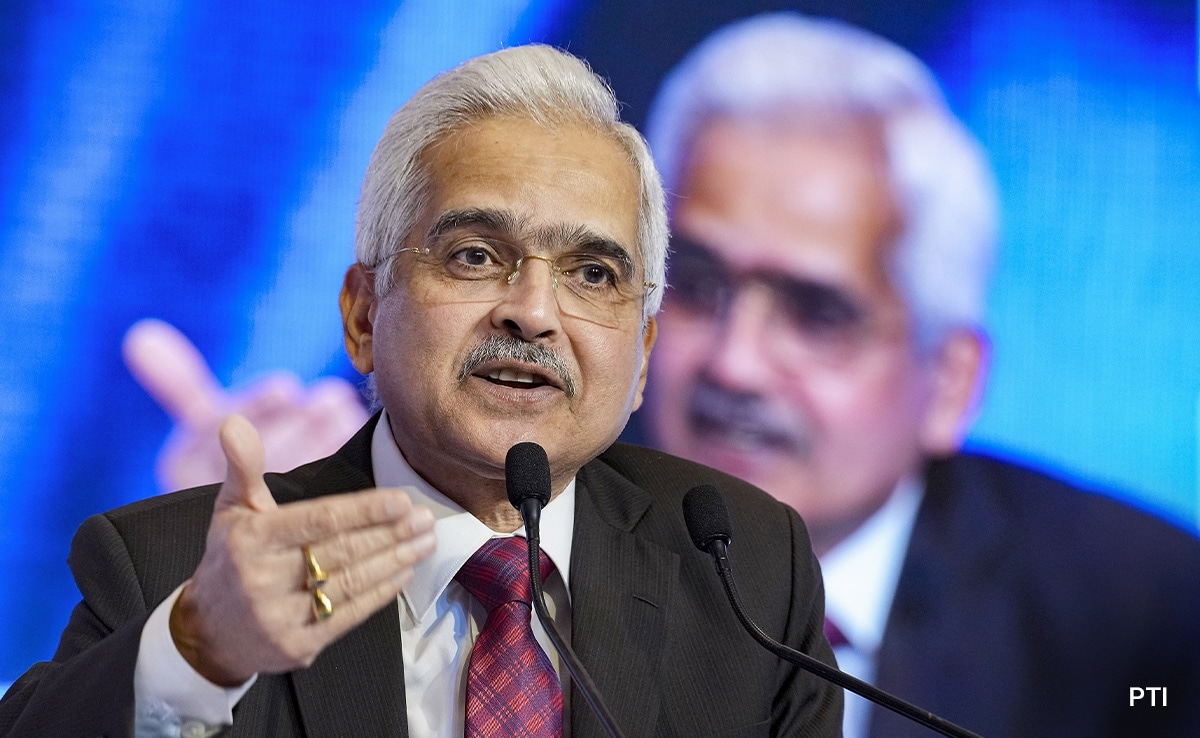
Stating that high and unsustainable debt levels have severely constrained the fiscal capacity of many countries, Reserve Bank of India Governor Shaktikanta Das on Friday pitched for a global debt data-sharing platform as part of the solution.
At a seminar held under the G20 Finance Track National Event titled 'Global Economy: Challenges, Opportunities and Way Forward' organised by the Ministry of Finance and the Reserve Bank of India, Mr Das, while explaining the benefits of global public goods said, risk sharing should be an important design element in fostering private financing for global public goods.
"In this endeavour, Multilateral Development Banks (MDBs) could catalyse private sector investment through risk-sharing mechanisms," Shaktikanta Das said.
"High and unsustainable debt levels have severely constrained many countries, limiting their fiscal capacity," he said, giving an example how an absence of seamless access to Covid-19 vaccines hurt many countries.
He made three specific suggestions, one of them being the creation of a global debt data-sharing platform.
"First, it is essential that Debt Sustainability Analysis (DSA) for countries is realistic on growth and fiscal projections are fully founded on accurate and comprehensive debt data."
"A global debt data-sharing platform can help in this regard. Establishing such a platform could be very challenging and may take several years."
Among others, he suggested consideration for a multilateral debt relief program providing targeted assistance to low-income countries with high debt levels.
In his third suggestion, taking into consideration the crucial role of the International Monetary Fund (IMF) and the World Bank in addressing global debt vulnerabilities, he called for more support for countries in debt distress.
"These institutions are at the centre of the international monetary and financial system. Hence it is incumbent upon them to do more for countries in debt distress. At present, the IMF's precautionary programmes such as the Precautionary Lending Line are available for countries with sound macro-fundamentals; however, there is little reason for countries with strong macro-fundamentals to seek Precautionary Lines."
Summing up all his observations, he said the key point he was trying to stress is that corrective measures, including financing, should be put in place on a "timely, non-stigmatised and more open access basis."
As part of his concluding remarks, he said it is important to focus on people-centric transformative changes taking place in member countries like the UPI and the financial inclusion initiatives in India.
"Wider adoption of such models would make the world a better place for everyone," he said.
UPI payments system has become hugely popular for retail digital payments in India, and its adoption is increasing at a rapid pace.
Unified Payments Interface (UPI) is India's mobile-based fast payment system, which facilitates customers to make round-the-clock payments instantly, using a Virtual Payment Address (VPA) created by the customer.
So far, Sri Lanka, France, UAE, and Singapore had partnered with India on emerging fintech and payment solutions.
A key emphasis of the Indian government has been on ensuring that the benefits of UPI are not limited to India only, but other countries, too, benefit from it.
(Except for the headline, this story has not been edited by NDTV staff and is published from a syndicated feed.)

-
We May Need Another Tukaram Mundhe To Fight Air Pollution | The Reason Why

Developers may install basic measures such as sprinklers and green nets, resume work, and continue violating rules when this equipment stops working.
-
Extracting Value From Battery Scrap Could Be Challenging For India | The Reason Why
A discarded lithium-ion battery still contains valuable materials such as lithium, nickel and cobalt. These can be recovered and reused. When such batteries are crushed and shredded, they produce a dark powder called black mass.
-
One El Nino, India Can Handle. Two Could Break The Granary
India's grain stocks can absorb one bad year, but a second El Nino could drain the buffer in two to three years, economists say.
-
India's Troika Of Good Luck | Joining The Dots
As Jensen Huang's exit drags Nvidia down, a cooling AI trade and resilient earnings have revived investor interest in India. A likely RBI rate hike looms.
-
Talking Points This Week: Leadership Shock At Nvidia, Earnings Strength, And The Fog Over Hormuz
The Anthropic IPO pricing and first trading day, Nvidia's upcoming earnings, and any fresh signals from Iran will set the tone for the following week.
-
Signature Play: The Classic Cocktail Is Dead. Or Is It?
Classic cocktails are disappearing from India's cocktail menus. But they're still being ordered, taught to bartenders and borrowed from. So, who's really having the last drink?
-
A New Samvat Wishlist: Inclusive Prosperity And Human Development
India has strengthened its economic foundations through infrastructure, digital access and enterprise. Its next growth chapter must deepen productivity, create better livelihoods and widen participation in prosperity.
-
Love, Sex Aur Dhokha: The Audacious Plot To Spy On Jensen Huang
A Taipei dinner, a Singapore chip buyer and a suspected Chinese asset: inside the alleged spy operation that got close to NVIDIA's Jensen Huang.
-
Ten Things I Learnt This Samvat
Patience can be a trap. Cheap stocks can stay cheap. Leverage can wipe you out. What did Samvat 2082 teach us? Niraj Shah writes on 10 lessons from the year gone by.
-
Talking Points This Week: Tech Nerves, FII Buying, And A Faraway Banking Shock
The global markets are not shining this Diwali. The exception in the large markets is, India.









