RBI Enforcement Department Steps Up Action Against Regulatory Lapses
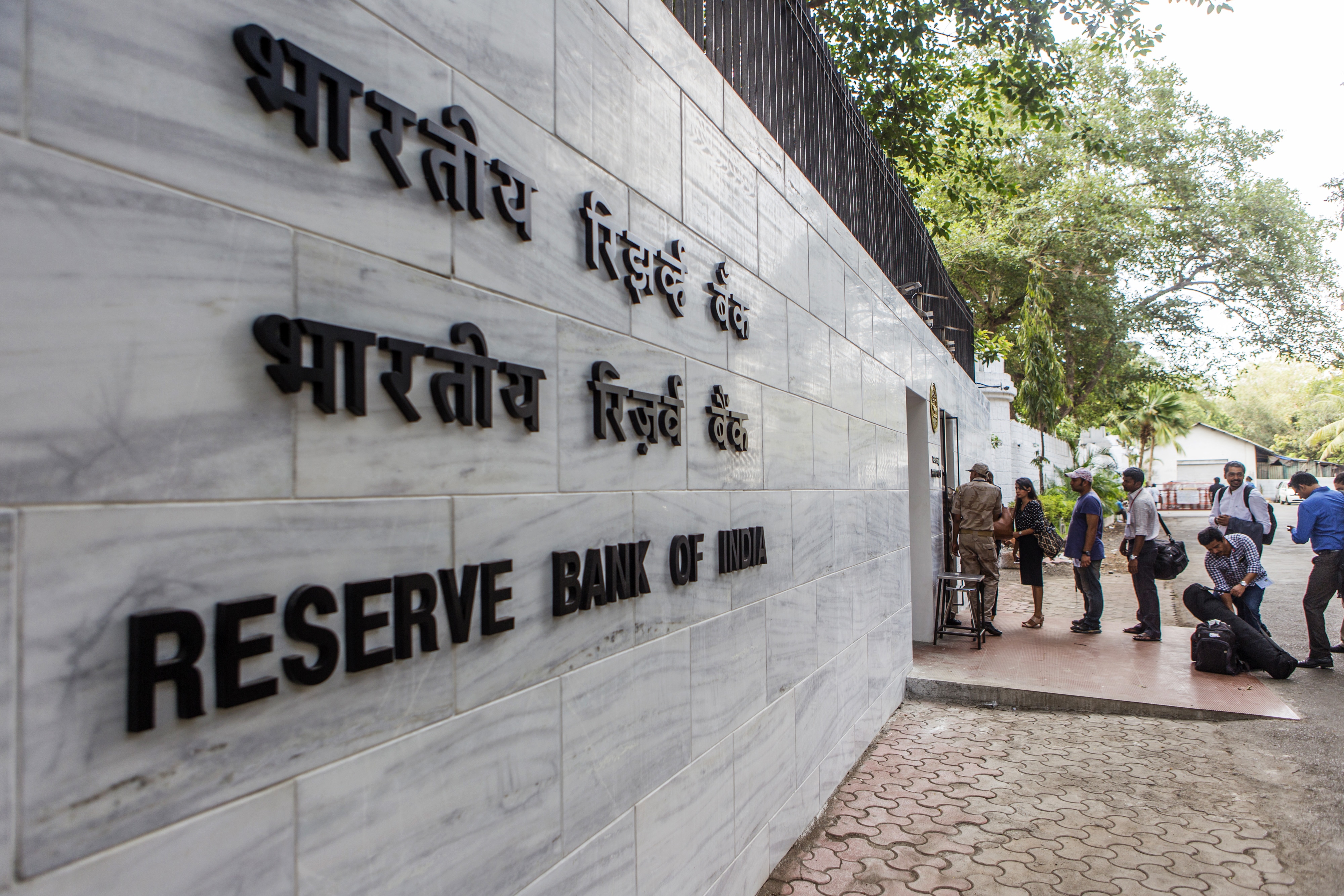
The Reserve Bank of India's actions against regulatory violations by banks have risen substantially over the past two years, ever since it set up a dedicated enforcement division to act against such lapses.
In April 2017, the RBI set up an internal Enforcement Department to oversee regulatory compliance and violations by banks, non-bank finance companies and other entities.
In its near two-year existence, the department has issued 128 penalties against financial institutions of all types, resulting in penal collections of around Rs 147.3 crore.
Spike In Enforcement Action
BloombergQuint compiled a list of penalties disclosed on the RBI website between 2016 and 2019.
- Between Jan. 1, 2019 and Feb. 15, 2019, 27 penalty orders worth Rs 25 crore were issued by the RBI against 20 commercial banks, 6 cooperative banks and 1 non- banking financial company.
- In 2018, the enforcement department issued 73 penalty orders totaling Rs 110.34 crore on 16 commercial banks, 53 cooperative banks, 2 NBFCs and 2 payment banks.
- This is 249 percent higher than penalty collections during 2017, wherein the RBI imposed a total of 38 penalties, collecting Rs 39.6 crore, on 6 commercial banks, 28 cooperative banks and 4 NBFCs.
- On the other hand, only 13 penal orders totaling Rs 1.21 crore were issued by the RBI against financial institutions in 2016.
Queries sent to the RBI seeking details of the functioning of the enforcement department did not elicit a response.
R Gandhi, former RBI deputy governor told BloombergQuint that the nature of enforcement by the RBI has changed in recent years.
The central bank supervisors have moved from imposing an all-encompassing penalty against a bank or NBFC to imposing penalties on a case-to-case [violation-to-violation] basis. That is, the RBI will issue penalties for every regulatory violation by an entity as and when its supervisors find lapses.
This is a new type of supervision and enforcement. For a long time typically, the central bank used to take an overall view of the bank's violations and not on each violation. But today the number of transactions that each bank and each of its branches process is significantly higher. Given that financial regulations, including securities market, have become tougher over time the RBI now applies penalties for each violation.R Gandhi, Former Deputy Governor, RBI
Nature Of Violations
RBI data shows that financial institutions mainly violated regulations on Know-Your-Customer norms, followed by guidelines of reporting and classifying frauds and end use-of-funds.
Around 11 penalties were imposed on different institutions for falling foul of the guidelines on restructuring accounts, 11 on inter-bank information exchange protocols and 10 for violating anti-money laundering regulations.
A total of 17 penalties were imposed on urban cooperative banks, with regards to violating rules on giving loans to the directors of the bank and their relatives.
Across different kinds of banking institutions, the maximum penalties were seen in the case of Urban Cooperative Banks. UCBs are regulated by the RBI while district cooperative banks and state cooperative banks are under the National Bank for Agriculture and Rural Development's supervision.
Gandhi said there are more UCBs than commercial banks and hence it appears that a high number of penalty orders have been issued against UCBs. When there is a regulation violation by a UCB, it is usually restricted to a local branch, unlike in the case of commercial banks where a specific regulatory violation would have been repeated multiple times across multiple locations, he added.
Therefore, the incidence of regulatory violations at commercial banks would be higher, on average, compared to cooperative banks.
Can Small Monetary Penalties Deter Regulations Lapses?
While the RBI publishes the quantum of penalty being imposed and what regulation an entity has violated, it does not disclose the exact details of the transgression. In contrast, the Securities and Exchange Board of India often, in large cases, puts out complete details of the violation and investigation.
Should the RBI also go down this route eventually?
SS Mundra, former deputy governor of the RBI agrees that more disclosures may be eventually needed. “The time has come for the regulator to be more articulate and provide details on the exact nature of the regulatory violation by organisations and how it happened,” Mundra told BloombergQuint.
Going forward enforcement by the RBI should have a bearing on the performance review of chief executive officer and key functionaries, Mundra said while arguing that the incremental impact of penalties will reduce over time.
The important point of enforcement is that the threat of a penalty can have reputation risk for the organisation, but it is a one-time weapon. If you have to keep imposing penalties on the same organisation, then it can lose its meaning as the receiver of the penalty and the audience will take it lightly as it becomes routine.SS Mundra, Former Deputy Governor, RBI
To be sure, no amount of enforcement action can completely eliminate regulatory lapses in an industry like banking where millions of transactions take place daily.
With the growing use of complex technologies by customers and institutions, “policing and enforcement” in today's day and age is difficult for the regulator because of the sheer number of transactions and people involved in the financial system, Gandhi said.
With millions of transactions taking place across banks, NBFCs and others like opening accounts, you will always be able to find a transgression, no matter how much the bank management tries to control it through processes. Enforcement cannot eliminate transgressions by companies through punishments like this.R Gandhi, Former Deputy Governor, RBI

-
We May Need Another Tukaram Mundhe To Fight Air Pollution | The Reason Why

Developers may install basic measures such as sprinklers and green nets, resume work, and continue violating rules when this equipment stops working.
-
Extracting Value From Battery Scrap Could Be Challenging For India | The Reason Why
A discarded lithium-ion battery still contains valuable materials such as lithium, nickel and cobalt. These can be recovered and reused. When such batteries are crushed and shredded, they produce a dark powder called black mass.
-
One El Nino, India Can Handle. Two Could Break The Granary
India's grain stocks can absorb one bad year, but a second El Nino could drain the buffer in two to three years, economists say.
-
India's Troika Of Good Luck | Joining The Dots
As Jensen Huang's exit drags Nvidia down, a cooling AI trade and resilient earnings have revived investor interest in India. A likely RBI rate hike looms.
-
Talking Points This Week: Leadership Shock At Nvidia, Earnings Strength, And The Fog Over Hormuz
The Anthropic IPO pricing and first trading day, Nvidia's upcoming earnings, and any fresh signals from Iran will set the tone for the following week.
-
Signature Play: The Classic Cocktail Is Dead. Or Is It?
Classic cocktails are disappearing from India's cocktail menus. But they're still being ordered, taught to bartenders and borrowed from. So, who's really having the last drink?
-
A New Samvat Wishlist: Inclusive Prosperity And Human Development
India has strengthened its economic foundations through infrastructure, digital access and enterprise. Its next growth chapter must deepen productivity, create better livelihoods and widen participation in prosperity.
-
Love, Sex Aur Dhokha: The Audacious Plot To Spy On Jensen Huang
A Taipei dinner, a Singapore chip buyer and a suspected Chinese asset: inside the alleged spy operation that got close to NVIDIA's Jensen Huang.
-
Ten Things I Learnt This Samvat
Patience can be a trap. Cheap stocks can stay cheap. Leverage can wipe you out. What did Samvat 2082 teach us? Niraj Shah writes on 10 lessons from the year gone by.
-
Talking Points This Week: Tech Nerves, FII Buying, And A Faraway Banking Shock
The global markets are not shining this Diwali. The exception in the large markets is, India.









