RBI Bars Dena Bank From Further Lending
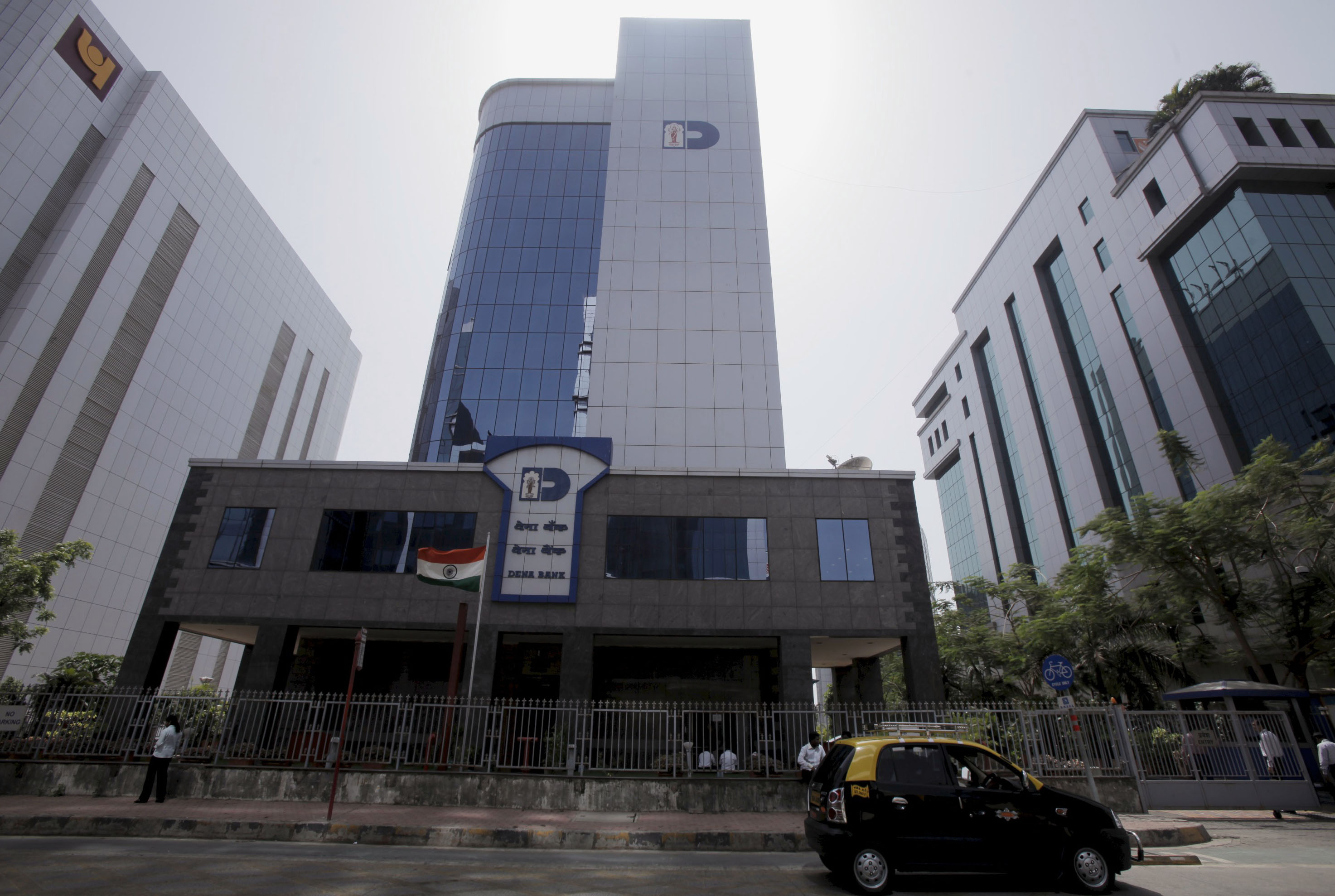
The Reserve Bank of India has barred Dena Bank Ltd. from further lending and frozen hiring at the lender, the bank disclosed in a notification to stock exchanges on Friday. The stringent measures come against the backdrop of continued weakening of the bank's fundamentals. Dena Bank has been under the RBI's prompt corrective action framework since May 2017.
...we wish to inform that the RBI vide their letter dated May 07, 2018 (received by the Bank on May 08, 2018) has restricted the Bank from assuming fresh credit exposure and recruitment of staff.Dena Bank Stock Exchange Notification
On Friday, Dena Bank reported a net loss of Rs 1225.42 crore compared to a net loss of Rs 380.07 crore in the same quarter last year. The bank saw its gross non performing assets rise to 22 percent from 19.5 percent in the previous quarter. The bank reported a negative return on assets at 4.07 for the quarter ended March 2018.
The bank's capital adequacy ratio stood at 11.09 percent and its tier-1 capital adequacy ratio at 8.81 percent. This is above the minimum tier-1 capital ratio mandated by the Basel norms.
The bank's advances stood at Rs 65,581 crore at the end of March 2018 compared to Rs 72,574 crore in March 2017, suggesting that the bank's loan book has anyway been contracting.
BloombergQuint could not immediately reach the bank for more clarity on the RBI's action.
On Monday, shares fell nearly 6 percent to Rs 17.35 apiece on the BSE.
Stage Two Of Prompt Corrective Action?
While the bank did not specify the reason behind the RBI's directive, the strictures are likely part of the RBI's prompt corrective action (PCA) framework.
In April 2017, the RBI tightened the rules under its ‘Prompt Corrective Action Framework' which aims to rein in lenders whose operational and financial metrics are looking weak. The new framework laid down three risk thresholds based on gross non-performing assets, net NPAs, capital adequacy ratio and return on assets. Once under the framework, restrictions are placed on dividends, branch expansion and, in some cases, lending based on the discretion of the regulator.
In Dena Bank's case, while the capital adequacy ratio is above the regulatory minimum, the net NPA level of 11.95 percent falls in the second risk threshold. Also its negative return on assets could place in this category.
As per the RBI's rules, banks that fall in the second risk threshold may be asked to make higher provisions and restrict branch addition. In addition, the RBI may take ‘discretionary actions' against the bank. These actions could be ‘credit risk' related and ‘market risk' related among others.
Taking Stock Of PCA Banks
Close to half of the government owned banks are under prompt corrective action now. On Friday, BloombergQuint reported that the government has planned a review meeting of these 11 weak banks.
The meeting, scheduled for May 17, will take stock of the measures taken by individual banks to improve their financial position.
Also Read: Do India's Weak Banks Need A Stronger Dose Of Corrective Action?

-
Talking Points This Week: Leadership Shock At Nvidia, Earnings Strength, And The Fog Over Hormuz

The Anthropic IPO pricing and first trading day, Nvidia's upcoming earnings, and any fresh signals from Iran will set the tone for the following week.
-
Signature Play: The Classic Cocktail Is Dead. Or Is It?
Classic cocktails are disappearing from India's cocktail menus. But they're still being ordered, taught to bartenders and borrowed from. So, who's really having the last drink?
-
A New Samvat Wishlist: Inclusive Prosperity And Human Development
India has strengthened its economic foundations through infrastructure, digital access and enterprise. Its next growth chapter must deepen productivity, create better livelihoods and widen participation in prosperity.
-
Love, Sex Aur Dhokha: The Audacious Plot To Spy On Jensen Huang
A Taipei dinner, a Singapore chip buyer and a suspected Chinese asset: inside the alleged spy operation that got close to NVIDIA's Jensen Huang.
-
Ten Things I Learnt This Samvat
Patience can be a trap. Cheap stocks can stay cheap. Leverage can wipe you out. What did Samvat 2082 teach us? Niraj Shah writes on 10 lessons from the year gone by.
-
Talking Points This Week: Tech Nerves, FII Buying, And A Faraway Banking Shock
The global markets are not shining this Diwali. The exception in the large markets is, India.
-
Midterm Rally Lasted A Day. The Hard Reality Of A Divided US May Last Two Years | Opinion
Between a contested AI boom, a debt ceiling that arrives in 2027 and a president with every incentive to act alone, the next two years may prove more volatile than the first day's rally suggests.
-
Blue Wave Will Derail the AI Trade but Won't Dismantle the AI Era | Unhedged Position
The Democrats' sweep of the US Congress will see politics collide with economic forces both over the long and short term.
-
It's Time To Take The GST Council's Bet On Trust Global
Payment records can prove India's services exports, and clear, proportionate rules can bring foreign digital sellers into the tax net.
-
Opinion | India at 38: From Innovation Overperformer to Innovation Powerhouse
India now has 453 VC-backed deep science startups, 18 of them late-stage, after 117 percent growth since 2020. Laurus Labs, at USD 9.3 billion, is the most valuable deep science company in any middle-income economy outside China.









