RBI Asks Banks To Stop Building Rupee Offshore Market Positions: Report
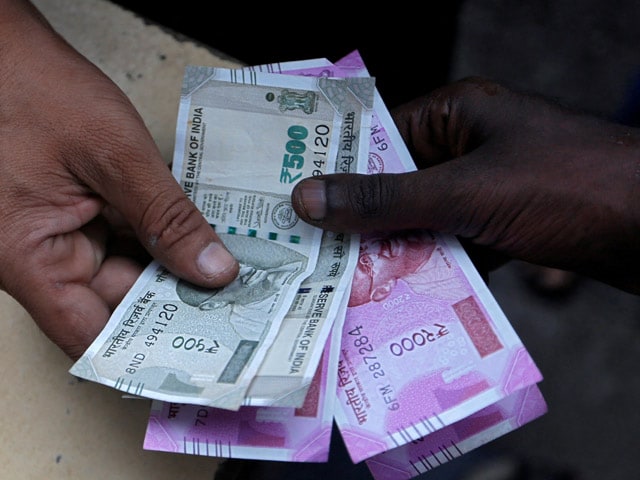
The Reserve Bank of India, seeking to arrest the rupee's slide, is asking local banks to not build additional positions in the non-deliverable forward market, a move that could lead to offshore volatility spilling into local markets, bankers and traders said.
The build-up of positions in this segment of the market is forcing the RBI to spend more reserves to defend the rupee, one of the bankers said.
The RBI's informal communication to local bankers is a step back from the directions it issued in June 2020, when it allowed banks operating from the International Financial Services Centre Banking Units to trade in the NDF segment.
The central bank's move in 2020 came after studies showed that the foreign bank-dominated NDF market, over which the RBI had little influence, fuelled volatility and often led the spot rupee lower in times of stress. Letting Indian banks trade in the segment would give RBI more control.
However, increased trading in the segment has created elevated demand for dollars at a time when the spot rupee is already under pressure, forcing RBI to intervene.
The RBI had probably assessed that the NDF was "nullifying the impact of their intervention," and was increasing liquidity in the forward market, both of which it does not want. Anindya Banerjee, head of research -forex and interest rates at Kotak Securities, said.
Meanwhile, the rupee's swift decline in recent days had led to arbitrage opportunities between the onshore and offshore rates. The arbitrage increases demand for dollars onshore while providing more liquidity offshore.
For instance, the USD/INR NDF 1-month rate is currently 7 paisa higher than the corresponding onshore rate and the 3-month forward rate is about 25 paisa higher.
About two weeks back, this difference was at near 2 paisa and 8 paisa, respectively.
To take advantage of this arbitrage, eligible banks could buy spot dollars onshore and pay 1-month premium while selling USD/INR 1-month in the NDF market.
Bankers argue that the RBI's curbs on the activity of banks on NDF will not ease pressure on the rupee. Instead, it would lead to offshore rates once again having more influence on the rupee exchange rate.
"The problem is that with banks now told to step aside, the difference between NDF and onshore will persist," a trader at a foreign bank said.
Bankers told Reuters that the RBI had clamped down on outright activity on the NDF. Trading forward basis points, or the difference between two maturities, is still allowed.
The RBI did not reply to an email seeking comment.

-
Talking Points This Week: Leadership Shock At Nvidia, Earnings Strength, And The Fog Over Hormuz

The Anthropic IPO pricing and first trading day, Nvidia's upcoming earnings, and any fresh signals from Iran will set the tone for the following week.
-
Signature Play: The Classic Cocktail Is Dead. Or Is It?
Classic cocktails are disappearing from India's cocktail menus. But they're still being ordered, taught to bartenders and borrowed from. So, who's really having the last drink?
-
A New Samvat Wishlist: Inclusive Prosperity And Human Development
India has strengthened its economic foundations through infrastructure, digital access and enterprise. Its next growth chapter must deepen productivity, create better livelihoods and widen participation in prosperity.
-
Love, Sex Aur Dhokha: The Audacious Plot To Spy On Jensen Huang
A Taipei dinner, a Singapore chip buyer and a suspected Chinese asset: inside the alleged spy operation that got close to NVIDIA's Jensen Huang.
-
Ten Things I Learnt This Samvat
Patience can be a trap. Cheap stocks can stay cheap. Leverage can wipe you out. What did Samvat 2082 teach us? Niraj Shah writes on 10 lessons from the year gone by.
-
Talking Points This Week: Tech Nerves, FII Buying, And A Faraway Banking Shock
The global markets are not shining this Diwali. The exception in the large markets is, India.
-
Midterm Rally Lasted A Day. The Hard Reality Of A Divided US May Last Two Years | Opinion
Between a contested AI boom, a debt ceiling that arrives in 2027 and a president with every incentive to act alone, the next two years may prove more volatile than the first day's rally suggests.
-
Blue Wave Will Derail the AI Trade but Won't Dismantle the AI Era | Unhedged Position
The Democrats' sweep of the US Congress will see politics collide with economic forces both over the long and short term.
-
It's Time To Take The GST Council's Bet On Trust Global
Payment records can prove India's services exports, and clear, proportionate rules can bring foreign digital sellers into the tax net.
-
Opinion | India at 38: From Innovation Overperformer to Innovation Powerhouse
India now has 453 VC-backed deep science startups, 18 of them late-stage, after 117 percent growth since 2020. Laurus Labs, at USD 9.3 billion, is the most valuable deep science company in any middle-income economy outside China.









