RBI Allows Restructuring Of Personal Loans. Here’s What You Should Keep In Mind
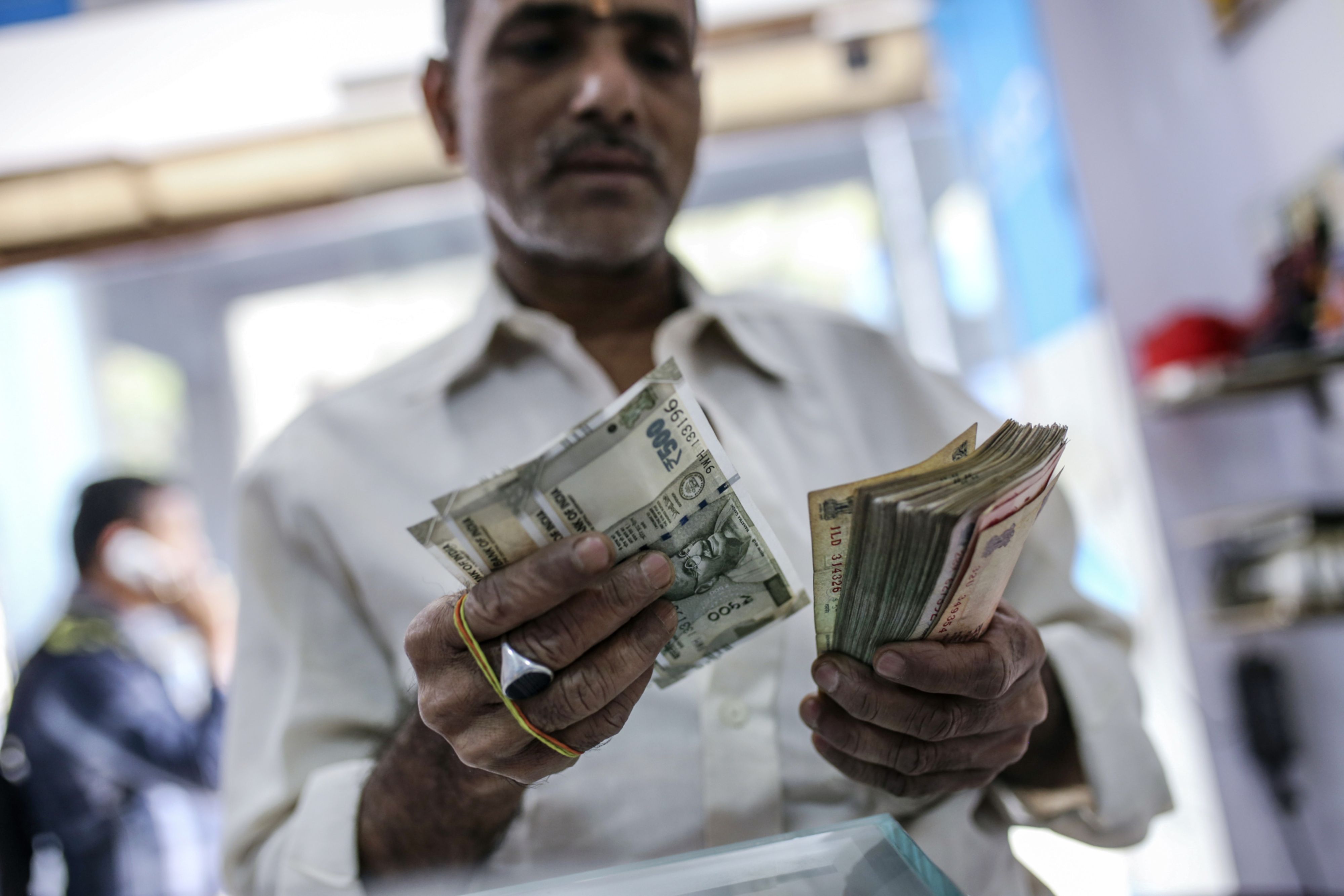
To provide relief to individual borrowers struggling because of the pandemic-induced economic slowdown, the Reserve Bank of India has allowed lenders to restructure personal loans till the end of 2020 with some conditions.
Here, personal loans mean consumer credit, education loans, loans for creation or enhancement of immovable property, including housing, and loans given for investment in financial assets, according to a central bank notification.
Such loans classified by lenders as standard, but not in default for more than 30 days as on March 1 this year, would be eligible to be restructured, RBI said. The resolution can't be invoked later than Dec. 31 and must be implemented within 90 days of the invocation.
The relief could include “rescheduling of payments, conversion of any interest accrued, or to be accrued, into another credit facility, or, granting of moratorium, based on an assessment of income streams of the borrower, subject to a maximum of two years”.
“The exact contours of the resolution plan have yet to be decided. The expert committee headed by KV Kamath will provide some direction," said Ashutosh Khajuria, executive director and chief financial officer at Federal Bank Ltd. "But there are a few interpretations that can be drawn from the announcement by the RBI.”
The permission for restructuring personal loans follows the six-month moratorium on repayment from March till August-end. That was aimed at helping borrowers as companies cut salaries and laid off people after India imposed the world's strictest lockdown, freezing economic activity.
The biggest relief to someone who is facing cash-flow problems right now, say for example because of the loss of a job, is the extended moratorium of up to two years that RBI has now permitted under such restructuring, said Suresh Sadagopan, certified financial planner and founder Ladder7 Financial Advisories.
Borrowers also have the option of converting the interest accrued during the moratorium period into a separate loan.
This facility could be similar to that provided in the case of working capital loans, according to Khajuria. “The entire interest accrued during the moratorium can be given in the form of a term loan that could be called a funded interest term loan or FITL, a very commonly understood term in banking parlance,” he said. These, according to him, are generally short-term loans and are priced lower than normal loans.
Also Read: RBI Sets New Conditions For Current Accounts To Improve Credit Discipline
Not A Free Pass
A moratorium on a loan repayment is not an interest holiday. There is a cost involved because interest continues to accrue, and the RBI pointed as much in its statement.
Under the six-month moratorium from March 1 to Aug. 31, borrowers have the option to pay all those installments in one shot in September, said Khajuria. “They can also ask a bank to add these to their existing instalments, which over a period of one or two years exhausts the pending amount.”
The final option results in the extension of the tenure of the loan by deferring the instalments. “But remember that deferred instalments, which in this case was six instalments, may become 14 depending on the length of the repayment," Khajuria said. "That's because of compounding interest.”
Also Read: RBI Permits One-Time Restructuring Of Loans
Restructure Only In Case Of Stress
“Obviously, we're talking about a situation where there is significant distress,” said Arvind Rao, certified financial planner and founder, Arvind Rao & Associates. “The moratorium, especially if it is to the extent of two years, gives an individual time to deal with it.”
In many industries, like hospitality and aviation, there is significant stress and many people have lost their jobs, according to Sadagopan. In such a situation, when there is a problem with cash flow, he said this restructuring is of paramount importance, but one should remember that this does not come free.
“Whatever interest is accruing on the loan, you'll have to repay it,” said Sadagopan. “Even if you're able to get a separate loan comprising the interest accrued, you'll end up paying more than if you had not restructured. So, only take the moratorium if you absolutely must.”
Also Read: Now, You Can Get A Bigger Loan Against Your Gold
And even if a moratorium is availed, it should be taken for the least possible time, said Sadagopan, as this will dramatically reduce the additional cost.

-
The Economic Imperative: Analysing The Material Driving Force Behind India-Canada Strategic Reset

This economic complementarity is further reinforced by deep institutional investment ties and talent mobility, which form the bedrock of the bilateral framework.
-
Medicine Pricing: Where Must Profit Stop?
India must confront excessive margins, hidden incentives and regulatory gaps that threaten the integrity of medicine.
-
Why Amazon And Flipkart Are Struggling To Beat Meesho In India's Smaller Cities
With 274 million users and lowest-cost logistics, Meesho is defending its value commerce crown against giants like Amazon and Flipkart.
-
High US Salaries, No Green Card Certainty: The Financial Calculation Facing Indian H-1B Families
The suspension of PERM processing at eight technology employers does not cancel existing H-1B visas. What it does is force a question many Indian families have been avoiding: is the US salary worth tying your career and family plans to one employer?
-
Swiggy vs Eternal: Food Delivery's Two Rivals Are No Longer In The Same Race
Eternal is building a private AI assistant, dark.ai. Swiggy is still working out how to make Instamart pay, with an operating loss of Rs 895 crore in the July-September quarter while Blinkit stayed profitable.
-
Where You Live Shapes How You Get To Work | The Reason Why
Two-wheelers are the most popular way to get to work in India, accounting for nearly 43% of workplace commutes.
-
Unhedged Position: Can India See An Indonesia-Style Time Correction?
The Nifty is trading below levels it first clocked in 2024. Is there, then, as I have suggested in the headline, potential that the current time correction drags on painfully for the next three-five, even ten years?
-
Navigating Friction And Energy Realities: An Analysis Of Marco Rubio's October Visit To India
Occurring at a critical juncture marked by stalled trade negotiations and escalating geopolitical pressures over global energy supplies, the visit offers a profound window into modern US-India relations.
-
India Exports Capital. Why Not Export Trusteeship?
The big question, then, is whether India can build an institution that global borrowers, investors, banks, and lawyers can trust, even without an Indian connection.
-
France's Economy & Politics Are In Crisis | The Reason Why
Let's look at how the French economy and politics evolved under Nicolas Sarkozy, Franois Hollande and Emmanuel Macron.










