RBI Allows Banks To Stagger Hit On Bond Portfolios
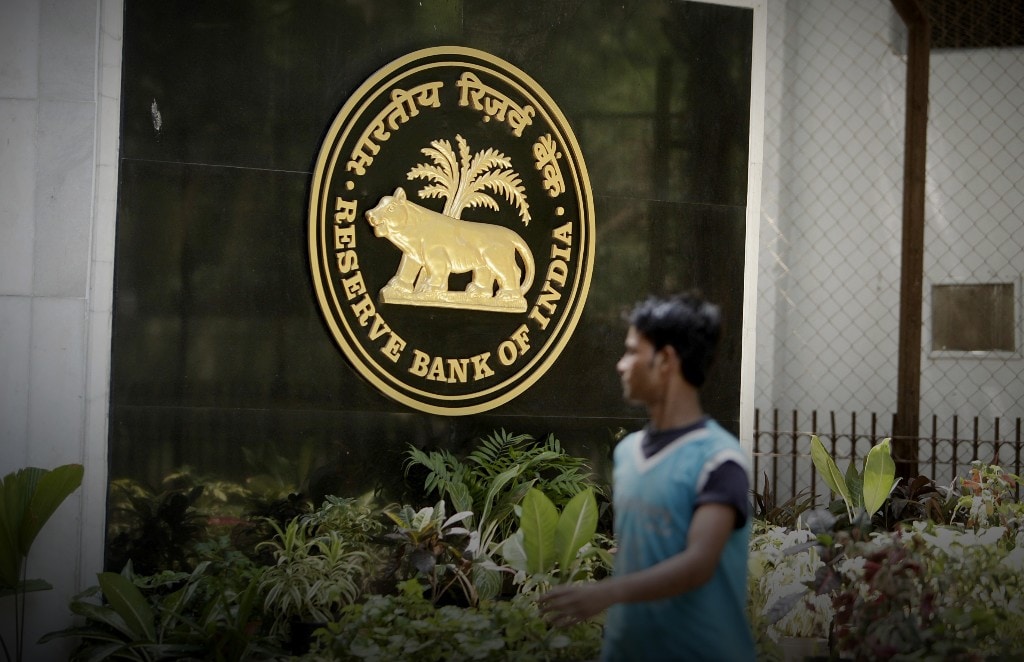
The Reserve Bank of India has stepped in to provide relief to banks, which have been weighed down by not just bad loans but rising bond yields.
In a circular issued today, the regulator said that banks can spread out the mark-to-market (MTM) hit taken on their bond portfolios over a period of four quarters. The dispensation has been given to address “the systemic impact of sharp increase in the yields on Government Securities”, RBI said.
Bond yields have risen sharply over the past six months on concerns over excess government bond supply. This, in turn, has meant that banks have had to incur losses on their bond portfolios by marking down prices. Bond prices are inversely correlated to bond yields.
To avoid a situation where banks see profits diminish due to losses on the bond portfolio, the RBI has said:
- Banks can spread provisioning for MTM losses incurred during December 2017 and March 2018 quarters over four quarters.
- Banks can stagger provisioning starting the quarter in which the loss was incurred.
- Banks should make suitable disclosures in their notes to accounts/ quarterly results on balance provisioning pending.
In addition, the RBI has also initiated measures to protect banks against future fluctuation in bond prices and yields. The regulator has advised banks to build an 'Investment Fluctuation Reserve' starting 2018-19.
- The investment reserve should be at least 2 percent of the held-for-maturity (HTM) and available-for-sale (AFS) portfolio.
- An amount not less than the lower of the following: (a) net profit on sale of investments during the year (b) net profit for the year less mandatory appropriations, should be transferred to the reserve.
- Where feasible, reserve should be built up within three years.
The investment fluctuation reserve will be eligible to be included in Tier-2 capital for banks. This reserve can be drawn down as per the bank's needs should it hold more than 2 percent of the HTM and AFS portfolios. If the reserve is below 2 percent, it can be drawn down to meet tier-1 capital requirements, said the regulator.
Analyst Views
‘Postponing The Inevitable'
The RBI's announcement will ease pressure on corporate earnings of banks for the January-March quarter but will postpone the problem to 2018-19, JPMorgan said in an emailed note.
It may, however, take pressure off bond yields and, to that extent, be a net benefit to PSU banks.JPMorgan Research Note
This could also trigger a trading rally in beaten-down PSU bank stocks, the note said. Yet, deeper issues like low capital ratios, eroding deposits and weak credit delivery in PSU banks remain and the rally should be used as an opportunity to exit these stocks, the financial major recommended.
‘Won't Impact FY19 Book Value'
Banks with high mark-to-market losses and low core capital would be more relieved by RBI's announcement, said Rakesh Kumar, a banking analyst at Elara Capital. These include the likes of State Bank of India Ltd., Syndicate Bank Ltd., Union Bank of India Ltd. where higher MTM depreciation was seen, Kumar added.
There wouldn't be any eventual impact on end-FY19 banks' book value, but reversal of provisions and lesser provisions in Q4FY18E would help banks avoid non-fulfillment on core capital position (CET I) front.Rakesh Kumar, Analyst, Elara Capital

-
The Economic Imperative: Analysing The Material Driving Force Behind India-Canada Strategic Reset

This economic complementarity is further reinforced by deep institutional investment ties and talent mobility, which form the bedrock of the bilateral framework.
-
Medicine Pricing: Where Must Profit Stop?
India must confront excessive margins, hidden incentives and regulatory gaps that threaten the integrity of medicine.
-
Why Amazon And Flipkart Are Struggling To Beat Meesho In India's Smaller Cities
With 274 million users and lowest-cost logistics, Meesho is defending its value commerce crown against giants like Amazon and Flipkart.
-
High US Salaries, No Green Card Certainty: The Financial Calculation Facing Indian H-1B Families
The suspension of PERM processing at eight technology employers does not cancel existing H-1B visas. What it does is force a question many Indian families have been avoiding: is the US salary worth tying your career and family plans to one employer?
-
Swiggy vs Eternal: Food Delivery's Two Rivals Are No Longer In The Same Race
Eternal is building a private AI assistant, dark.ai. Swiggy is still working out how to make Instamart pay, with an operating loss of Rs 895 crore in the July-September quarter while Blinkit stayed profitable.
-
Where You Live Shapes How You Get To Work | The Reason Why
Two-wheelers are the most popular way to get to work in India, accounting for nearly 43% of workplace commutes.
-
Unhedged Position: Can India See An Indonesia-Style Time Correction?
The Nifty is trading below levels it first clocked in 2024. Is there, then, as I have suggested in the headline, potential that the current time correction drags on painfully for the next three-five, even ten years?
-
Navigating Friction And Energy Realities: An Analysis Of Marco Rubio's October Visit To India
Occurring at a critical juncture marked by stalled trade negotiations and escalating geopolitical pressures over global energy supplies, the visit offers a profound window into modern US-India relations.
-
India Exports Capital. Why Not Export Trusteeship?
The big question, then, is whether India can build an institution that global borrowers, investors, banks, and lawyers can trust, even without an Indian connection.
-
France's Economy & Politics Are In Crisis | The Reason Why
Let's look at how the French economy and politics evolved under Nicolas Sarkozy, Franois Hollande and Emmanuel Macron.










