Rate Cut Possible Only If Inflation Eases: Raghuram Rajan
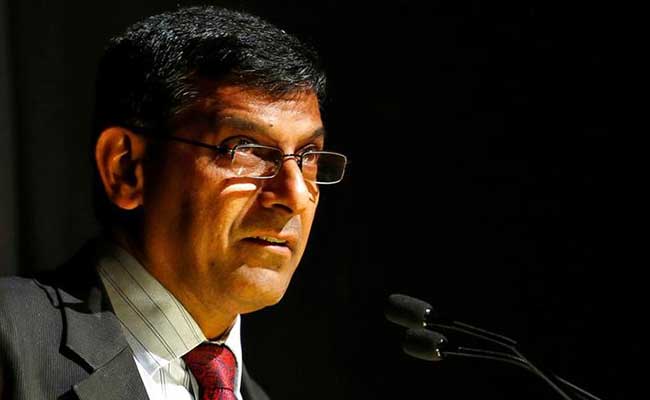
Mumbai: The Reserve Bank of India's outgoing governor Raghuram Rajan on Monday said the policy rate can be cut only if inflation eases, as "inflation projections are still at the upper limits" of the central bank's target.
Retail inflation shot up to a nearly two-year high of 6.07 per cent, while the one based on wholesale prices soared to a 23-month high of 3.55 per cent in July. (Read more)
"Inflation projections are still at the upper limits of RBI's inflation objective. With RBI needing to balance savers' desire for positive real interest rates with corporate investors' and retail borrowers' need for low nominal borrowing rates, the room to cut policy rates can emerge only if inflation is projected to fall further," Mr Rajan wrote in the foreword to RBI Annual Report 2015-16.
He said the short-term macroeconomic priorities of the RBI continue to focus on bringing down inflation towards the government-set target of four per cent. (Read: 'Focus on bringing inflation down to 4%')
So far, the RBI has followed a gentle glide path, aiming at five per cent by March 2017 after having brought it below six per cent in January 2016, Mr Rajan said.
The RBI is also working with the government and banks on speeding up the resolution of distressed projects and completing the clean-up of bank balance sheets, ensuring banks have the capital to make provisions, support new lending, and thus pass on future possible rate cuts, he added.
He said economic growth, while showing signs of a pickup, is still below the levels that the country is capable of.
The key weakness is in investment, with private corporate investment subdued because of low capacity utilization, and public investment slow in rolling out in some sectors, he noted.
The RBI governor said the willingness of banks to cut lending rates is muted.
"Not only does weak corporate investment reduce the volume of new profitable loans, their stressed assets have tightened capital positions, which may prevent them from lending freely," Mr Rajan said.
The reluctance to lend to industry and small businesses is more visible among the stressed public sector banks compared to the private sector lenders, Mr Rajan said.
The RBI governor said expectations of a good monsoon coupled with more money in the hands of government employees following the 7th Pay Commission payouts should boost consumer demand.
With final demand picking up, capacity utilization is likely to increase, and so will investment. "A virtuous cycle of growth is possible, reinforced by anticipation of the coming benefits from reforms like the recently passed Goods and Services Tax legislation in Parliament," he said.
On the Monetary Policy Committee, Mr Rajan said "this will be a welcome step forward in strengthening the transparency, continuity, and independence of monetary policy".
Mr Rajan said the asset quality review initiated in early 2015-16 has improved recognition of non-performing assets (NPAs) and provisioning in banks enormously, with some banks taking significant steps in recognising incipient stress early.
"Now more focus should move to improving the operational efficiency of stressed assets, and creating the right capital structure so that all stakeholders can benefit."
Mr Rajan said that in the medium term, there is a need to increase efficiency in the financial sector through greater entry and competition.
"Participation is best enhanced not through subventions and subsidies but by creating supporting frameworks and new institutions that improve transparency, contract enforcement, and protections for market participants against abusive practices," he said.
The RBI had asked banks to implement Charter of Customer Rights and appoint an internal ombudsman to monitor the grievance redressal process.
"We now will examine how banks are faring, and whether further regulations are needed to strengthen consumer protection."
Mr Rajan said the RBI will continue to increase specialisation of its staff, while strengthening the performance evaluation system so as to identify weaknesses, and the skilling system so as to provide remedial action.

-
Extracting Value From Battery Scrap Could Be Challenging For India | The Reason Why

A discarded lithium-ion battery still contains valuable materials such as lithium, nickel and cobalt. These can be recovered and reused. When such batteries are crushed and shredded, they produce a dark powder called black mass.
-
One El Nino, India Can Handle. Two Could Break The Granary
India's grain stocks can absorb one bad year, but a second El Nino could drain the buffer in two to three years, economists say.
-
India's Troika Of Good Luck | Joining The Dots
As Jensen Huang's exit drags Nvidia down, a cooling AI trade and resilient earnings have revived investor interest in India. A likely RBI rate hike looms.
-
Talking Points This Week: Leadership Shock At Nvidia, Earnings Strength, And The Fog Over Hormuz
The Anthropic IPO pricing and first trading day, Nvidia's upcoming earnings, and any fresh signals from Iran will set the tone for the following week.
-
Signature Play: The Classic Cocktail Is Dead. Or Is It?
Classic cocktails are disappearing from India's cocktail menus. But they're still being ordered, taught to bartenders and borrowed from. So, who's really having the last drink?
-
A New Samvat Wishlist: Inclusive Prosperity And Human Development
India has strengthened its economic foundations through infrastructure, digital access and enterprise. Its next growth chapter must deepen productivity, create better livelihoods and widen participation in prosperity.
-
Love, Sex Aur Dhokha: The Audacious Plot To Spy On Jensen Huang
A Taipei dinner, a Singapore chip buyer and a suspected Chinese asset: inside the alleged spy operation that got close to NVIDIA's Jensen Huang.
-
Ten Things I Learnt This Samvat
Patience can be a trap. Cheap stocks can stay cheap. Leverage can wipe you out. What did Samvat 2082 teach us? Niraj Shah writes on 10 lessons from the year gone by.
-
Talking Points This Week: Tech Nerves, FII Buying, And A Faraway Banking Shock
The global markets are not shining this Diwali. The exception in the large markets is, India.
-
Midterm Rally Lasted A Day. The Hard Reality Of A Divided US May Last Two Years | Opinion
Between a contested AI boom, a debt ceiling that arrives in 2027 and a president with every incentive to act alone, the next two years may prove more volatile than the first day's rally suggests.









