Rajasthan Ordinance: Unconstitutional Immunity And An Attack On Free Speech
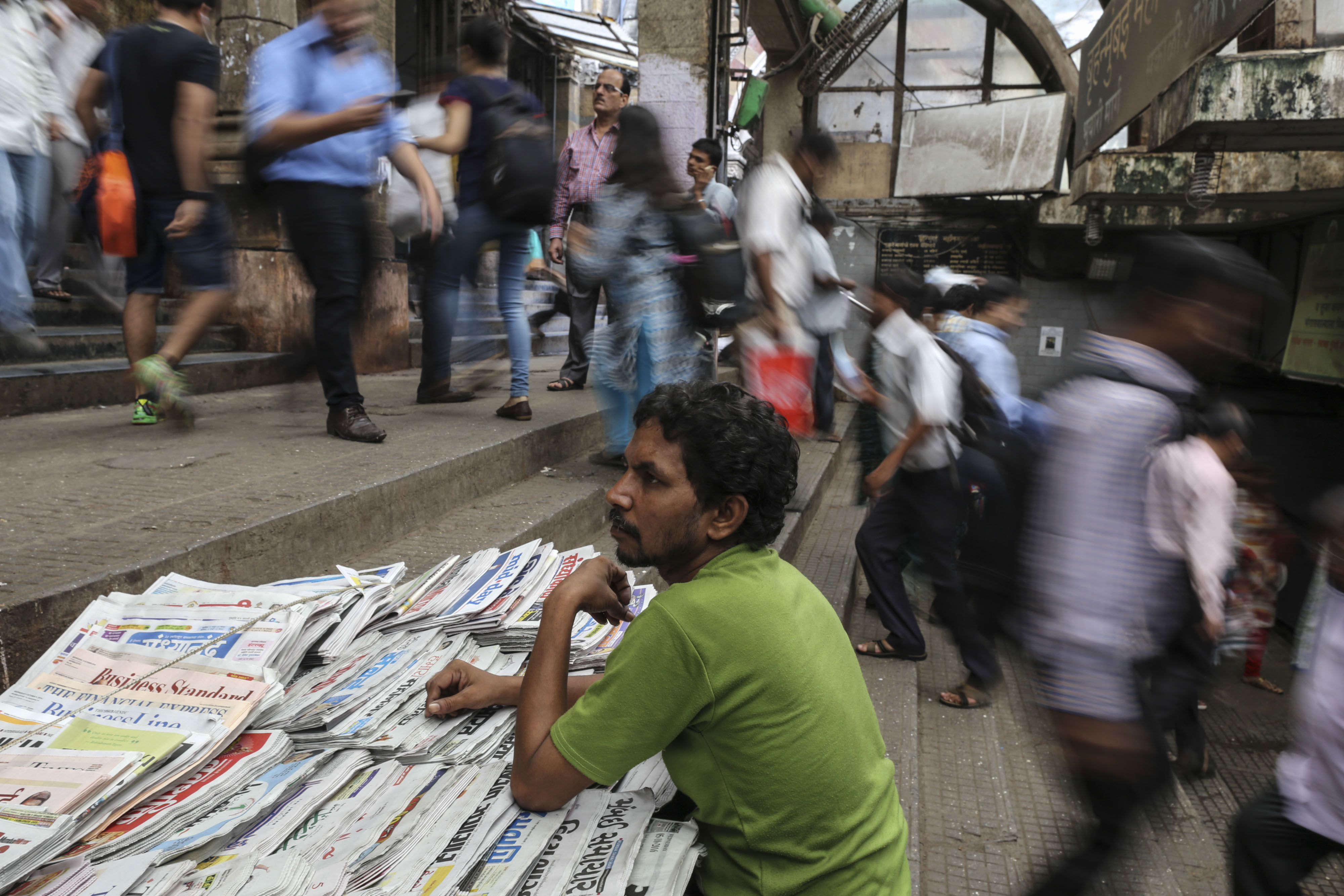
The Rajasthan government's ordinance to limit reportage of the criminal misdeeds of public servants (including judges and magistrates) in the state is an abominable law that has no place in a constitutional democracy. Let's be very clear – this law serves no purpose other than to intimidate the press and citizenry, to prevent them from questioning malfeasance in public office.
The ordinance proposes to do two things: it introduces provisos to Section 156 and Section 190 of the Code of Criminal Procedure, 1974 (CrPC) requiring prior sanction of the government before court-ordered investigation of public servants, and introduces a new offence under the Indian Penal Code (Section 228-B) which makes the reporting of allegations against a public servant contrary to the new provisos introduced in Section 156 and 190, punishable with imprisonment of up to two years and a fine.
Also Read: Leading Lawyers Call Rajasthan Ordinance ‘Unconstitutional'
Unconstitutional Immunity To Public Servant
There is already Section 197 of the CrPC which requires a court to take the sanction of the government concerned before taking “cognizance” of an offence allegedly committed by a public servant in the course of her duty. Specifically, under the Prevention of Corruption Act, Section 19 mandates that even for corruption cases, sanction be taken from the government concerned. Purportedly, this is to prevent government officers from being harassed for just doing their work. One can accept this concern without necessarily agreeing with the way in which the law provides for it. This means that even if the judge finds that on applying her mind to the facts of the case, there is an offence potentially made out, she cannot proceed further without getting sanction of the government concerned.
What the Rajasthan ordinance proposes to do is to stymie criminal proceedings at an even earlier stage – no one can even investigate (let alone file a chargesheet or frame charges) without sanction.
There is some controversy over the existing position under the CrPC – a recent decision of the Supreme Court stating that sanction was needed before court could order investigation under Section 156 has been doubted as being contrary to a previous Constitution Bench decision of the Supreme Court. What the Rajasthan ordinance does is to firmly remove all doubt but in favour of ensuring that there is no public accountability on the part of the government servant.
A somewhat similar clause, in the context of the CBI investigation (Section 6-A of the Delhi Special Police Establishment Act), was struck down by a Constitution Bench of the Supreme Court in a petition filed by Subramanian Swamy. The prime ground for striking down that clause was because the “protection” against investigation had been extended only to public servants above the rank of joint secretary. It did not go into the other arguments which said that such pre-investigation protection was per se unconstitutional (as there was no need to), but it is hard to see on what principle the government can constitutionally justify such immunity from investigation for all public servants. With arbitrariness having been held to be ground to strike down legislation in the triple talaq case, the constitutional validity of the provisions of the ordinance look extremely doubtful.
A similar provision (also amending the same sections of CrPC) passed by the Maharashtra Assembly has been challenged in the Bombay High Court in a PIL.
Attack On Free Speech
But that isn't the only unconstitutional or even the worst thing about this ordinance. Until sanction is given by the government, no one can even report the allegations against the government servant concerned. Effectively, the government will tell you if and when you can report the misdeeds of public servants. On the face of it, it is a gross and unconscionable attack on the freedom of speech. It has effectively criminalised reporting of government malfeasance, whether by the press or by individual citizens.
No reasons are offered in the ordinance for such obnoxious provisions. A minister in the Rajasthan government says it was necessary to protect against “frivolous allegations”. The fig leaf of “defamation” falls apart when one notices that even under Section 499 of the IPC, questioning a public servant's acts (when done in good faith) does not amount to defamation under the law. Under the Rajasthan ordinance, even good faith reporting of even just the facts amounts to an offence under the proposed Section 228-B of the IPC.
This ordinance is a direct attack on the freedom of speech guaranteed under Article 19(1)(a) of the Constitution and there is no way it can be justified as a reasonable restriction for anything.
The ordinance has not yet come into force given that the state is trying to amend a Central law and therefore requires Presidential approval before it takes effect. The Union Government, which advises the President on whether to give approval or not, has not yet said what it thinks about this law. One hopes better sense prevails and the President is advised to refuse assent to such a grotesque law.
Alok Prasanna Kumar is an advocate based in Bengaluru, an Executive Committee Member of the Campaign for Judicial Accountability and Reforms and was a Senior Resident Fellow at the Vidhi Centre for Legal Policy.
The views expressed here are those of the author's and do not necessarily represent the views of Bloomberg Quint or its editorial team.

-
Indians Are Travelling, But Not Every Journey Is A Holiday | The Week In Whys

Pilgrims, patients and working women are the real travellers, and the system hasn't quite caught up with them.
-
Getting To Work Costs Women More | The Reason Why
It is not just about women paying more than men. It is about women paying much more in cities than in villages.
-
AI Bias In Investing Cannot Be Eliminated, But It Can Be Governed
Framing is a particularly important example as identical financial information presented in terms of gains rather than losses can lead an LLM to reach a different assessment.
-
Joining The Dots | Dark Skies, Steady Diya: Why Hope Holds This Diwali
With war, a weak rupee and foreign outflows weighing on sentiment, policymakers at the NDTV World Summit and market veterans at NDTV Profit Ignite: Diwali Edition offered the same advice: stay invested and filter out the noise.
-
The Curious Case of Equitas Small Finance Bank And A CEO Who Quit For Stock
PN Vasudevan believes persistent investor concerns over a perceived conflict of interest had become a governance overhang on Equitas Small Finance Bank's stock, even as the lender improved profitability and asset quality.
-
Talking Points This Week: AI Cash Burn, A Tiger Comeback And An India That Still Finds Its Own Path
India is not immune to higher oil or tighter global liquidity, yet its earnings base is broader, its domestic policy levers are still available.
-
Foreign Investors Own Half Of HDFC Bank and ICICI Bank. An LTCG Cut Could Matter Most Here
Foreign portfolio investors have US$115 billion parked in HDFC Bank, ICICI Bank. If the government cuts long-term capital gains tax, Jefferies says returning foreign money could land here first.
-
'Never Seen This Level Of Negativity': Sandeep Tandon Says The Next Rally May Be Closer Than You Think
Veteran investor Sandeep Tandon says foreign selling is easing, large-caps are due a comeback and mid-caps are crowded, while he turns positive on gold, power and pharma this Diwali.
-
Indians Stay With Family, Not In Hotels | The Reason Why
India still lacks enough clean, reliable and affordable hotels for budget-conscious travellers.
-
The Economic Imperative: Analysing The Material Driving Force Behind India-Canada Strategic Reset
This economic complementarity is further reinforced by deep institutional investment ties and talent mobility, which form the bedrock of the bilateral framework.










