Rail Fare Hike Difficult but Correct Decision, Says Arun Jaitley
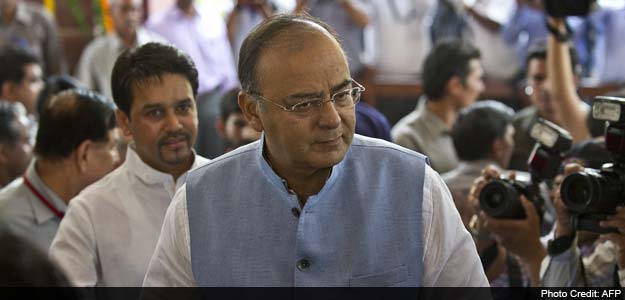
Defending the steep hike in rail fare and freight rates as a 'difficult but correct decision', Finance Minister Arun Jaitley on Saturday said the railways can survive only if users pay for availing of facilities.
"The passenger services have been subsidised by the freight traffic. In recent years, even freight fares have come under pressure," he said in his first reaction to the 14.2 per cent increase in passenger fares and 6.5 per cent hike in freight rates.
Stating that the choice before the government was to allow the railways to bleed and eventually walk into a debt trap or raise fares, Mr Jaitley said, "India must decide whether it wants a world-class railway or a ramshackled one.
"The railway minister has taken a difficult but a correct decision...The Indian Railways for the last few years have been running at a loss. The only way that Railways can survive is when users pay for the facilities that they avail," he added.
Mr Jaitley, who will present the Union budget next month, said a loss-making railway would provide below-par services and would eventually not even have the resources to meet its expenditure.
In a Facebook posting titled 'The Truth of Railway Fare Hike', the minister said the decision to increase the rates was mooted by the Railway Board on February 5, when the United Progressive Alliance was in power. The board proposed a 5 per cent increase in freight rates and a 10 per cent increase in passenger fares.
The proposal was to rationalise freight rates with effect from April 1 and passenger fares with effect from May 1, he said.
"Even as the Interim Budget of the Railways was yet to come, the date May 1, 2014, was chosen hoping that the general elections would be over by that day. The railways had proposed that this increase would give the railways additional revenue of Rs 7,900 crore.
"Armed with this decision, the then Railway Minister Shri Mallikarjuna Kharge met the then Prime Minister Shri Manmohan Singh on February 11, 2014. The then Prime Minister approved the hike and suggested that both freight and passenger fares should be implemented with effect from May 1, 2014, itself," Mr Jaitley said.
The Railway Board, Mr Jaitley said, accordingly notified this increase on May 16, when the election results were being declared. The decision gave effect "to what the Railway Board, the Rail Minister and the then Prime Minister had concurred."
However, Mr Jaitley added, then Railway Minister Kharge "developed cold feet and in the evening of May 16, 2014, even after the UPA had been defeated in the elections, he countermanded the order of the Railway Board so that theoretically the decision taken by him and the then Prime Minister is implemented by the Railway Minister of the NDA government."
Finance Minister said that by withdrawing the countermanding order, current Railway Minister D V Sadananda Gowda has taken a challenging decision.
"The choice before Shri Gowda was whether to allow the Railways to bleed and eventually walk into a debt trap by following the policy of the UPA government or implement the decision which the UPA government had taken to increase the fares for both passenger and freight but did not have the courage to implement."

-
Signature Play: The Classic Cocktail Is Dead. Or Is It?

Classic cocktails are disappearing from India's cocktail menus. But they're still being ordered, taught to bartenders and borrowed from. So, who's really having the last drink?
-
A New Samvat Wishlist: Inclusive Prosperity And Human Development
India has strengthened its economic foundations through infrastructure, digital access and enterprise. Its next growth chapter must deepen productivity, create better livelihoods and widen participation in prosperity.
-
Love, Sex Aur Dhokha: The Audacious Plot To Spy On Jensen Huang
A Taipei dinner, a Singapore chip buyer and a suspected Chinese asset: inside the alleged spy operation that got close to NVIDIA's Jensen Huang.
-
Ten Things I Learnt This Samvat
Patience can be a trap. Cheap stocks can stay cheap. Leverage can wipe you out. What did Samvat 2082 teach us? Niraj Shah writes on 10 lessons from the year gone by.
-
Talking Points This Week: Tech Nerves, FII Buying, And A Faraway Banking Shock
The global markets are not shining this Diwali. The exception in the large markets is, India.
-
Midterm Rally Lasted A Day. The Hard Reality Of A Divided US May Last Two Years | Opinion
Between a contested AI boom, a debt ceiling that arrives in 2027 and a president with every incentive to act alone, the next two years may prove more volatile than the first day's rally suggests.
-
Blue Wave Will Derail the AI Trade but Won't Dismantle the AI Era | Unhedged Position
The Democrats' sweep of the US Congress will see politics collide with economic forces both over the long and short term.
-
It's Time To Take The GST Council's Bet On Trust Global
Payment records can prove India's services exports, and clear, proportionate rules can bring foreign digital sellers into the tax net.
-
Opinion | India at 38: From Innovation Overperformer to Innovation Powerhouse
India now has 453 VC-backed deep science startups, 18 of them late-stage, after 117 percent growth since 2020. Laurus Labs, at USD 9.3 billion, is the most valuable deep science company in any middle-income economy outside China.









