Rail Budget Seen Seeking More Private Sector Funds
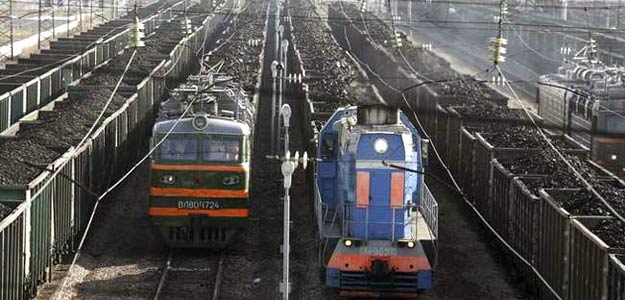
The new Narendra Modi-led is expected to suggest a bigger private sector role in developing India's railway as it presents its bellwether budget on Tuesday for the colonial-era train network.
The rail finance bill is traditionally regarded by economists as setting the stage for the national budget, due Thursday, in which the government will lay out its economic reform plans.
Prime Minister Modi last week said in a speech he hopes for more private sector money in modernising the railways, still the main form of long-distance travel for most of India's population of 1.2 billion people.
"We want the railway stations to have better facilities than airports. This is our dream," said Mr Modi, whose government is expected to announce more public-private partnerships in railway infrastructure.
"You will see a change in near future," he said, adding that "private parties would also be ready to invest because this is a good project economically and will benefit everyone".
Mr Modi's Bharatiya Janata Party (BJP), which took office in May after scoring a landslide election win, has also said it favours a greater role for private business in building other infrastructure such as roads and ports.
But the BJP has said modernisation of the decrepit and over-burdened train network tops its ambitious agenda for infrastructure-building in India.
Dilapidated transportation has held back growth of Asia's third-largest economy, analysts say.
To help fund new wagon purchases, modernise track, revamp lines and improve safety, the government hiked passenger fares by 14.2 per cent and freight rates by 6.5 per cent - the steepest rise in 15 years and a politically controversial move.
A public outcry saw the government later partially climb down over city commuter fare hikes, underscoring the difficulty in reducing subsidies in a tough economic environment where hundreds of millions of people live in dire poverty.
The economy is growing by just under 5 per cent annually, far below the near double-digit pace of a few years ago.
Finance Minister Arun Jaitley underlined Monday in parliament the government's determination to go ahead with difficult belt-tightening decisions, saying "for any public utility to run, the users must pay".
The government has also suggested it may open up the railway to foreign investors, and analysts will be looking for any suggestion of such a move in the rail budget as a sign of desire to welcome more outside investment.
Analysts say as much as $500 billion (Rs 30 lakh crore at 1 dollar = 60 rupees) must be invested over the next decade to overhaul the Victorian-era network.
In the national budget, Mr Jaitley is expected to press forward with fuel price rises as part of efforts to curb subsidies.
India's subsidies on energy, food and fertiliser total some Rs 2.6 lakh crore ($43 billion) annually.

-
Signature Play: The Classic Cocktail Is Dead. Or Is It?

Classic cocktails are disappearing from India's cocktail menus. But they're still being ordered, taught to bartenders and borrowed from. So, who's really having the last drink?
-
A New Samvat Wishlist: Inclusive Prosperity And Human Development
India has strengthened its economic foundations through infrastructure, digital access and enterprise. Its next growth chapter must deepen productivity, create better livelihoods and widen participation in prosperity.
-
Love, Sex Aur Dhokha: The Audacious Plot To Spy On Jensen Huang
A Taipei dinner, a Singapore chip buyer and a suspected Chinese asset: inside the alleged spy operation that got close to NVIDIA's Jensen Huang.
-
Ten Things I Learnt This Samvat
Patience can be a trap. Cheap stocks can stay cheap. Leverage can wipe you out. What did Samvat 2082 teach us? Niraj Shah writes on 10 lessons from the year gone by.
-
Talking Points This Week: Tech Nerves, FII Buying, And A Faraway Banking Shock
The global markets are not shining this Diwali. The exception in the large markets is, India.
-
Midterm Rally Lasted A Day. The Hard Reality Of A Divided US May Last Two Years | Opinion
Between a contested AI boom, a debt ceiling that arrives in 2027 and a president with every incentive to act alone, the next two years may prove more volatile than the first day's rally suggests.
-
Blue Wave Will Derail the AI Trade but Won't Dismantle the AI Era | Unhedged Position
The Democrats' sweep of the US Congress will see politics collide with economic forces both over the long and short term.
-
It's Time To Take The GST Council's Bet On Trust Global
Payment records can prove India's services exports, and clear, proportionate rules can bring foreign digital sellers into the tax net.
-
Opinion | India at 38: From Innovation Overperformer to Innovation Powerhouse
India now has 453 VC-backed deep science startups, 18 of them late-stage, after 117 percent growth since 2020. Laurus Labs, at USD 9.3 billion, is the most valuable deep science company in any middle-income economy outside China.









