Raghuram Rajan Too May Have Cut Interest Rate Like Urjit Patel Did: Fitch
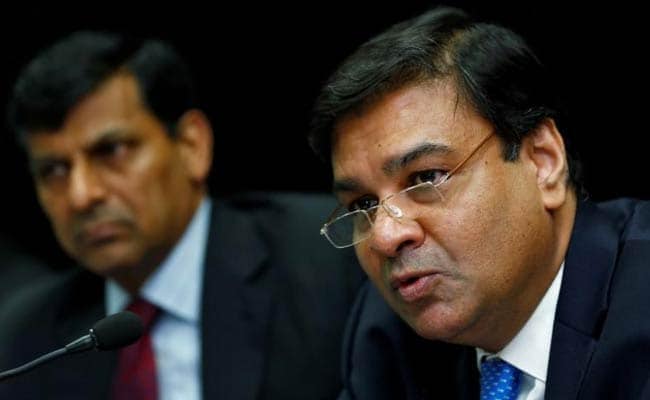
New Delhi: Flamboyant former Reserve Bank Governor Raghuram Rajan too may have cut interest rates like his successor Urjit Patel did at his every first monetary policy review, said rating agency Fitch.
"The newly established six-person monetary policy committee he (Patel) heads voted to cut interest rates at its first meeting (last month) since Rajan's exit. Tempting as it is to think the central bank has slipped back to its bad habits that had resulted in persistently high inflation, one might argue Rajan would have made the exact same choice at last month's meeting," it said in its bi-monthly publication 'Fitch on India'.
It reasoned its assessment to consumer price inflation coming in at 4.3 per cent in September, comfortably below the RBI's 5 per cent target for end-March 2017.
Also, India's external position has improved in recent years, and is no longer of major concern to the central bank.
"Raghuram Rajan left his role as governor of the Reserve Bank of India (RBI) in September, taking with him his celebrity reputation and a good track record. Inflation fell significantly and the rupee stabilised during his three years in charge, so it is perhaps understandable that his departure has created a few jitters," Fitch said.
However, it does not take a governor with "Rajan's high profile to run a central bank that prioritises inflation and delivers economic stability," it said.
The new inflation-targeting framework - implemented under Rajan - that focuses on consumer prices instead of wholesale prices represents a significant improvement.
"Institutional support for policies that keep inflation in check has also risen. Government officials appear to have grown more cognizant of the downside of high inflation, and have allowed more limited increases in minimum support prices for agricultural products," it said.
Fitch, however, said it was still far too early to say that there has been a structural shift to a more stable inflation environment that might support India's credit profile.
"The decline in inflation under Rajan was at least partly driven by a big fall in global commodity prices. Keeping inflation low without that supply-side help could require a more active role for the RBI," it said.
The government's decision to raise public-sector salaries by 24 per cent with the implementation of the 7th Pay Commission earlier this year will also add to price pressure.
"Fitch forecasts that inflation will drift to the upper end of the RBI's medium-term inflation target range of 2-6 per cent by end-2018.
"The RBI's policy stance between now and then will provide a clearer idea of whether the new inflation-targeting framework is truly a regime shift," it added.
(This story has not been edited by NDTV staff and is auto-generated from a syndicated feed.)

-
Getting To Work Costs Women More | The Reason Why

It is not just about women paying more than men. It is about women paying much more in cities than in villages.
-
AI Bias In Investing Cannot Be Eliminated, But It Can Be Governed
Framing is a particularly important example as identical financial information presented in terms of gains rather than losses can lead an LLM to reach a different assessment.
-
Joining The Dots | Dark Skies, Steady Diya: Why Hope Holds This Diwali
With war, a weak rupee and foreign outflows weighing on sentiment, policymakers at the NDTV World Summit and market veterans at NDTV Profit Ignite: Diwali Edition offered the same advice: stay invested and filter out the noise.
-
The Curious Case of Equitas Small Finance Bank And A CEO Who Quit For Stock
PN Vasudevan believes persistent investor concerns over a perceived conflict of interest had become a governance overhang on Equitas Small Finance Bank's stock, even as the lender improved profitability and asset quality.
-
Talking Points This Week: AI Cash Burn, A Tiger Comeback And An India That Still Finds Its Own Path
India is not immune to higher oil or tighter global liquidity, yet its earnings base is broader, its domestic policy levers are still available.
-
Foreign Investors Own Half Of HDFC Bank and ICICI Bank. An LTCG Cut Could Matter Most Here
Foreign portfolio investors have US$115 billion parked in HDFC Bank, ICICI Bank. If the government cuts long-term capital gains tax, Jefferies says returning foreign money could land here first.
-
'Never Seen This Level Of Negativity': Sandeep Tandon Says The Next Rally May Be Closer Than You Think
Veteran investor Sandeep Tandon says foreign selling is easing, large-caps are due a comeback and mid-caps are crowded, while he turns positive on gold, power and pharma this Diwali.
-
Indians Stay With Family, Not In Hotels | The Reason Why
India still lacks enough clean, reliable and affordable hotels for budget-conscious travellers.
-
The Economic Imperative: Analysing The Material Driving Force Behind India-Canada Strategic Reset
This economic complementarity is further reinforced by deep institutional investment ties and talent mobility, which form the bedrock of the bilateral framework.
-
Medicine Pricing: Where Must Profit Stop?
India must confront excessive margins, hidden incentives and regulatory gaps that threaten the integrity of medicine.










