IMF Economist Who Foresaw 2008 Crisis Expects More Bank Troubles
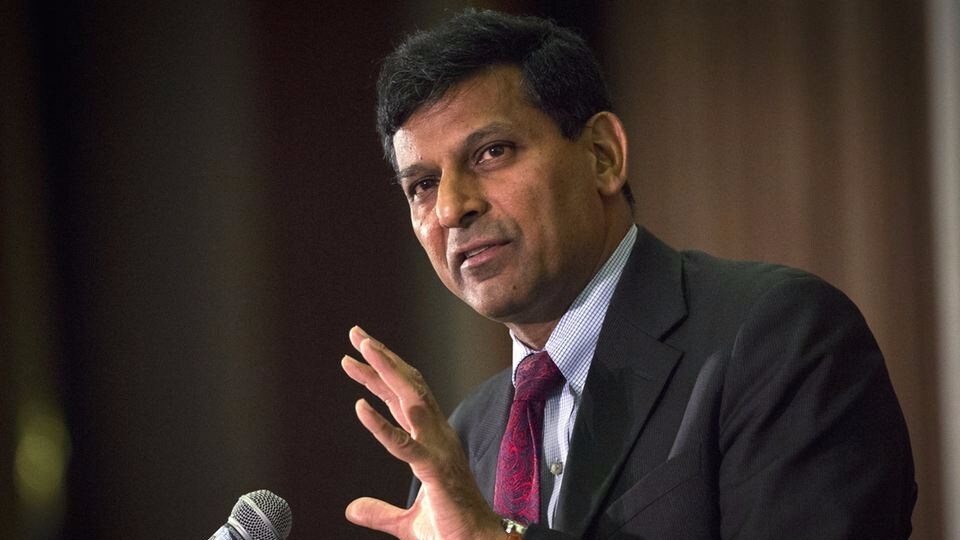
(Bloomberg) -- Raghuram Rajan — the former International Monetary Fund chief economist who predicted the global financial crisis more than a decade ago — warned that the banking system is headed for more turmoil after the rescues of Silicon Valley Bank and Credit Suisse.
Rajan, who was also governor of Reserve Bank of India, said a decade of easy money and a flood of liquidity from central banks has caused an “addiction” and a fragility within the financial system as policy makers tighten policy.
“I hope for the best but expect that there might be more to come, partly because some of what we saw was unexpected,” Rajan said in an interview in Glasgow. “The entire concern is that very easy money (and) high liquidity over a long period creates perverse incentives and perverse structures that become fragile when you reverse everything.”
His comments add to warnings that the troubles at SVB and Credit Suisse are indicative of deeper underlying problems in the financial system.
While IMF chief economist in 2005, Rajan gave a prescient warning on the banking sector ahead the global financial crisis in a Jackson Hole speech that prompted former US Treasury Secretary Larry Summers to call him a “luddite.” Rajan, now a professor at University of Chicago Booth School of Business, also won acclaim for his handling of the Indian economy while leading its central bank from 2013 to 2016.
Bank shares slumped following the crises at SVB and Credit Suisse but central banks have pushed ahead with policy tightening to rein in inflation.
Rajan said central bankers have been given a “free ride” as policy makers rapidly reverse the ultra-accommodative stance taken in the decade following the financial crisis.
“This sense that the spillover effects of monetary policy are huge and aren't dealt with by ordinary supervision has just escaped our consciousness over the last so many years,” Rajan said.
He said banks are vulnerable to unwinding after central banks “flooded the system with liquidity.”
“It's an addiction that you've forced into the system because you flood the system with low return liquid assets and banks are saying, ‘we've got to hold this, but what do we do with it? Let's find ways to make money off it' and that gives makes them vulnerable to the withdrawal of liquidity.”
More stories like this are available on bloomberg.com
©2023 Bloomberg L.P.

-
The Economic Imperative: Analysing The Material Driving Force Behind India-Canada Strategic Reset

This economic complementarity is further reinforced by deep institutional investment ties and talent mobility, which form the bedrock of the bilateral framework.
-
Medicine Pricing: Where Must Profit Stop?
India must confront excessive margins, hidden incentives and regulatory gaps that threaten the integrity of medicine.
-
Why Amazon And Flipkart Are Struggling To Beat Meesho In India's Smaller Cities
With 274 million users and lowest-cost logistics, Meesho is defending its value commerce crown against giants like Amazon and Flipkart.
-
High US Salaries, No Green Card Certainty: The Financial Calculation Facing Indian H-1B Families
The suspension of PERM processing at eight technology employers does not cancel existing H-1B visas. What it does is force a question many Indian families have been avoiding: is the US salary worth tying your career and family plans to one employer?
-
Swiggy vs Eternal: Food Delivery's Two Rivals Are No Longer In The Same Race
Eternal is building a private AI assistant, dark.ai. Swiggy is still working out how to make Instamart pay, with an operating loss of Rs 895 crore in the July-September quarter while Blinkit stayed profitable.
-
Where You Live Shapes How You Get To Work | The Reason Why
Two-wheelers are the most popular way to get to work in India, accounting for nearly 43% of workplace commutes.
-
Unhedged Position: Can India See An Indonesia-Style Time Correction?
The Nifty is trading below levels it first clocked in 2024. Is there, then, as I have suggested in the headline, potential that the current time correction drags on painfully for the next three-five, even ten years?
-
Navigating Friction And Energy Realities: An Analysis Of Marco Rubio's October Visit To India
Occurring at a critical juncture marked by stalled trade negotiations and escalating geopolitical pressures over global energy supplies, the visit offers a profound window into modern US-India relations.
-
India Exports Capital. Why Not Export Trusteeship?
The big question, then, is whether India can build an institution that global borrowers, investors, banks, and lawyers can trust, even without an Indian connection.
-
France's Economy & Politics Are In Crisis | The Reason Why
Let's look at how the French economy and politics evolved under Nicolas Sarkozy, Franois Hollande and Emmanuel Macron.










