12 State-Run Banks Instead Of 27 In Government's Mega Mergers: 10 Things To Know
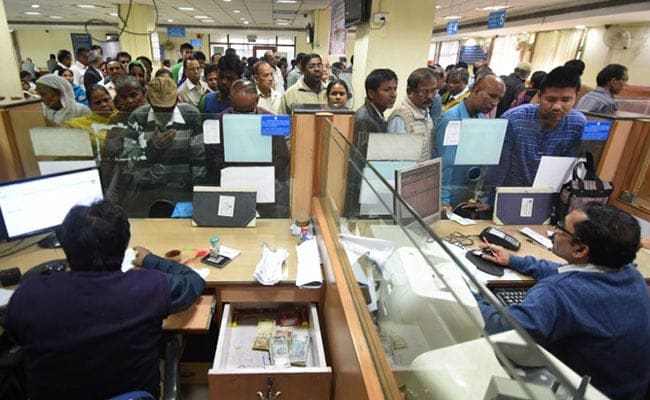
- The Canara Bank will join Syndicate Bank; Union Bank of India, Andhra Bank and Corporation Bank will merge, and Indian Bank will merge with Allahabad Bank. Together, they will hold business worth Rs 55.8 lakh crore.
- After the mega PSU bank consolidation, there will be 12 public sector banks in the system instead of 27, the Finance Minister said.
- Announcing steps to empower the public sector banks, the Finance Minister said a board committee of nationalised banks will appraise the performance of general managers and higher positions.
- For the first time, Chief Risk Offers will be recruited at market-linked compensation to attract best available talent.
- The government further said PSU banks will be repositioned to take the economy to the $5-trillion mark, with wide ranging reforms, financially stronger and well-provisioned lenders, technology-driven banking, synergy and stronger governance.
- The Finance Minister also said that loan recoveries have hit a recovery level of Rs. 1,21,076 crore. Gross non-performing assets (NPAs) - or bad loans - have come down from Rs. 8.65 lakh crore to Rs. 7.90 lakh crore, she added.
- Analysts said the steps announced by the government are in the right direction. "This is a much awaited and a step in the right direction in order to consolidate the size of the banks and improve the efficiency. The move can also help expand the size of the economy," Deven Choksey of wealth management company KR Choksey Investment Managers told NDTV.
- The announcements on bank consolidation comes a day after the Reserve Bank of India (RBI) said in its annual report that frauds in the banking system increased 74 per cent to Rs.71,543 crore in financial year 2018-19.
- The RBI also said that the average lag between the date of occurrence of frauds and its detection by banks stood at 22 months.
- In its bid to push investments and revive growth, the government has announced a range of measures in the past few days, including easing of FDI or foreign direct investment norms in four sectors, and a reversal of higher taxes on foreign investors as announced in Budget.

-
Signature Play: The Classic Cocktail Is Dead. Or Is It?

Classic cocktails are disappearing from India's cocktail menus. But they're still being ordered, taught to bartenders and borrowed from. So, who's really having the last drink?
-
A New Samvat Wishlist: Inclusive Prosperity And Human Development
India has strengthened its economic foundations through infrastructure, digital access and enterprise. Its next growth chapter must deepen productivity, create better livelihoods and widen participation in prosperity.
-
Love, Sex Aur Dhokha: The Audacious Plot To Spy On Jensen Huang
A Taipei dinner, a Singapore chip buyer and a suspected Chinese asset: inside the alleged spy operation that got close to NVIDIA's Jensen Huang.
-
Ten Things I Learnt This Samvat
Patience can be a trap. Cheap stocks can stay cheap. Leverage can wipe you out. What did Samvat 2082 teach us? Niraj Shah writes on 10 lessons from the year gone by.
-
Talking Points This Week: Tech Nerves, FII Buying, And A Faraway Banking Shock
The global markets are not shining this Diwali. The exception in the large markets is, India.
-
Midterm Rally Lasted A Day. The Hard Reality Of A Divided US May Last Two Years | Opinion
Between a contested AI boom, a debt ceiling that arrives in 2027 and a president with every incentive to act alone, the next two years may prove more volatile than the first day's rally suggests.
-
Blue Wave Will Derail the AI Trade but Won't Dismantle the AI Era | Unhedged Position
The Democrats' sweep of the US Congress will see politics collide with economic forces both over the long and short term.
-
It's Time To Take The GST Council's Bet On Trust Global
Payment records can prove India's services exports, and clear, proportionate rules can bring foreign digital sellers into the tax net.
-
Opinion | India at 38: From Innovation Overperformer to Innovation Powerhouse
India now has 453 VC-backed deep science startups, 18 of them late-stage, after 117 percent growth since 2020. Laurus Labs, at USD 9.3 billion, is the most valuable deep science company in any middle-income economy outside China.









