State Banks May Have To Find Own Funding After Rs 2.11 Lakh Crore Bailout
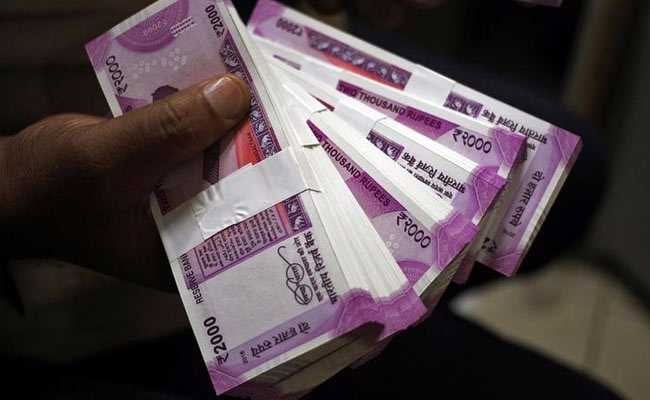
New Delhi: A massive $32 billion (Rs 2.11 lakh crore) bailout package for the dominant state-run banks will not happen again and lenders will have to find their own funding by selling non-core assets and merging with each other, a senior government official said on Monday.
Twenty-one banks, majority owned by New Delhi, account for more than two-thirds of the banking assets in Asia's third-biggest economy. These lenders also account for close to 90 per cent of soured loans in the banking sector.
Last October, the finance ministry announced a state-bank rescue plan worth Rs 2.11 lakh crore ($32.41 billion) - $14 billion of which it is in the process of injecting as a first tranche - to help banks set aside enough for their bad loans and boost credit growth in an economy where banks are the main source of funding.
"My message is no more recapitalisation. Whatever has happened, has happened. Clean up on your own," the official who oversees the state banking sector told news agency Reuters.
"We brought you out of the intensive care unit (ICU). Now, if you again go back to the ICU, and we keep bringing you out, that's not how it's done," said the official, declining to be named.
The government would like to get the total number of state-run banks to down to 12-13 from 21 now through mergers, the official said. He did not give a time-frame for such deals, but expected some bank mergers to happen during the current financial year that began on Sunday.
"You either shrink or find some synergy," the official said.
Recent rule changes by the Reserve Bank of India (RBI) that did away with existing loan-restructuring schemes and aims to steer more defaulting companies into the bankruptcy courts could mean non-performing loans in state-run banks could rise from nearly Rs 8 lakh crore now, the official said, although he added Rs 10 lakh crore would be the upper limit for any such increase.
Including restructured or rolled over loans, all banks in the country had a total Rs 9.5 lakh crore of soured loans as of end-December, central bank data shows. State-run banks' stressed loan pile was Rs 8.26 lakh crore, or 15.8 per cent of their total loans.
To avert situations like the massive $2 billion fraud in state-run Punjab National Bank that stunned the financial sector, the government is asking banks to constantly monitor loans above Rs 250 crore and report at their board meetings every quarter, the official said.
The government is also working to ease the country's fledgling bankruptcy laws to help speed up the resolution process, the official said.
One of the proposals is to allow a resolution process to go ahead if 66 per cent of the creditors vote for it, compared with the current requirement of a minimum of 75 per cent.
"We are facing some resistance here from the promoters," the official said, referring to the main backers of companies.
"But we are planning to ease the process with more changes."

-
Getting To Work Costs Women More | The Reason Why

It is not just about women paying more than men. It is about women paying much more in cities than in villages.
-
AI Bias In Investing Cannot Be Eliminated, But It Can Be Governed
Framing is a particularly important example as identical financial information presented in terms of gains rather than losses can lead an LLM to reach a different assessment.
-
Joining The Dots | Dark Skies, Steady Diya: Why Hope Holds This Diwali
With war, a weak rupee and foreign outflows weighing on sentiment, policymakers at the NDTV World Summit and market veterans at NDTV Profit Ignite: Diwali Edition offered the same advice: stay invested and filter out the noise.
-
The Curious Case of Equitas Small Finance Bank And A CEO Who Quit For Stock
PN Vasudevan believes persistent investor concerns over a perceived conflict of interest had become a governance overhang on Equitas Small Finance Bank's stock, even as the lender improved profitability and asset quality.
-
Talking Points This Week: AI Cash Burn, A Tiger Comeback And An India That Still Finds Its Own Path
India is not immune to higher oil or tighter global liquidity, yet its earnings base is broader, its domestic policy levers are still available.
-
Foreign Investors Own Half Of HDFC Bank and ICICI Bank. An LTCG Cut Could Matter Most Here
Foreign portfolio investors have US$115 billion parked in HDFC Bank, ICICI Bank. If the government cuts long-term capital gains tax, Jefferies says returning foreign money could land here first.
-
'Never Seen This Level Of Negativity': Sandeep Tandon Says The Next Rally May Be Closer Than You Think
Veteran investor Sandeep Tandon says foreign selling is easing, large-caps are due a comeback and mid-caps are crowded, while he turns positive on gold, power and pharma this Diwali.
-
Indians Stay With Family, Not In Hotels | The Reason Why
India still lacks enough clean, reliable and affordable hotels for budget-conscious travellers.
-
The Economic Imperative: Analysing The Material Driving Force Behind India-Canada Strategic Reset
This economic complementarity is further reinforced by deep institutional investment ties and talent mobility, which form the bedrock of the bilateral framework.
-
Medicine Pricing: Where Must Profit Stop?
India must confront excessive margins, hidden incentives and regulatory gaps that threaten the integrity of medicine.










