Proxy Advisory Firm Questions Exemptions In The ONGC-HPCL Deal
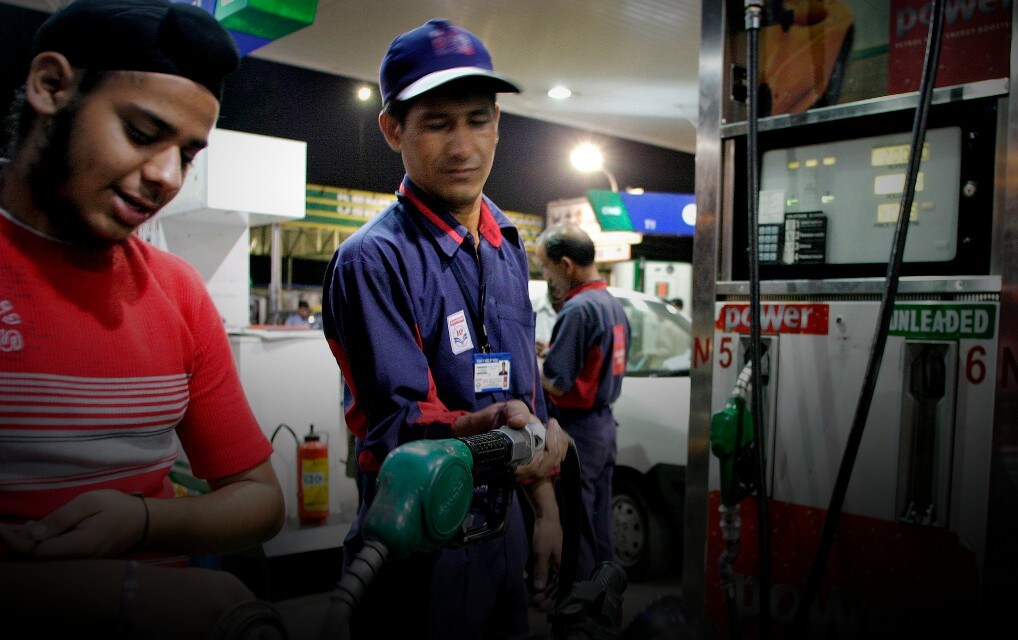
Proxy advisory firm IiAS questioned ONGC seeking exemption from taking shareholders' nod to acquire the government's stake in HPCL, adding that such leniency with regard to public votes is not warranted.
Oil and Natural Gas Corporation had bought the government's 51.1 percent stake in Hindustan Petroleum Corporation Ltd. for Rs 36,916 crore in January this year.
The acquisition price of Rs 473.97 apiece was finalised on Jan. 20 and the deal was completed as an off-market transaction on Jan. 31, while ONGC is now asking the shareholders to ratify it, IiAS said.
The purchase qualified as a related party transaction (RPT) as the government holds majority stake in ONGC and was selling its stake in HPCL.
IiAS said that according to the Section 188 of The Companies Act, ‘prior approval' is required for firms to enter into RPTs. In cases where such an approval has not been taken, the Act allows for ratification till three months' time.
Also Read: ONGC Is Said to Plan $4.8 Billion Indian Oil, GAIL Stake Sale
This is understandable for routine transactions which are in the ordinary course of business. But given the legal and operational complexities in rolling back stake purchases, as a good governance measure, ONGC should have refrained from going ahead with the transaction before the shareholder vote.Institutional Investor Advisory Services India Limited Note
On the company's assertion in the shareholder notice that seeking prior approval for a price sensitive deal was impracticable, IiAS said that “it is unfathomable, given that the purchase has been under consideration for several months and there was no real urgency to close the deal.”
“Why could ONGC not wait for shareholders' approval before purchasing the stake? What happens if the resolution is defeated? Does the company have a plan in place to rollback the transaction in case the resolution is defeated?” asked IiAS.
Both the Companies Act and SEBI (LODR) Regulations 2015 exempt public-sector undertakings from seeking shareholder approval where the RPTs are conducted with another PSU. But there are no such exemptions for transactions between the government and a PSU.
“Despite this, SEBI, vide its letter dated November 30, 2017, has already granted exemption to ONGC from having to take shareholders' approval. ONGC has also applied to the Ministry of Corporate Affairs for an exemption – once granted the current resolution (seeking shareholder nod) will be withdrawn. IiAS believes this renders otiose the entire exercise,” the note said.
IiAS said that discerning shareholders who have taken the time and effort to analyse and vote will be left in the lurch if the resolution were to be withdrawn.
Also Read: India's ONGC Is Said to Expect Delays in Its Biggest Project
It went on to ask if ONGC should be given preferential treatment, thereby avoiding the shareholder voting process.
Stating that PSU shareholders have expectations regarding governance standards, it said that the current legal framework fails to provide a level playing field.
“The government is often able to push its agenda forward, which might not always be in the best interests of the company's direct and immediate stakeholders,” it said.
The advisory firm said there is a need for greater introspection across the board. “In the listed space, there cannot be different standards for PSUs and private companies. It is time for the Government and regulators to bridge this governance gap,” IiAS added.
While listing of PSUs is cited as the biggest driver of accountability and transparency, there is a big divergence in standards applicable for state-owned and private companies.
“In ONGC's case, the company is seeking regulatory exemptions. While IiAS supports the overall transaction, it believes that such leniency with regard to public votes are not warranted,” the note said.

-
The Economic Imperative: Analysing The Material Driving Force Behind India-Canada Strategic Reset

This economic complementarity is further reinforced by deep institutional investment ties and talent mobility, which form the bedrock of the bilateral framework.
-
Medicine Pricing: Where Must Profit Stop?
India must confront excessive margins, hidden incentives and regulatory gaps that threaten the integrity of medicine.
-
Why Amazon And Flipkart Are Struggling To Beat Meesho In India's Smaller Cities
With 274 million users and lowest-cost logistics, Meesho is defending its value commerce crown against giants like Amazon and Flipkart.
-
High US Salaries, No Green Card Certainty: The Financial Calculation Facing Indian H-1B Families
The suspension of PERM processing at eight technology employers does not cancel existing H-1B visas. What it does is force a question many Indian families have been avoiding: is the US salary worth tying your career and family plans to one employer?
-
Swiggy vs Eternal: Food Delivery's Two Rivals Are No Longer In The Same Race
Eternal is building a private AI assistant, dark.ai. Swiggy is still working out how to make Instamart pay, with an operating loss of Rs 895 crore in the July-September quarter while Blinkit stayed profitable.
-
Where You Live Shapes How You Get To Work | The Reason Why
Two-wheelers are the most popular way to get to work in India, accounting for nearly 43% of workplace commutes.
-
Unhedged Position: Can India See An Indonesia-Style Time Correction?
The Nifty is trading below levels it first clocked in 2024. Is there, then, as I have suggested in the headline, potential that the current time correction drags on painfully for the next three-five, even ten years?
-
Navigating Friction And Energy Realities: An Analysis Of Marco Rubio's October Visit To India
Occurring at a critical juncture marked by stalled trade negotiations and escalating geopolitical pressures over global energy supplies, the visit offers a profound window into modern US-India relations.
-
India Exports Capital. Why Not Export Trusteeship?
The big question, then, is whether India can build an institution that global borrowers, investors, banks, and lawyers can trust, even without an Indian connection.
-
France's Economy & Politics Are In Crisis | The Reason Why
Let's look at how the French economy and politics evolved under Nicolas Sarkozy, Franois Hollande and Emmanuel Macron.










