Protectionism Won't Create Jobs: Nasscom On Trump's Remarks
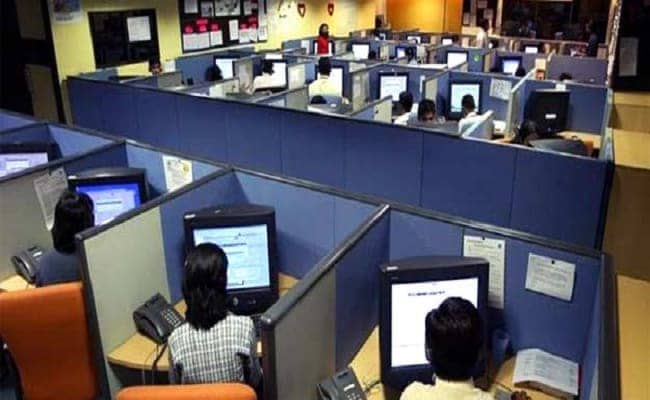
New Delhi: Stressing that "blind protectionism" will not help in creating jobs, IT industry body Nasscom has said it will reach out to the new American administration to further highlight the key role played by Indian companies in keeping their economy competitive.
The comments come in the backdrop of US President-elect Donald Trump's statement on visa related issues at a rally in Michigan last week. He said one of his first executive orders after assuming office next month would be to order investigation into all visas abuses.
Industry watchers say this could mean that foreigner workers, including Indians, may face tough scrutiny under his administration.
"Trump is pro-business in his basic approach and as a businessman he will recognise that the only way you can create jobs in the US is for US corporates to be economically competitive. We hope Trump will understand that blind protectionism is not something that will create jobs, on the contrary it will lead to loss of jobs," Nasscom President R Chandrashekhar told PTI.
He added that the Indian IT sector is hopeful that any decision that is taken "is based on the consideration of full facts".
Stating that Nasscom is watching the developments, Chandrashekhar said it is a "myth" that a company does "one-to-one replacement" to perform the same task at lower cost.
"The reality is different. Indian companies help to revamp and transform organisations and processes by using disruptive and innovative technologies. We hope that a holistic view is taken," he added.
Pointing out that the new Trump administration takes charge next month, Chandrashekhar said Nasscom "will reach out to new administration to convey its views".
During his presidential campaign, Trump had emphasised on tightening immigration and criticised companies that ship jobs
overseas to countries like India and China.
At the Michigan rally, Trump said he had spent time with American workers who were laid off and forced to train foreign workers that were brought in to replace them.
While he did not take any names, Trump was apparently referring to cases like that of Disney World and other American companies wherein people hired on H-1B visas, including Indians, displaced US workers.
The $110-billion Indian IT services sector, which gets about 60 per cent of its revenues from the US, has been gradually ramping up local hiring as a measure to protect its business. This is an expensive route as manpower costs more compared to those in places like India and China and will impact margins of the service providers, industry experts said.
India companies like Infosys and TCS have also been aggressively expanding their STEM programmes to create more skilled manpower in the US.
"The kind of services that Indian IT industry provides in the US is a combination of new technology requiring different set of skills, applied to transform American businesses and to make them more competitive and in turn enable them to create jobs," Chandrashekhar said.

-
The Curious Case of Equitas Small Finance Bank And A CEO Who Quit For Stock

PN Vasudevan believes persistent investor concerns over a perceived conflict of interest had become a governance overhang on Equitas Small Finance Bank's stock, even as the lender improved profitability and asset quality.
-
Talking Points This Week: AI Cash Burn, A Tiger Comeback And An India That Still Finds Its Own Path
India is not immune to higher oil or tighter global liquidity, yet its earnings base is broader, its domestic policy levers are still available.
-
Foreign Investors Own Half Of HDFC Bank and ICICI Bank. An LTCG Cut Could Matter Most Here
Foreign portfolio investors have US$115 billion parked in HDFC Bank, ICICI Bank. If the government cuts long-term capital gains tax, Jefferies says returning foreign money could land here first.
-
'Never Seen This Level Of Negativity': Sandeep Tandon Says The Next Rally May Be Closer Than You Think
Veteran investor Sandeep Tandon says foreign selling is easing, large-caps are due a comeback and mid-caps are crowded, while he turns positive on gold, power and pharma this Diwali.
-
Indians Stay With Family, Not In Hotels | The Reason Why
India still lacks enough clean, reliable and affordable hotels for budget-conscious travellers.
-
The Economic Imperative: Analysing The Material Driving Force Behind India-Canada Strategic Reset
This economic complementarity is further reinforced by deep institutional investment ties and talent mobility, which form the bedrock of the bilateral framework.
-
Medicine Pricing: Where Must Profit Stop?
India must confront excessive margins, hidden incentives and regulatory gaps that threaten the integrity of medicine.
-
Why Amazon And Flipkart Are Struggling To Beat Meesho In India's Smaller Cities
With 274 million users and lowest-cost logistics, Meesho is defending its value commerce crown against giants like Amazon and Flipkart.
-
High US Salaries, No Green Card Certainty: The Financial Calculation Facing Indian H-1B Families
The suspension of PERM processing at eight technology employers does not cancel existing H-1B visas. What it does is force a question many Indian families have been avoiding: is the US salary worth tying your career and family plans to one employer?
-
Swiggy vs Eternal: Food Delivery's Two Rivals Are No Longer In The Same Race
Eternal is building a private AI assistant, dark.ai. Swiggy is still working out how to make Instamart pay, with an operating loss of Rs 895 crore in the July-September quarter while Blinkit stayed profitable.










