Protectionism Can Blunt US Firms' Efficiency, Says Arun Jaitley
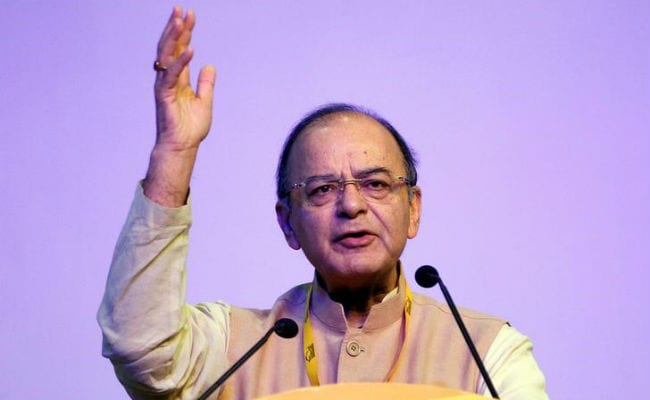
Yokohama (Japan): US firms may become sluggish if cheaper products and efficient services are cut off to them due to protectionist policies, Finance Minister Arun Jaitley said today, amid concerns that protectionism in US can affect Indian companies.
He said India has so far not been impacted by US' protectionist overtones and hoped nations will realise that free trade is the only way forward.
Speaking at a session on 'Asia's Economic Outlook: Talking Trade' on the sidelines of Asian Development Bank's 50th annual meet here, he said developed economies are aided when their companies benefit from cheaper products and more efficient services outsourced from countries like India.
"If this itself is reduced, it is quite likely that these companies themselves may become sluggish because then you have to rely on products which are costlier, services which are less effective," he said.
He said economies will have to become more efficient in order to make sure their goods and services have acceptability all over the world.
On the impact of Trump administration's executive orders curbing visas for skilled workers and 'Buy American, Hire American' policy, the minister said, "I don't think we have felt any impact because of the executive order at the moment."
He said no economy can be immune from what happens in the rest of the world.
"So if there is a global slowdown, the slowdown will certainly impact demand, exports and these impacts would be domestically felt also.
"If commodity or oil prices fluctuate, it is going to have significant impact on an economy like India," he said.
While the global economy impacted India, the country's large market and domestic demand kept its economy going, helping it clock 7.5 per cent plus growth even during global slowdown.
"And that is essentially because of a set of large number of structural reforms.
"One of the major structural reforms was we became one of the most open economies in the world, and we simplified FDI procedures and over the last 2-3 years. We became the largest recipient globally of FDI and that became a great additionality of resource for domestic economy," he said.
So even when domestic investment was modest, foreign investment coupled with a large number of government and public spending still managed to keep the economy going.
"But if you are growing at this pace and you have the force of global tailwinds, which are positive, behind you, then certainly you can move up a lot more.
"We do sustain and survive in spite of what is happening in the world, but what is happening in the world certainly does impact us," he said.
The Finance Minister said trade is going to find ways and means either by way of multilateral, unilateral or bilateral arrangements.
"I don't think there is any force in the world today that can prevent trade.There are going to be movements of...persons from one part of the world to another because economies need experts, they need technology.
"There is going to be movement of technology, capital, goods and commodities because some countries have surplus some countries have shortage," he said.
Global trade, he said, either through regional pacts or any other alternative form will move forward.
"And even if you have some temporary setbacks on a particular trade deal, economies in the long run are going to go into a process of self realisation - did it help us eventually?" he added.
(This story has not been edited by NDTV staff and is auto-generated from a syndicated feed.)

-
Signature Play: The Classic Cocktail Is Dead. Or Is It?

Classic cocktails are disappearing from India's cocktail menus. But they're still being ordered, taught to bartenders and borrowed from. So, who's really having the last drink?
-
A New Samvat Wishlist: Inclusive Prosperity And Human Development
India has strengthened its economic foundations through infrastructure, digital access and enterprise. Its next growth chapter must deepen productivity, create better livelihoods and widen participation in prosperity.
-
Love, Sex Aur Dhokha: The Audacious Plot To Spy On Jensen Huang
A Taipei dinner, a Singapore chip buyer and a suspected Chinese asset: inside the alleged spy operation that got close to NVIDIA's Jensen Huang.
-
Ten Things I Learnt This Samvat
Patience can be a trap. Cheap stocks can stay cheap. Leverage can wipe you out. What did Samvat 2082 teach us? Niraj Shah writes on 10 lessons from the year gone by.
-
Talking Points This Week: Tech Nerves, FII Buying, And A Faraway Banking Shock
The global markets are not shining this Diwali. The exception in the large markets is, India.
-
Midterm Rally Lasted A Day. The Hard Reality Of A Divided US May Last Two Years | Opinion
Between a contested AI boom, a debt ceiling that arrives in 2027 and a president with every incentive to act alone, the next two years may prove more volatile than the first day's rally suggests.
-
Blue Wave Will Derail the AI Trade but Won't Dismantle the AI Era | Unhedged Position
The Democrats' sweep of the US Congress will see politics collide with economic forces both over the long and short term.
-
It's Time To Take The GST Council's Bet On Trust Global
Payment records can prove India's services exports, and clear, proportionate rules can bring foreign digital sellers into the tax net.
-
Opinion | India at 38: From Innovation Overperformer to Innovation Powerhouse
India now has 453 VC-backed deep science startups, 18 of them late-stage, after 117 percent growth since 2020. Laurus Labs, at USD 9.3 billion, is the most valuable deep science company in any middle-income economy outside China.









