Production Of Essential Items Rises 10 Days Into Coronavirus Lockdown
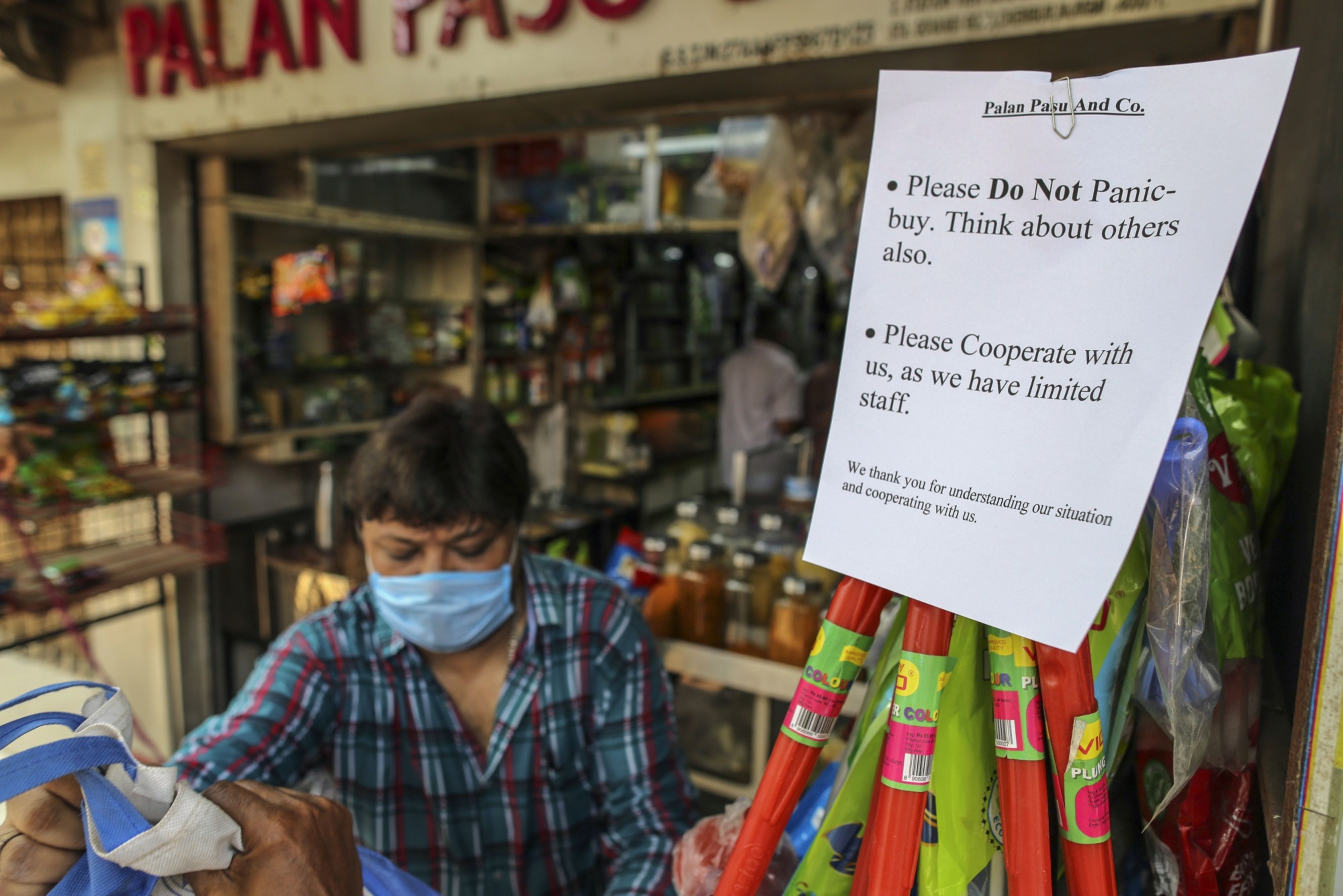
As the confusion over essential goods cleared, production of such items increased nearly two weeks after India put its 1.3 billion citizens under a 21-day lockdown to combat spreading of the new coronavirus pandemic.
“We are seeing improvement in coordination, in terms of worker availability, transportation, supply chain, raw materials, godowns as well as distributor points,” Harsh Mariwala, chairman of Marico Ltd., told BloombergQuint. It's not back to normal but definitely better compared to what it was week ago, he said. Mariwala pegged the manufacturing of essential items to be in the range of 20-30 percent.
Manufacturing of essentials, like packaged atta (wheat flour) and edible oil, managed to pick up pace last week and, according to officials at prominent makers of such items, factories were running at about 40 percent capacity.
Production of several essential goods were running low ever since the lockdown was announced as factories stopped operations in several states on account of a lack of a common list of essential items. BloombergQuint first reported on the issue on March 29. Later that day, the government expanded the list of such items to include hygiene products, including soaps, detergents, sanitary napkins and diapers, among others.
Currently, sanitary napkin manufacturers are running at 20-25 percent capacity, Rajesh Shah, president of Feminine and Infant Hygiene Association of India, told Bloomberg Quint. Johnson & Johnson and Procter & Gamble Hygiene that sells sanitary napkins under the brand name Stayfree and Whisper, respectively, are yet to respond to BloombergQuint's queries.
A prominent biscuits maker said the company's manufacturing facilities were running at 25 percent capacity, while a detergent and shampoo manufacturer said it was in the range of 25-30 percent. That compares with 15-20 percent capacity last week at biscuit factories and less than 10 percent at detergents and soap facilities.
“The situation has eased a bit with approvals for plant operations and movement of trucks coming in,” Shahrukh Khan, executive director (operations) at Dabur India Ltd., told BloombergQuint. “We are deploying special buses to help our workers and staff reach the manufacturing units for producing essential goods.”
Also, ITC Ltd.'s spokesperson, in an email, said the maker of ‘Aashirvaad' atta and biscuits under the brand name ‘Dark Fantasy' and ‘Mom's Magic' had been working closely with state authorities and local administration to ensure manufacturing and distribution activities continue uninterrupted with minimum people involved.
Still, some issues remain.
Availability of raw materials and packing material continues to be a challenge due to restricted movement of trucks, hampering a quick resumption of production of essential goods, Dabur's Khan said.
“While we have used vehicles for transporting essential raw materials and packing materials for hygiene products like hand sanitisers, these are stuck at some state borders,” Khan said.
“A lot of time is being spent on sorting out administrative issues at the state level.”
The Union Ministry of Home Affairs, however, issued a circular on April 3, advising states to inform district authorities and field agencies regarding the clarifications it has made over the last few days on what is considered as essentials so as to avoid any ambiguity at the ground level.
While the central government has permitted movement of trucks, Khan said, it's equally important that these guidelines are properly communicated to authorities across states and to the local police as well to ensure seamless movement of raw materials and finished goods across state borders.
To be sure, an essential item factory needs a certificate from the district industries centre/state government/local police commissioner to resume production, access passes for factory workers and transport vehicles and drivers of these vehicles. Also, private transport to ferry workers while ensuring social distancing norms are met.
Transportation costs have increased due to shortage of drivers. Abhishek Gupta, joint secretary state Bombay Goods Transport Association, said all bookings were done on spot and rates were 10-20 percent higher.
According to an official at a consumer goods maker, truckers are seeking higher rates on some routes despite a contract being in place. But this is done only temporarily till the situation eases out, the official said on the condition of anonymity.
ITC, too, said interstate and local truck movement had been severely impacted, together with the challenge of shortage of manpower in factories. The company, the emailed statement said, though has “progressively obtained permissions in some states, availability of trucks continues to be its biggest challenge”.
The company is exploring localised solutions with help from communities around its factories. “We believe it will take a few more days for the entire ecosystem and process to be streamlined for movement of essential goods,” it said.
Besides restriction on movement of trucks, companies are facing a severe manpower crunch as most workers have migrated back to their hometowns amid the lockdown or don't want to go to work due to fear and stigma. Companies had earlier told BloombergQuint that some workers had been asked to vacate hostels and rentals as owners fear contagion, while in some instances, village authorities warned factory workers that they won't be accepted back if they leave for work at factories.

-
Extracting Value From Battery Scrap Could Be Challenging For India | The Reason Why

A discarded lithium-ion battery still contains valuable materials such as lithium, nickel and cobalt. These can be recovered and reused. When such batteries are crushed and shredded, they produce a dark powder called black mass.
-
One El Nino, India Can Handle. Two Could Break The Granary
India's grain stocks can absorb one bad year, but a second El Nino could drain the buffer in two to three years, economists say.
-
India's Troika Of Good Luck | Joining The Dots
As Jensen Huang's exit drags Nvidia down, a cooling AI trade and resilient earnings have revived investor interest in India. A likely RBI rate hike looms.
-
Talking Points This Week: Leadership Shock At Nvidia, Earnings Strength, And The Fog Over Hormuz
The Anthropic IPO pricing and first trading day, Nvidia's upcoming earnings, and any fresh signals from Iran will set the tone for the following week.
-
Signature Play: The Classic Cocktail Is Dead. Or Is It?
Classic cocktails are disappearing from India's cocktail menus. But they're still being ordered, taught to bartenders and borrowed from. So, who's really having the last drink?
-
A New Samvat Wishlist: Inclusive Prosperity And Human Development
India has strengthened its economic foundations through infrastructure, digital access and enterprise. Its next growth chapter must deepen productivity, create better livelihoods and widen participation in prosperity.
-
Love, Sex Aur Dhokha: The Audacious Plot To Spy On Jensen Huang
A Taipei dinner, a Singapore chip buyer and a suspected Chinese asset: inside the alleged spy operation that got close to NVIDIA's Jensen Huang.
-
Ten Things I Learnt This Samvat
Patience can be a trap. Cheap stocks can stay cheap. Leverage can wipe you out. What did Samvat 2082 teach us? Niraj Shah writes on 10 lessons from the year gone by.
-
Talking Points This Week: Tech Nerves, FII Buying, And A Faraway Banking Shock
The global markets are not shining this Diwali. The exception in the large markets is, India.
-
Midterm Rally Lasted A Day. The Hard Reality Of A Divided US May Last Two Years | Opinion
Between a contested AI boom, a debt ceiling that arrives in 2027 and a president with every incentive to act alone, the next two years may prove more volatile than the first day's rally suggests.









