What Is Production Linked Incentive Scheme? Here's All You Need To Know
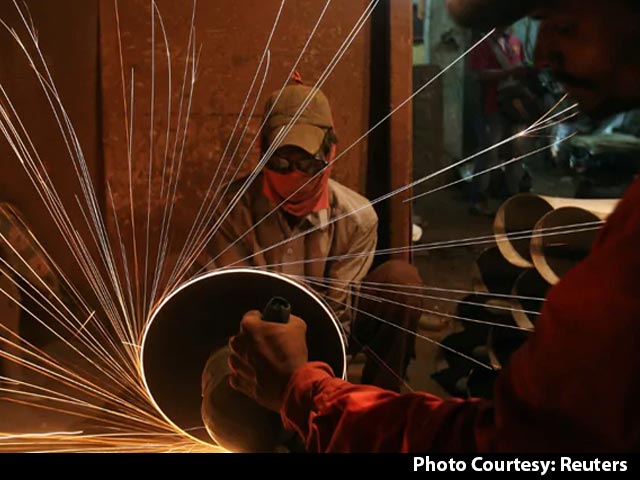
In order to boost domestic manufacturing and make the country globally competitive, the central government introduced the production linked incentive (PLI) scheme in March last year. On Wednesday, February 24, the Union Cabinet approved a Rs 7,350 crore PLI scheme for boosting the local manufacturing and export of IT products such as laptops, tablets, personal computers, and servers. As part of the plan, incentives worth Rs 7,350 crore will be provided over four years for the manufacturing of IT hardware products in the country. The approved PLI scheme for IT hardware will help the country export IT goods worth Rs 2.45 lakh crore. (Also Read: Cabinet Approves ₹ 12,000 Crore Production-Linked Incentive Scheme For Telecom Sector )
On February 17, the Union Cabinet approved Rs 12,195 crore PLI scheme for the telecom and networking products in order to boost the country's manufacturing capabilities and enhance exports. Telecom Minister Ravi Shankar Prasad said that the scheme will ensure the progress of Make-in-India in the telecom equipment space and 5G equipment will also come. The scheme outlay is for a period of five years.
The eligibility under the scheme will be subject to achieving a minimum threshold of the cumulative incremental investment and incremental sales of manufactured goods. The incentive structure ranges between four and seven per cent for different categories and years. The fiscal year 2019-20 will be treated as the base year for computing the cumulative incremental sales of manufactured goods and net of taxes.
With the PLI scheme, the government expects that the country will be well-positioned as a global hub for manufacturing of telecom and networking products. Along with this, an incremental production around Rs. 2 lakh crore is expected to be achieved over five years, according to a recent research report by CARE Ratings. It is also expected that the scheme will bring over Rs. 3,000 crore investment and generate direct and indirect employment. By incentivizing large scale manufacturing in the country, the domestic value addition may increase gradually. The provision of higher incentive to the MSME sector is likely to encourage the domestic telecom manufacturers to become part of the global supply chain.
In November 2020, the government approved the PLI scheme for 10 key sectors which included:
- Advance Chemistry
- Electronic/Technology Products
- Automobiles and components
- Pharmaceuticals drugs
- Telecom and Networking Products
- Textile Products: MMF segment and technical textiles
- Food Products
- High Efficiency Solar PV Modules
- White Goods (ACs & LED)
- Speciality Steel

-
We May Need Another Tukaram Mundhe To Fight Air Pollution | The Reason Why

Developers may install basic measures such as sprinklers and green nets, resume work, and continue violating rules when this equipment stops working.
-
Extracting Value From Battery Scrap Could Be Challenging For India | The Reason Why
A discarded lithium-ion battery still contains valuable materials such as lithium, nickel and cobalt. These can be recovered and reused. When such batteries are crushed and shredded, they produce a dark powder called black mass.
-
One El Nino, India Can Handle. Two Could Break The Granary
India's grain stocks can absorb one bad year, but a second El Nino could drain the buffer in two to three years, economists say.
-
India's Troika Of Good Luck | Joining The Dots
As Jensen Huang's exit drags Nvidia down, a cooling AI trade and resilient earnings have revived investor interest in India. A likely RBI rate hike looms.
-
Talking Points This Week: Leadership Shock At Nvidia, Earnings Strength, And The Fog Over Hormuz
The Anthropic IPO pricing and first trading day, Nvidia's upcoming earnings, and any fresh signals from Iran will set the tone for the following week.
-
Signature Play: The Classic Cocktail Is Dead. Or Is It?
Classic cocktails are disappearing from India's cocktail menus. But they're still being ordered, taught to bartenders and borrowed from. So, who's really having the last drink?
-
A New Samvat Wishlist: Inclusive Prosperity And Human Development
India has strengthened its economic foundations through infrastructure, digital access and enterprise. Its next growth chapter must deepen productivity, create better livelihoods and widen participation in prosperity.
-
Love, Sex Aur Dhokha: The Audacious Plot To Spy On Jensen Huang
A Taipei dinner, a Singapore chip buyer and a suspected Chinese asset: inside the alleged spy operation that got close to NVIDIA's Jensen Huang.
-
Ten Things I Learnt This Samvat
Patience can be a trap. Cheap stocks can stay cheap. Leverage can wipe you out. What did Samvat 2082 teach us? Niraj Shah writes on 10 lessons from the year gone by.
-
Talking Points This Week: Tech Nerves, FII Buying, And A Faraway Banking Shock
The global markets are not shining this Diwali. The exception in the large markets is, India.









