Bids Invited To Set Up Solar Manufacturing Units Under PLI Scheme
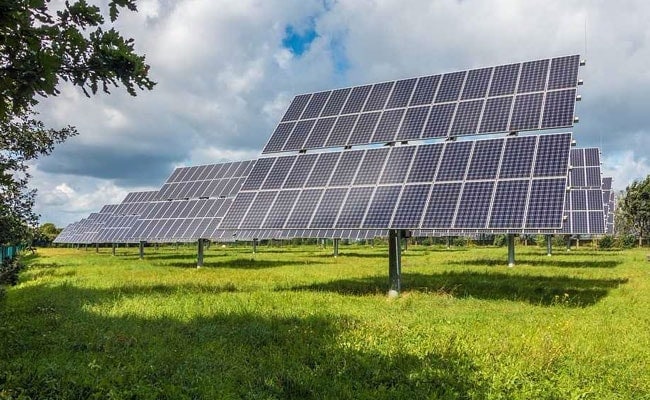
The Indian Renewable Energy Development Agency or IREDA recently invited bids to set up solar manufacturing units, as part of the government's Rs 4,500-crore production linked incentive (PLI) scheme. According to a press release by the Ministry of New and Renewable Energy issued on Friday, June 11, the last date for submitting the application for the project is set as June 30, while the selection process for the successful bidders will be completed by July 30, 2021.
The government had delegated the IREDA – a government enterprise under the administration of the Minister of New and Renewable Energy, as the main implementing agency for the scheme. Earlier in April 2021, the government approved the production-linked incentive scheme worth Rs 4,500 crore in order to boost domestic manufacturing of solar photovoltaic modules.
According to details shared in the press release, the organisation had floated the invitations for the application document on May 25, regarding the scheme, and the electronic application process went live on May 31, 2021.
For this particular project, the applicants are required to set-up either a brownfield or greenfield manufacturing facility for the entire allotted capacity. The ministry added that setting up a mix of brownfield and greenfield facilities under the scheme is not allowed. Also, the minimum capacity of the solar manufacturing unit to be installed is set as 1,000 megawatt. The incentive will be given to the successful bidders annually for five years.
According to the government, the production-linked incentive scheme is likely to generate a direct employment of around 30,000 and an indirect employment of 1.2 lakh. The scheme is targeted towards adding 10,000 MW manufacturing capacity with integrated solar photovoltaic modules, that entails a direct investment of Rs 17,200 crore.
The solar photovoltaic modules will ease the dependence on imports in the electricity sector and will also boost the Aatmanirbhar Bharat program. As stated by the government in April 2021, the manufacturers for the scheme will be selected through a transparent competitive bidding process.

-
Signature Play: The Classic Cocktail Is Dead. Or Is It?

Classic cocktails are disappearing from India's cocktail menus. But they're still being ordered, taught to bartenders and borrowed from. So, who's really having the last drink?
-
A New Samvat Wishlist: Inclusive Prosperity And Human Development
India has strengthened its economic foundations through infrastructure, digital access and enterprise. Its next growth chapter must deepen productivity, create better livelihoods and widen participation in prosperity.
-
Love, Sex Aur Dhokha: The Audacious Plot To Spy On Jensen Huang
A Taipei dinner, a Singapore chip buyer and a suspected Chinese asset: inside the alleged spy operation that got close to NVIDIA's Jensen Huang.
-
Ten Things I Learnt This Samvat
Patience can be a trap. Cheap stocks can stay cheap. Leverage can wipe you out. What did Samvat 2082 teach us? Niraj Shah writes on 10 lessons from the year gone by.
-
Talking Points This Week: Tech Nerves, FII Buying, And A Faraway Banking Shock
The global markets are not shining this Diwali. The exception in the large markets is, India.
-
Midterm Rally Lasted A Day. The Hard Reality Of A Divided US May Last Two Years | Opinion
Between a contested AI boom, a debt ceiling that arrives in 2027 and a president with every incentive to act alone, the next two years may prove more volatile than the first day's rally suggests.
-
Blue Wave Will Derail the AI Trade but Won't Dismantle the AI Era | Unhedged Position
The Democrats' sweep of the US Congress will see politics collide with economic forces both over the long and short term.
-
It's Time To Take The GST Council's Bet On Trust Global
Payment records can prove India's services exports, and clear, proportionate rules can bring foreign digital sellers into the tax net.
-
Opinion | India at 38: From Innovation Overperformer to Innovation Powerhouse
India now has 453 VC-backed deep science startups, 18 of them late-stage, after 117 percent growth since 2020. Laurus Labs, at USD 9.3 billion, is the most valuable deep science company in any middle-income economy outside China.









