Private Equity Firms Eye Bonanza In Residential Real Estate Space: Report
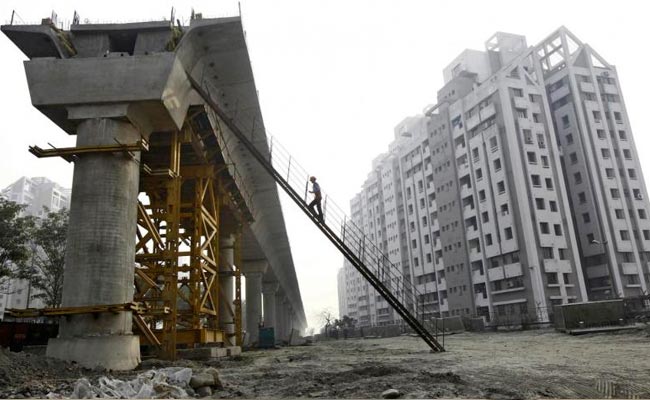
Nation's cash-starved residential real estate market is set to get a boost from foreign and domestic private equity firms, which are lining up big bets worth hundreds of millions of dollars for the sector.
The domestic residential real estate space has been in a rut for years with failed and delayed projects putting buyers off. Developers more recently have been hit by a credit squeeze as banks struggle with bad debts and a crunch in the shadow banking sector.
Private equity firms are now swooping in to buy assets at attractive valuations, say industry insiders, as regulatory changes and a more dovish monetary policy outlook bode well for the sector.
"With major impetus being given to affordable housing ... PE investors are sensing a big opportunity in this segment," said Anuj Puri, chairman at Anarock, a real estate consultancy firm.
"The expected 8-10 per cent annual return in the affordable segment of residential real estate is attracting not just domestic investors but also foreign entities from the US, Singapore and Canada."
Blackstone Group, one of the largest owners of commercial real estate in India, this month agreed to buy a majority stake in Aadhar Housing Finance - an affordable housing project, and committed 800 crore rupees ($112 million) of additional equity to the asset.
Piramal Enterprises and Ivanhoe Cambridge, the real estate arm of Canadian fund CDPQ, last week announced a $70.15 million investment in Palava - a project of Lodha Group on the outskirts of country's financial hub, Mumbai.
Several domestic real estate funds, including HDFC Property Fund and Kotak Realty Fund, are also scouting opportunities in the real estate space, say industry sources aware of the talks.
And one industry source said that Canadian asset management firm Brookfield Asset Management is exploring roughly half a dozen residential real estate investments and it aims to nearly double its bets in the space to over $1 billion, from $450 million in the coming year.
The Abu Dhabi Investment Authority (ADIA), along with Hines Investments is also poised to announce an investment in the space, a source involved in the deal said.
Brookfield declined to comment, HDFC Property, Kotak Realty, ADIA and Hines were not immediately available for comment.
TIMING IT RIGHT
Rising bad debts and real estate project failures have made banks cautious on lending to developers, leading to a slowdown in the property market that relies heavily on borrowing for both home building and buying.
Developers in the country were typically averse to private equity as it is more expensive funding compared to debt they could raise from banks, or non-bank finance companies (NBFCs).
However, with funding from NBFCs drying up in the aftermath of a string of defaults at lender IL&FS, developers are being forced to explore debt and equity funding from private equity.
"For the PE players the valuations are probably a lot more attractive today than they were four to five years ago," said Anshul Jain, managing director at Cushman and Wakefield India.
"From a risk perspective too, risk is slightly lower as some green-shoots are visible in the segment. PE can see that pricing and sale pricing is at an all-time low, so valuations are at an all-time low, so it's a good time for them to enter."
The government has also announced several incentives for the real estate sector in the interim budget earlier this month.
"This is a very positive budget from a real estate point of view," said Samir Jasuja, managing director of PropEquity, an online real estate data and analytics platform.
The government announced a total tax rebate for individuals with annual income of up to 5 lakh rupees, and offered some tax incentives that would benefit both property developers and potential homebuyers.
These measures, along with the rate cut by the central bank last week, are expected to give an added push to the segment.

-
'Never Seen This Level Of Negativity': Sandeep Tandon Says The Next Rally May Be Closer Than You Think

Veteran investor Sandeep Tandon says foreign selling is easing, large-caps are due a comeback and mid-caps are crowded, while he turns positive on gold, power and pharma this Diwali.
-
Indians Stay With Family, Not In Hotels | The Reason Why
India still lacks enough clean, reliable and affordable hotels for budget-conscious travellers.
-
The Economic Imperative: Analysing The Material Driving Force Behind India-Canada Strategic Reset
This economic complementarity is further reinforced by deep institutional investment ties and talent mobility, which form the bedrock of the bilateral framework.
-
Medicine Pricing: Where Must Profit Stop?
India must confront excessive margins, hidden incentives and regulatory gaps that threaten the integrity of medicine.
-
Why Amazon And Flipkart Are Struggling To Beat Meesho In India's Smaller Cities
With 274 million users and lowest-cost logistics, Meesho is defending its value commerce crown against giants like Amazon and Flipkart.
-
High US Salaries, No Green Card Certainty: The Financial Calculation Facing Indian H-1B Families
The suspension of PERM processing at eight technology employers does not cancel existing H-1B visas. What it does is force a question many Indian families have been avoiding: is the US salary worth tying your career and family plans to one employer?
-
Swiggy vs Eternal: Food Delivery's Two Rivals Are No Longer In The Same Race
Eternal is building a private AI assistant, dark.ai. Swiggy is still working out how to make Instamart pay, with an operating loss of Rs 895 crore in the July-September quarter while Blinkit stayed profitable.
-
Where You Live Shapes How You Get To Work | The Reason Why
Two-wheelers are the most popular way to get to work in India, accounting for nearly 43% of workplace commutes.
-
Unhedged Position: Can India See An Indonesia-Style Time Correction?
The Nifty is trading below levels it first clocked in 2024. Is there, then, as I have suggested in the headline, potential that the current time correction drags on painfully for the next three-five, even ten years?
-
Navigating Friction And Energy Realities: An Analysis Of Marco Rubio's October Visit To India
Occurring at a critical juncture marked by stalled trade negotiations and escalating geopolitical pressures over global energy supplies, the visit offers a profound window into modern US-India relations.










