Prime Minister Narendra Modi Asks Top Bankers To Ensure Stable Credit Growth
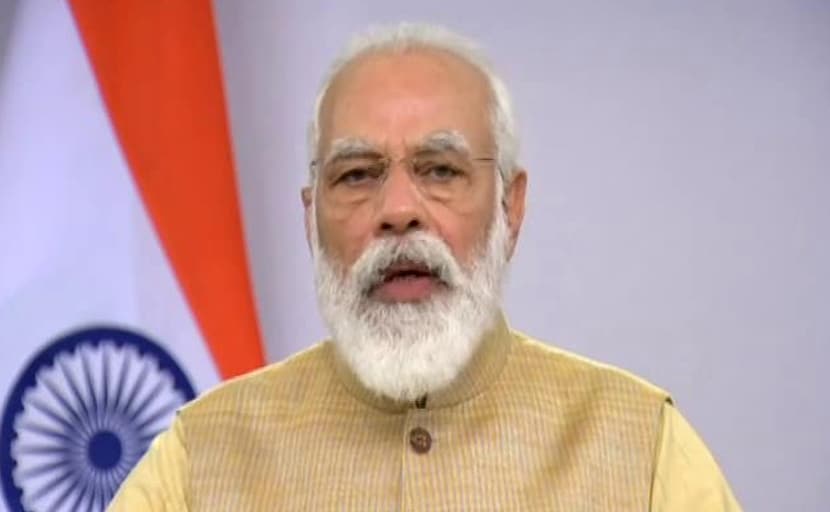
Emphasising on the crucial role of the financial sector in supporting the economy, Prime Minister Narendra Modi on Wednesday asked bankers to take a relook at their practices to ensure stable credit growth and not to turn down bankable proposals on apprehensions of prospective bad loans.
During a three-hour long virtual meeting with CEOs of large public and private sector banks along with heads of non-banking financial companies (NBFCs), the Prime Minister assured them that the government is ready to take all steps to support the financial sector.
"Had an extensive interaction with stakeholders from banks and NBFCs to deliberate on the roadmap for economic growth, helping entrepreneurs and a range of other aspects," he tweeted.
Prime Minister Modi exhorted bankers to motivate small entrepreneurs, self-help groups and farmers to use institutional credit in order to grow.
"Each bank needs to introspect and take a relook at its practices to ensure stable credit growth. Banks should not treat all proposals with the same yardstick and need to distinguish and identify bankable proposals and to ensure that these don't suffer in the name of past NPAs," an official statement quoted him as saying.
It was emphasised that the government is firmly behind the banking system, the statement said.
"Banks should adopt fintech like centralised data platforms, digital documentation and collaborative use of information to move towards digital acquisition of customers. This will help increase credit penetration, increase ease for customers, lower costs for banks and also reduce frauds," the Prime Minister said.
Stating that India has built a robust, low cost infrastructure which enables every Indian to undertake digital transactions of any size with great ease, he asked banks and financial institutions to actively promote the use of RuPay and UPI among their customers.
The progress of schemes like emergency credit line for MSMEs, additional Kisan Credit Cards, liquidity window for NBFCs and micro finance institutions was also reviewed, the statement said.
While it was noted that significant progress has been made in most schemes, banks need to be proactive and actively engage with the intended beneficiaries to ensure that the credit support reaches them in a timely manner during this period of crisis, it said.
Those who attended the brain-storming session included SBI Chairman Rajnish Kumar, PNB Managing Director S S Mallikarjuna Rao, ICICI Bank Managing Director Sandeep Bakhshi, HDFC Bank Managing Director Aditya Puri and HDFC Ltd Managing Director Renu Sud Karnad, among others, sources said.
Following the outbreak of COVID-19, bank credit growth tumbled to 7 per cent in May from 11.5 per cent a year ago. The growth is likely to remain muted during the current fiscal due to uncertainty and consequent risk aversion on part of borrowers as well as lenders.
To push credit growth, the RBI brought down its benchmark lending rate to a historic low of 4 per cent. However, corporate and retail borrowers are still shying away from taking loans.
In the absence of enough loan demand, banks are forced to park their money with the Reserve Bank under the reverse repo window.
The Reserve Bank of India (RBI) eased the monetary policy, reduced reserve requirements and introduced liquidity in the economy to the extent of almost 3.9 per cent of GDP.
Banks and other financial institutions are implementing the bulk of the measures announced in May under the Rs 20.97-lakh crore economic package to deal with the coronavirus crisis.

-
We May Need Another Tukaram Mundhe To Fight Air Pollution | The Reason Why

Developers may install basic measures such as sprinklers and green nets, resume work, and continue violating rules when this equipment stops working.
-
Extracting Value From Battery Scrap Could Be Challenging For India | The Reason Why
A discarded lithium-ion battery still contains valuable materials such as lithium, nickel and cobalt. These can be recovered and reused. When such batteries are crushed and shredded, they produce a dark powder called black mass.
-
One El Nino, India Can Handle. Two Could Break The Granary
India's grain stocks can absorb one bad year, but a second El Nino could drain the buffer in two to three years, economists say.
-
India's Troika Of Good Luck | Joining The Dots
As Jensen Huang's exit drags Nvidia down, a cooling AI trade and resilient earnings have revived investor interest in India. A likely RBI rate hike looms.
-
Talking Points This Week: Leadership Shock At Nvidia, Earnings Strength, And The Fog Over Hormuz
The Anthropic IPO pricing and first trading day, Nvidia's upcoming earnings, and any fresh signals from Iran will set the tone for the following week.
-
Signature Play: The Classic Cocktail Is Dead. Or Is It?
Classic cocktails are disappearing from India's cocktail menus. But they're still being ordered, taught to bartenders and borrowed from. So, who's really having the last drink?
-
A New Samvat Wishlist: Inclusive Prosperity And Human Development
India has strengthened its economic foundations through infrastructure, digital access and enterprise. Its next growth chapter must deepen productivity, create better livelihoods and widen participation in prosperity.
-
Love, Sex Aur Dhokha: The Audacious Plot To Spy On Jensen Huang
A Taipei dinner, a Singapore chip buyer and a suspected Chinese asset: inside the alleged spy operation that got close to NVIDIA's Jensen Huang.
-
Ten Things I Learnt This Samvat
Patience can be a trap. Cheap stocks can stay cheap. Leverage can wipe you out. What did Samvat 2082 teach us? Niraj Shah writes on 10 lessons from the year gone by.
-
Talking Points This Week: Tech Nerves, FII Buying, And A Faraway Banking Shock
The global markets are not shining this Diwali. The exception in the large markets is, India.









