Prices To Cool By Rs 5-6/Kg After Centre's Move To Sell Wheat In Open Market: Millers
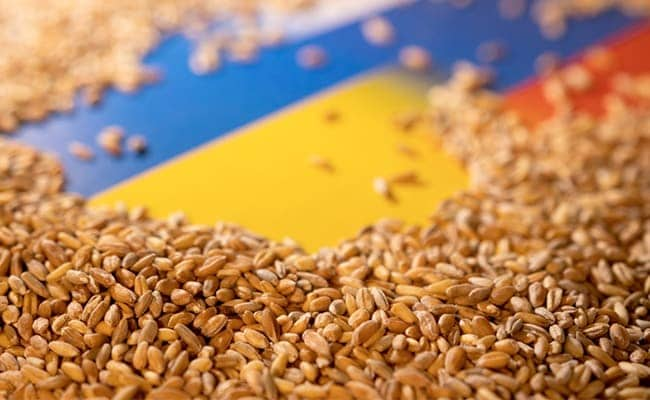
Roller Flour Millers Federation of India (RFMFI) on Thursday hailed the government's decision to sell 30 lakh tonnes of wheat in the open market and said the move will lead to a reduction in wheat and wheat flour (atta) prices by Rs 5-6 per kg.
The Centre on Wednesday announced the sale of 30 lakh tonnes of wheat in the open market from its buffer stock to check the rise in prices of wheat and wheat flour (atta).
The stocks will be sold by the state-owned Food Corporation of India (FCI) during the next two months through various channels.
While wheat will be sold to bulk consumers like flour millers through e-auction, the FCI will offer wheat at Rs 23.50 per kg to public sector units/cooperatives/ federations, Kendriya Bhandar/NCCF/NAFED for converting the grain to atta and offer it to the public at a maximum retail price (MRP) of Rs 29.50 per kg.
"We welcome the government decision. It should have been taken a month ago. It is a right step. Wholesale and retail prices will come down by Rs 5-6 per kg," RFMFI President Pramod Kumar told PTI.
As per the government data, the average price of wheat across major cities stood at Rs 33.43 per kilogram on Wednesday, up from Rs 28.24 per kg a year ago. Average prices of atta (wheat flour) stood at Rs 37.95 per kg against Rs 31.41/kg a year ago.
The FCI will offload 30 lakh tonnes of wheat from the central pool stock to the market through various routes under the Open Market Sale Scheme (Domestic), the food ministry said in a statement on Wednesday.
The ministry had said that sales of wheat in the market through this scheme will have an "immediate impact on the soaring wheat and atta prices and will help contain the rising prices and will bring much relief to the common man".
In order to address the rising prices of wheat and atta, the group of ministers headed by Home Minister Amit Shah met on Wednesday and discussed the buffer stock position of the country.
The committee decided that wheat will be offered to the flour millers, bulk buyers etc through e-auction for a maximum quantity of 3,000 tonnes per buyer per auction.
Wheat will also be offered to states and Union Territories for their schemes without e-auction.
"Wheat will be offered at a concessional rate of Rs 2,350 per quintal to government PSUs/cooperatives/federations, Kendriya Bhandar/NCCF/NAFED etc without e-auction.
"The sale under this special scheme will be subject to the stipulation that the buyer will convert wheat to atta and offer it to the public at a maximum retail price of Rs 29.50 per Kg," the ministry had said.
The FCI will offload wheat within the next two months to the market. It will start the process of e-auction of stocks immediately throughout the country from January to March 2023.
FCI, the government's nodal agency for procurement and distribution of foodgrains, had around 171.70 lakh tonnes of wheat as on January 1 in the buffer stock.
Under the OMSS policy, the government allows FCI to sell food grains, especially wheat and rice, at pre-determined prices in the open market from time to time to bulk consumers and private traders.
The purpose is to boost the supply during the lean season and moderate the general open market prices.
The Centre had banned wheat exports in May last year to control prices, after a slight fall in domestic production and a sharp decline in the FCI's procurement for the central pool.
India's wheat production fell to 106.84 million tonnes in the 2021-22 crop year (July-June) from 109.59 million tonnes in the previous year due to heat waves in a few states. The procurement fell sharply to 19 million tonnes this year from around 43 million tonnes last year.
The area under coverage for wheat crops in the current rabi (winter-sown) season is slightly higher. The procurement of new wheat crops would commence from April 2023
(Except for the headline, this story has not been edited by NDTV staff and is published from a syndicated feed.)

-
Getting To Work Costs Women More | The Reason Why

It is not just about women paying more than men. It is about women paying much more in cities than in villages.
-
AI Bias In Investing Cannot Be Eliminated, But It Can Be Governed
Framing is a particularly important example as identical financial information presented in terms of gains rather than losses can lead an LLM to reach a different assessment.
-
Joining The Dots | Dark Skies, Steady Diya: Why Hope Holds This Diwali
With war, a weak rupee and foreign outflows weighing on sentiment, policymakers at the NDTV World Summit and market veterans at NDTV Profit Ignite: Diwali Edition offered the same advice: stay invested and filter out the noise.
-
The Curious Case of Equitas Small Finance Bank And A CEO Who Quit For Stock
PN Vasudevan believes persistent investor concerns over a perceived conflict of interest had become a governance overhang on Equitas Small Finance Bank's stock, even as the lender improved profitability and asset quality.
-
Talking Points This Week: AI Cash Burn, A Tiger Comeback And An India That Still Finds Its Own Path
India is not immune to higher oil or tighter global liquidity, yet its earnings base is broader, its domestic policy levers are still available.
-
Foreign Investors Own Half Of HDFC Bank and ICICI Bank. An LTCG Cut Could Matter Most Here
Foreign portfolio investors have US$115 billion parked in HDFC Bank, ICICI Bank. If the government cuts long-term capital gains tax, Jefferies says returning foreign money could land here first.
-
'Never Seen This Level Of Negativity': Sandeep Tandon Says The Next Rally May Be Closer Than You Think
Veteran investor Sandeep Tandon says foreign selling is easing, large-caps are due a comeback and mid-caps are crowded, while he turns positive on gold, power and pharma this Diwali.
-
Indians Stay With Family, Not In Hotels | The Reason Why
India still lacks enough clean, reliable and affordable hotels for budget-conscious travellers.
-
The Economic Imperative: Analysing The Material Driving Force Behind India-Canada Strategic Reset
This economic complementarity is further reinforced by deep institutional investment ties and talent mobility, which form the bedrock of the bilateral framework.
-
Medicine Pricing: Where Must Profit Stop?
India must confront excessive margins, hidden incentives and regulatory gaps that threaten the integrity of medicine.










