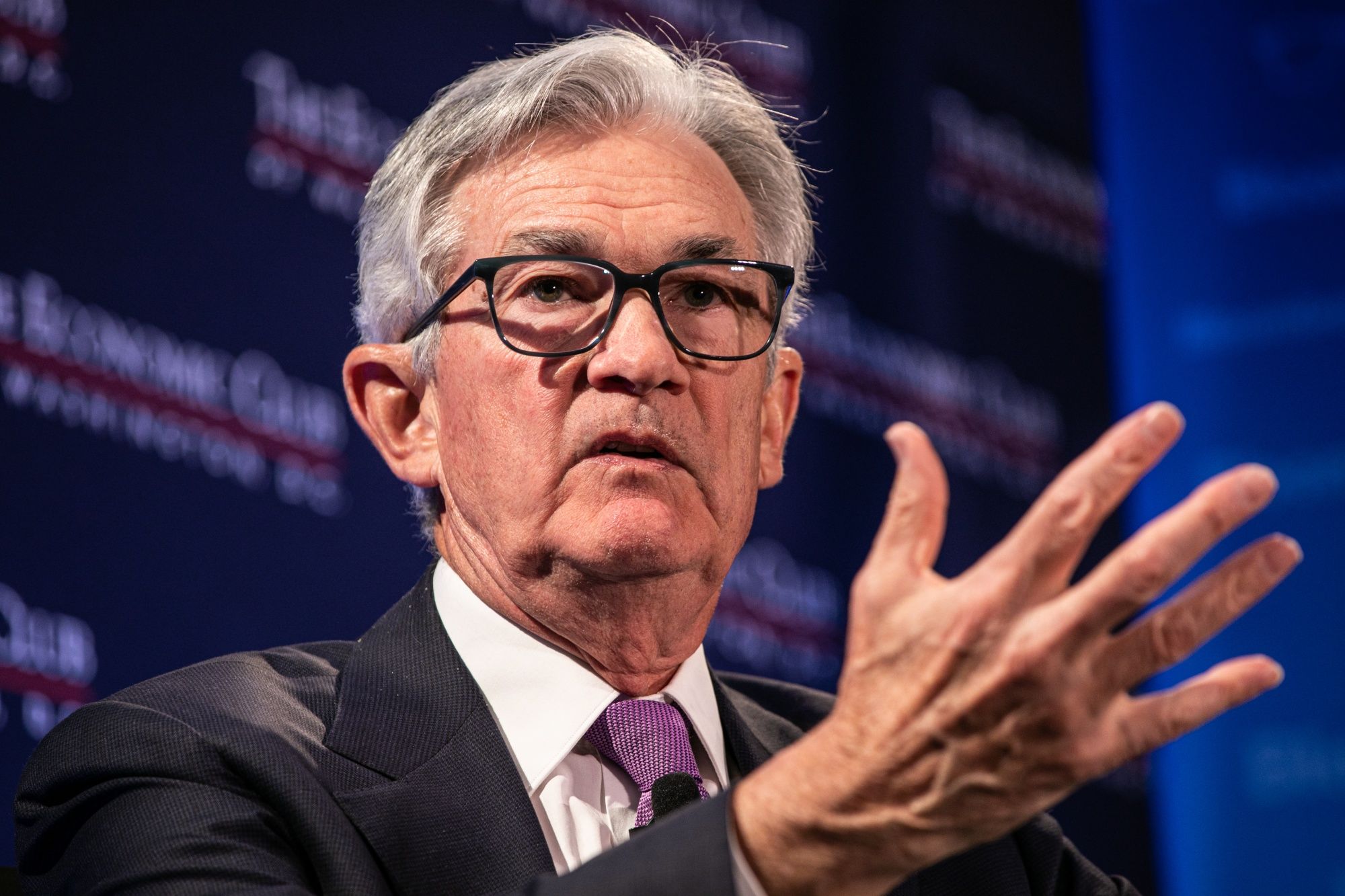
(Bloomberg) -- For a lesson in the real-time pitfalls of Federal Reserve messaging, consider the market reaction to Jerome Powell's commentary on the role of Wall Street in subduing inflation.
Stocks and Treasuries rose after the central bank held interest rates steady and the Fed chair name-checked rising bond yields in helping to tighten financial conditions — potentially serving as a substitute for additional interest-rate hikes down the road.
Policy-sensitive two-year yields, cited by Powell this week, duly plummeted after his remarks, along with those on longer-dated bonds. That has helped to ease the latest gut-wrenching Treasury rout that has rippled through the global economy — hitting asset prices, squeezing home buyers and raising the cost of doing business for Corporate America and beyond.
While the Fed kept open the prospect of additional policy action on strong economic growth, Powell speculated that Treasury yields at lofty levels could instead help the central bank keep monetary conditions restrictive to wring out the inflationary excesses of this business cycle.
The problem now: Fed officials risk a no-win position if the financial climate eases materially on expectations – arguably stoked by Powell – that the US central bank is now done with its aggressive tightening campaign.
“One problem, I think, the chairman has at this point is by talking to markets in a supportive way, stocks rally, bond yields fall — that's loosening financial conditions,” said Bill Dudley, the former president of the New York Fed, said on Bloomberg Television. “That's removing some of the restraint that was creating some impetus for not tightening monetary policy further.”
US yields were already easing in the run-up to the Fed decision after the Treasury announced plans to sell a lower-than-expected amount of securities at its quarterly refunding auctions next week, while a gauge of US factory activity also came in below expectations.
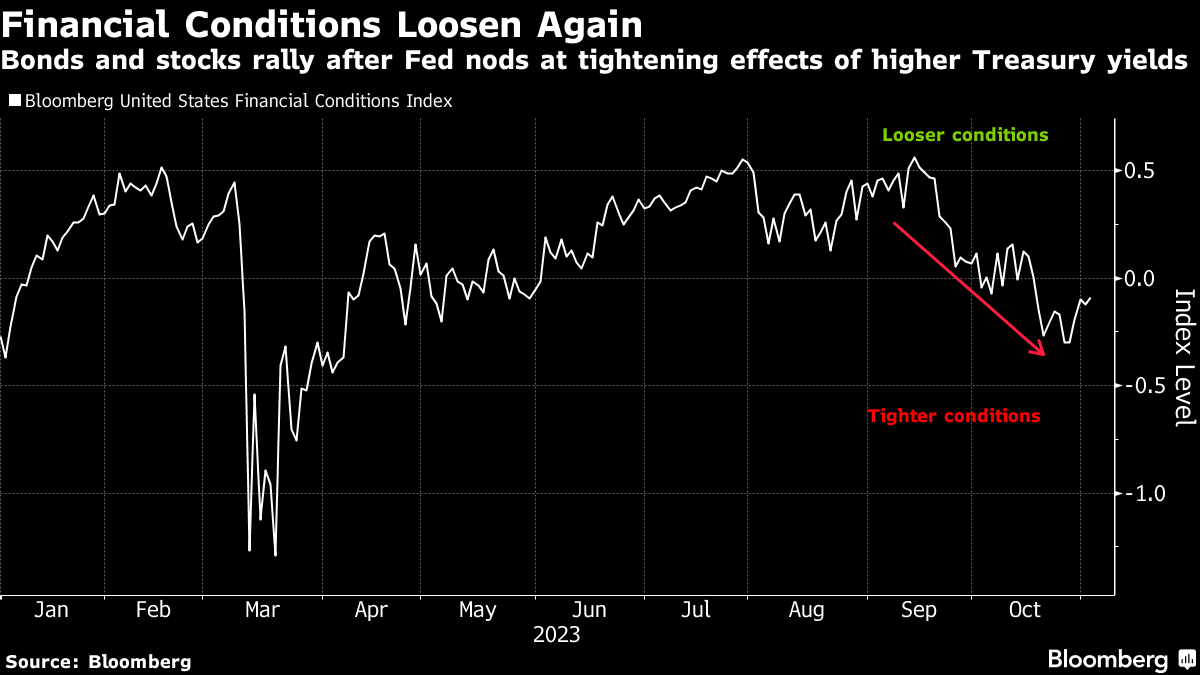
More broadly, the Bloomberg US Financial Conditions Index — which measures tightness in money, bond and stock markets — has turned more restrictive for three straight months as higher rates fueled a big retreat in the S&P 500.
While Powell on Wednesday kept open the possibility of a fresh hike in December, traders weighed on the significance of the Federal Open Market Committee's view that “tighter financial and credit conditions for households and business are likely to weigh on economic activity, hiring and inflation.”
Yet the challenge of adding financial conditions in the latest statement is that they can go up and down, former Fed Vice Chair Richard Clarida told Bloomberg Television, adding that policymakers may come to regret focusing on volatile market data.
“With Powell seeing persistence of tighter financial conditions as ‘critical', we can't help but wonder whether yesterday's dovish market reaction could incentivize some hawkish pushback, especially if it continued,” wrote Jim Reid, head of European and US credit strategy at Deutsche Bank AG.
In any case, there are clear reasons for Wall Street's fixation on how asset prices interact with the real economy, by driving the cost of funding for consumers and businesses while influencing demand. Standard Chartered, for its part, estimates that a more restrictive financing climate could cut more than a percentage point off baseline economic growth over the year ahead.
“The run-up in mortgage, corporate and Treasury yields, combined with a strong USD and weaker equities, raise the expected drag on the US economy,” the bank's analysts including Dan Pan wrote in a research note. “The implied downside risk to growth might be underestimated, especially if the rise in financial stability risks is not fully captured by equity or corporate bond market moves.”
--With assistance from Justina Lee.
More stories like this are available on bloomberg.com
©2023 Bloomberg L.P.
Essential Business Intelligence, Sharp Market Insights, Practical Personal Finance Advice, Daily Fuel, Gold and Silver Prices and Latest Stories — On NDTV Profit.