You Can Access These Banking Services At Designated Post Offices
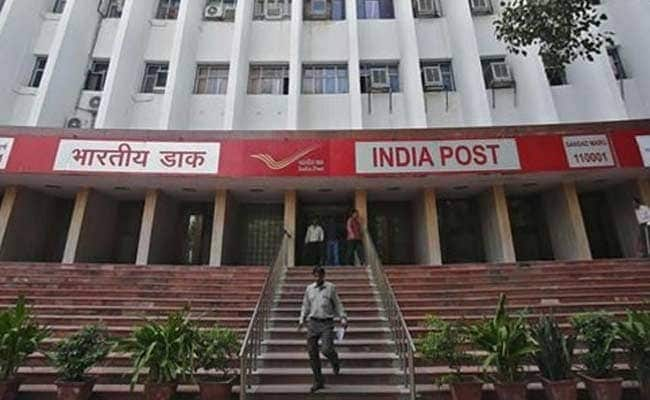
India Post provides a variety of banking and remittance services to the public, such as government-sponsored small savings schemes, at designated post offices. The financial products offered by India Post - which has a network of over 1.5 lakh post offices across the country - range from the savings bank account, or Post Office Savings Account, to the fixed deposits account (Post Office Time Deposit Savings Scheme). Meanwhile, India Post Payments Bank (IPPB) - also under the ambit of Department of Posts - offers a separate portfolio of bank accounts, and other financial services such as money transfer, direct benefit transfer services and bill/utility payments.
Here's a lowdown of various banking services one can access at designated post offices under India Post as well as India Post Payments Bank:
Small savings schemes at designated post offices under India Post
One can access nine types of government-sponsored small savings schemes at designated post offices. India Post pays interest rates to the tune of 4-8.7 per cent per annum on investment in these savings schemes, according to its website (indiapost.gov.in).
| Small savings scheme | Interest rate |
|---|---|
| Post Office Savings Account | 4% |
| National Savings Recurring Deposit Account | 7.3% |
| National Savings Time Deposit Account | 7-7.8% |
| National Savings Monthly Income Account | 7.3% |
| Senior Citizens Savings Scheme | 8.7% |
| Public Provident Fund | 8% |
| National Savings Certificates | 8% |
| Kisan Vikas Patra | 7.7% |
| Sukanya Samriddhi | 8.5% |
| (Source: India Post website) | |
Besides, India Post office also provides National Pension System (NPS) (all citizens model) accounts. NPS is a voluntary pension scheme managed by the Pension Fund Regulatory and Development Authority (PFRDA). (Also read: How post office NPS account works)
Investment limits and lock-in periods applicable to small savings schemes in designated post offices
| Savings scheme | Maturity period | Investment limit |
|---|---|---|
| Post Office Savings Account | - | Minimum Rs. 20 for opening account |
| National Savings Recurring Deposit Account | 5 years | Minimum Rs. 10 per month, no maximum limit |
| National Savings Time Deposit Account | 1/2/3/5 years | Minimum Rs. 200, no maximum limit |
| National Savings Monthly Income Account | 5 years | Rs. 1,500 - Rs. 4.5 lakh in single account/Rs. 9 lakh in joint account |
| Senior Citizens Savings Scheme | 5 years | Rs. 1,000 - Rs. 15 lakh |
| Public Provident Fund | 15 years | Rs. 500 - Rs. 1.5 lakh per financial year |
| National Savings Certificates | 5 years | Minimum Rs. 100, no maximum limit |
| Kisan Vikas Patra | 2.5 years | Minimum Rs. 1,000, no maximum limit |
| Sukanya Samriddhi | - | Rs. 1,000 - Rs. 1.5 lakh per financial year |
| (Source: India Post website) | ||
The savings schemes of Time Deposit, Recurring Deposit, Monthly Income, Senior Citizens, PPF, NSC and Kisan Vikas Patra come with a lock-in period - also known as maturity period - of one year to 15 years, according to the India Post website.
Banking services provided by India Post Payments Bank
Savings account or current account - at post office and India Post Payments Bank
India Post Payments Bank
India Post Payments Bank offers three types of savings bank accounts: regular, digital and basic. Among other features, all three types of IPPB savings bank accounts do not require the account holder to maintain any particular balance, meaning the account can be operated with zero balance.
Here are details about the four types of bank accounts currently offered by the payments bank under India Post (India Post Payments Bank):
| Type of account | Interest rate | Minimum amount for opening account | Maximum balance allowed |
|---|---|---|---|
| Post Office Savings Account | 4% per annum | Rs 20 | - |
| IPPB Regular Savings Account | 4% per annum | Nil | Rs 1 lakh (end of day balance) |
| IPPB Basic Savings Account | 4% per annum | Nil | Rs 1 lakh (end of day balance) |
| IPPB Current Account | NA | Nil | Rs 1 lakh (end of day balance) |
| (Source: India Post, India Post Payments Bank websites) | |||
IPPB, however, requires its current account holders to maintain a monthly average balance - the average of daily balances in a month - of Rs. 1,000, according to the payments bank's website (ippbonline.com).
Post office
A Post Office Savings Account can be opened against a minimum deposit of Rs 20. For a savings account without subscription to the post office's cheque book facility, a minimum balance of Rs 50 to ensure operability. For subscription to the cheque book facility, the savings account is to be opened with a minimum deposit of Rs 500, and for this purpose, minimum balance of Rs 500 is required to be maintained, according to the post office website. India Post also provides internet banking services for its savings bank accounts. Deposit in a post office savings account fetches interest at the rate of 4 per cent per annum, according to the India Post website.(Also read: Five types of bank accounts one can operate in a post office)
One can also access a variety of financial products at designated India Post branches:
Post office certificate-based investment schemes
One can set up a variety of bank accounts at the post office. Out of the nine small savings schemes, Kisan Vikas Patra and National Savings Certificate (NSC) are certificate-based investment schemes.
NPS account in a post office
National Pension System (NPS) enables the subscriber to set his or her own choice for fund allocation to different asset classes, such as government securities, equity market instruments, corporate debt and alternative investment funds.
Post office account income tax benefits
(Also read: Investment choices available under NPS explained)
Investment in three of these small savings schemes - KVP, NSC and NPS - is eligible for a deduction in taxable individual income up to Rs. 1.5 lakh in a financial year under Section 80C of the Income Tax Act. These post office schemes are: National Savings Time Deposit (five years), Public Provident Fund (15-year) and Senior Citizen Savings Scheme. Investment in NPS (all citizen model) is eligible for an additional tax benefit up to Rs.50,000 in a financial year, according to the post office website.

-
Your iPhone Costs 12 Grams Of Gold, A Car About 100. What Does Your Life Weigh?

Measured in rupees, almost everything looks more expensive than it did a generation ago. Measured in grams of gold, a lot of it has become cheaper.
-
Gold Is Rs 22,000 Cheaper Than A Month Ago. Should You Buy Amid The Wedding Season?
Gold's potential slide to $3,500 could save around Rs 4,700 per 10 grams, but a soft inflation print could just as easily push prices back up. One way to split the risk is to buy in parts, some now and the rest after the Fed's Dec. 9 decision.
-
AI Agents Are Gaining Power. Who Governs Them?
Artificial intelligence agents promise to transform productivity by moving machines from assisting decisions to executing them. But as organisations delegate greater authority to these AI-agents, they must first establish who controls that authority and who remains accountable when things go wrong.
-
Why Swapping Your Old Gold Can Trigger A Rs 5 Lakh Tax Bill, And How You Can Avoid It Legally
Swapping old gold for new is taxed as a sale and a fresh purchase. Getting your own gold remade can cut most of that bill, though it has its own costs.
-
The AI Trade is Done. The Real Opportunity for Investors Starts in 2027 | Unhedged Position
As pureplay AI stocks plunge and circular, capex-led financing unwinds, 2027 is set to be a year of reckoning for AI companies. Yet the bust clears the way for a better opportunity for investors in 2027 -- shifting the spotlight from AI builders to the companies using AI.
-
Leadership As Mission: Why The Age Of AI Demands More Human Leadership
Debjani Ghosh examines how AI is changing leadership, arguing that its success must be measured by its impact on people and the accountability of those guiding its use.
-
We May Need Another Tukaram Mundhe To Fight Air Pollution | The Reason Why
Developers may install basic measures such as sprinklers and green nets, resume work, and continue violating rules when this equipment stops working.
-
Extracting Value From Battery Scrap Could Be Challenging For India | The Reason Why
A discarded lithium-ion battery still contains valuable materials such as lithium, nickel and cobalt. These can be recovered and reused. When such batteries are crushed and shredded, they produce a dark powder called black mass.
-
One El Nino, India Can Handle. Two Could Break The Granary
India's grain stocks can absorb one bad year, but a second El Nino could drain the buffer in two to three years, economists say.
-
India's Troika Of Good Luck | Joining The Dots
As Jensen Huang's exit drags Nvidia down, a cooling AI trade and resilient earnings have revived investor interest in India. A likely RBI rate hike looms.









