Post Office Saving Schemes That Offer 6.6-8.3% Interest Rate
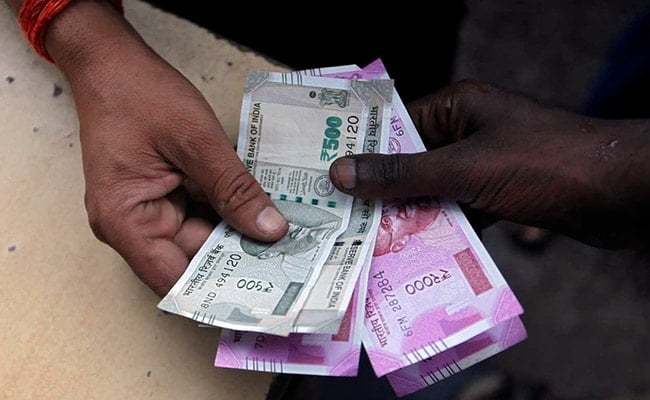
India Post, which runs the postal network of the country, offers nine saving schemes. Saving schemes in post offices offer interest rates between 4 per cent and 8.3 per cent, according to India Post's website, indiapost.gov.in. The lowest interest rate in Indian post office saving schemes is offered on post office saving accounts. The rest of the saving schemes in post office - recurring deposits, fixed deposits, post office monthly income scheme, senior citizen saving scheme, 15-year public provident fund account, national savings certificate, kisan vikas patra (KVP), and sukanya samriddhi account - offer interest rates between 6.6 per cent and 8.3 per cent.
Given below are saving schemes in post office with interest rates between 6.6% and 8.3%:
Post office time deposit account or fixed deposit account
Post office fixed deposit account can be invested into across four tenures - one year, two years, three years and five years. A one-year post office fixed deposit offers an interest rate of 6.6 per cent, a two-year fixed deposit pays 6.7 per cent as interest, a three-year post office fixed deposit offers 6.9 per cent interest, and a five-year fixed deposit pays 7.4 per cent interest rate. A five-year fixed deposit also offers income tax benefit under Section 80 C of the Income Tax (I-T) Act. Interest on post office fixed deposits is payable annually but calculated quarterly.
Post office recurring deposit (RD)
The post office recurring deposit, which requires a minimum investment of Rs 10 per month or any amount in multiples of Rs 5, offers a quarterly compounded interest rate of 6.9 per cent. If you deposit Rs 10 per month, the investment will fetch you a return of Rs 717.43. The post office recurring deposit account can be continued for another five years on year-to-year basis.
Post office monthly income scheme (MIS) account
Post office monthly income scheme, which has a maximum investment limit of Rs 4.5 lakh in a single account and Rs 9 lakh in joint account, offers an interest rate of 7.3per cent.
Kisan Vikas Patra (KVP)
KVP certificates, which can be encashed after two-and-a-half years, offer an interest rate of 7.3 per cent, which is compounded annually. The invested amount doubles in 118 months (9 years and 10 months).
15 year Public Provident Fund Account (PPF)
The public provident fund, which allows a deposit of Rs 1,50,000 in a financial year, pays an interest rate of 7.6 per cent per annum, which is compounded yearly. The deposits in PPF accounts can be made in lump-sum or in 12 instalments. The maturity period of PPF accounts is five years.
National Savings Certificates (NSC)
National savings certificates offer an interest rate of 7.6 per cent, which is compounded annually but is payable at maturity only. This means that a certificate of the value of Rs 100 gives you a return of Rs 144.23 after five years. NSC deposits qualify for tax rebate under Section 80C of I-T Act.
Sukanya Samriddhi Accounts
This saving scheme, meant only for the girl child, offers an interest rate of 8.1 per cent per annum, which is calculated and compounded on a yearly basis. A maximum of 1,50,000 can be deposited in this account in a financial year. There is no limit, however, on the number of deposits. The account can be closed after the girl child completes 21 years of age.
Senior Citizen Savings Scheme (SCSS)
This scheme allows for only one deposit subject to a maximum of Rs 15 lakh. The SCSS pays an interest rate of 8.3 per cent per annum. The interest is payable from the date of deposit of 31st March/ 30th September/ 31st December in the first instance and thereafter, interest is payable on 31st March, 30th June, 30th September and 31st December. Only senior citizens or an individual over 55 but less than 60 years of age can invest in this post office saving scheme.

-
Talking Points This Week: Leadership Shock At Nvidia, Earnings Strength, And The Fog Over Hormuz

The Anthropic IPO pricing and first trading day, Nvidia's upcoming earnings, and any fresh signals from Iran will set the tone for the following week.
-
Signature Play: The Classic Cocktail Is Dead. Or Is It?
Classic cocktails are disappearing from India's cocktail menus. But they're still being ordered, taught to bartenders and borrowed from. So, who's really having the last drink?
-
A New Samvat Wishlist: Inclusive Prosperity And Human Development
India has strengthened its economic foundations through infrastructure, digital access and enterprise. Its next growth chapter must deepen productivity, create better livelihoods and widen participation in prosperity.
-
Love, Sex Aur Dhokha: The Audacious Plot To Spy On Jensen Huang
A Taipei dinner, a Singapore chip buyer and a suspected Chinese asset: inside the alleged spy operation that got close to NVIDIA's Jensen Huang.
-
Ten Things I Learnt This Samvat
Patience can be a trap. Cheap stocks can stay cheap. Leverage can wipe you out. What did Samvat 2082 teach us? Niraj Shah writes on 10 lessons from the year gone by.
-
Talking Points This Week: Tech Nerves, FII Buying, And A Faraway Banking Shock
The global markets are not shining this Diwali. The exception in the large markets is, India.
-
Midterm Rally Lasted A Day. The Hard Reality Of A Divided US May Last Two Years | Opinion
Between a contested AI boom, a debt ceiling that arrives in 2027 and a president with every incentive to act alone, the next two years may prove more volatile than the first day's rally suggests.
-
Blue Wave Will Derail the AI Trade but Won't Dismantle the AI Era | Unhedged Position
The Democrats' sweep of the US Congress will see politics collide with economic forces both over the long and short term.
-
It's Time To Take The GST Council's Bet On Trust Global
Payment records can prove India's services exports, and clear, proportionate rules can bring foreign digital sellers into the tax net.
-
Opinion | India at 38: From Innovation Overperformer to Innovation Powerhouse
India now has 453 VC-backed deep science startups, 18 of them late-stage, after 117 percent growth since 2020. Laurus Labs, at USD 9.3 billion, is the most valuable deep science company in any middle-income economy outside China.









