Post Office Savings Scheme: Minimum Deposit For Opening Account And Other Key Details
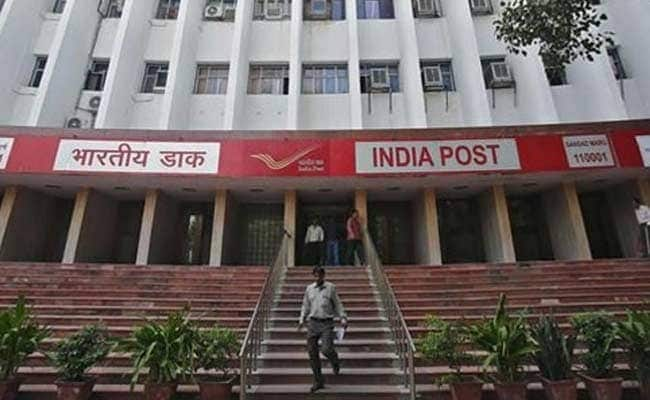
Did you know you can choose from nine different types of accounts at the post office today? Besides postal services, India Post - which has a network of more than 1.5 lakh post offices across the country - offers several types of banking and remittance services. These nine types of schemes are part of the entire bouquet of post office savings scheme. These are: savings account, recurring deposit account, time deposit account, monthly income scheme account, senior citizen savings scheme account, public provident fund or PPF account, national savings certificate, Kisan Vikas Patra (KVP) and Sukanya Samriddhi account. The post office pays interest rates in the range of 4 per cent-8.3 per cent on these savings schemes, according to India Post's website - indiapost.gov.in.
| Post office saving scheme | Interest rate (annual return) | Term | Minimum amount required for opening account |
|---|---|---|---|
| Post office savings account | 4% | - | Rs 20 |
| 5-year recurring deposit account (RD) | 6.9% (compounded on a quarterly basis) | 5 years | Rs 10 per month |
| Time deposit account (TD) | 6.6-7.4% | 1-5 years | Rs 200 |
| Monthly income scheme account (MIS) | 7.3% | 5 years | Rs 1,500 |
| Senior citizen savings scheme (SCSS) | 8.3% | 5 years | Rs 1,000 |
| 15-year public provident fund account (PPF?) | 7.6% | 15 years | Rs 500 |
| National savings certificates (NSC) | 7.6% (compounded on an annual basis; payable at maturity) | 5 years | Rs 100 |
| Kisan Vikas Patra (KVP) | 7.30% | 118 months | Rs 1,000 |
| Sukanya Samriddhi account | 8.1% | 21 years | Rs 1,000 |
| (Source: indiapost.gov.in) | |||
Some of these schemes also offer income tax benefits under Section 80C of the Income Tax Act, according to India Post. Financial planners say that savings scheme accounts provide the investor with flexibility and one can select a post office savings scheme based on his or her personal financial goals.
Here's a comparison of interest rates paid by the post office in its savings scheme accounts and the minimum amount of money required to open these accounts:
1. Savings account
The post office pays an interest rate of 4 per cent per annum on deposits in its savings account. A person can open a savings account against a minimum deposit amount of Rs 20. In case of a savings account without a cheque book facility, the customer is required to maintain a minimum of Rs 50 as balance, according to the India Post website.
2. Recurring deposit (RD) account
The post office pays an interest rate of 6.9 per cent on its recurring deposit account. The interest is compounded on a quarterly basis. On maturity, a recurring deposit of Rs 10 per month fetches a return of Rs 717.43 over a maturity period of five years. The account can be opened against a minimum of Rs 10, according to India Post.
3. Monthly income scheme (MIS) account
The post office offers an interest rate of 7.3 per cent on deposit in the monthly income scheme account. The interest is payable on a monthly basis. The minimum investment required to set up a monthly income account is Rs 1,500, according to India Post.
4. Time deposit (TD) or fixed deposit account
The post office offers the time deposit or fixed deposit account in four options of maturity periods: 1 year, 2 years, 3 years and 5 years. The interest rate ranges from 6.6 per cent to 7.4 per cent, according to India Post. The minimum investment that you require to open a fixed deposit with the post office is Rs. 200.
5. Sukanya Samriddhi account
A Sukanya Samriddhi scheme account fetches an interest rate of 8.1 per cent. The minimum amount required for investment in this scheme - which is meant for the girl child - is Rs 1,000. The account is opened in the name of the girl child by a guardian.
6. Senior citizen savings scheme (SCSS) account
The post office pay an interest rate of 8.3 per cent on deposits on the senior citizen savings account. The post office permits only one deposit in this account of an amount in multiples Rs 1,000.
7. 15-year public provident fund account
The PPF account fetches an interest rate of 7.6 per cent. The account can be opened with an investment of a minimum of Rs 500. Deposits can be made in lump sum or in 12 installments, according to India Post.
8. National savings certificates (NSC)
The national savings certificate fetches an interest rate of 7.6 per cent. The interest is compounded annually and payable at maturity. Investment can be made against a minimum of Rs 100 as deposit. An amount of Rs 100 returns Rs 144.23 after the maturity period of five years in this account, according to India Post.
9. Kisan Vikas Patra (KVP) account
The post office pays an interest rate of 7.3 per cent on deposits in KVP certificates. The interest is compounded on an annual basis. The KVP scheme requires a minimum investment of Rs 1,000. The amount deposited in the Kisan Vikas Patra doubles in a period of 118 months, according to India Post.

-
Indians Are Travelling, But Not Every Journey Is A Holiday | The Week In Whys

Pilgrims, patients and working women are the real travellers, and the system hasn't quite caught up with them.
-
Getting To Work Costs Women More | The Reason Why
It is not just about women paying more than men. It is about women paying much more in cities than in villages.
-
AI Bias In Investing Cannot Be Eliminated, But It Can Be Governed
Framing is a particularly important example as identical financial information presented in terms of gains rather than losses can lead an LLM to reach a different assessment.
-
Joining The Dots | Dark Skies, Steady Diya: Why Hope Holds This Diwali
With war, a weak rupee and foreign outflows weighing on sentiment, policymakers at the NDTV World Summit and market veterans at NDTV Profit Ignite: Diwali Edition offered the same advice: stay invested and filter out the noise.
-
The Curious Case of Equitas Small Finance Bank And A CEO Who Quit For Stock
PN Vasudevan believes persistent investor concerns over a perceived conflict of interest had become a governance overhang on Equitas Small Finance Bank's stock, even as the lender improved profitability and asset quality.
-
Talking Points This Week: AI Cash Burn, A Tiger Comeback And An India That Still Finds Its Own Path
India is not immune to higher oil or tighter global liquidity, yet its earnings base is broader, its domestic policy levers are still available.
-
Foreign Investors Own Half Of HDFC Bank and ICICI Bank. An LTCG Cut Could Matter Most Here
Foreign portfolio investors have US$115 billion parked in HDFC Bank, ICICI Bank. If the government cuts long-term capital gains tax, Jefferies says returning foreign money could land here first.
-
'Never Seen This Level Of Negativity': Sandeep Tandon Says The Next Rally May Be Closer Than You Think
Veteran investor Sandeep Tandon says foreign selling is easing, large-caps are due a comeback and mid-caps are crowded, while he turns positive on gold, power and pharma this Diwali.
-
Indians Stay With Family, Not In Hotels | The Reason Why
India still lacks enough clean, reliable and affordable hotels for budget-conscious travellers.
-
The Economic Imperative: Analysing The Material Driving Force Behind India-Canada Strategic Reset
This economic complementarity is further reinforced by deep institutional investment ties and talent mobility, which form the bedrock of the bilateral framework.










