Pollution Watchdog Draws Up List Of Don’ts To Clean Up Delhi Air
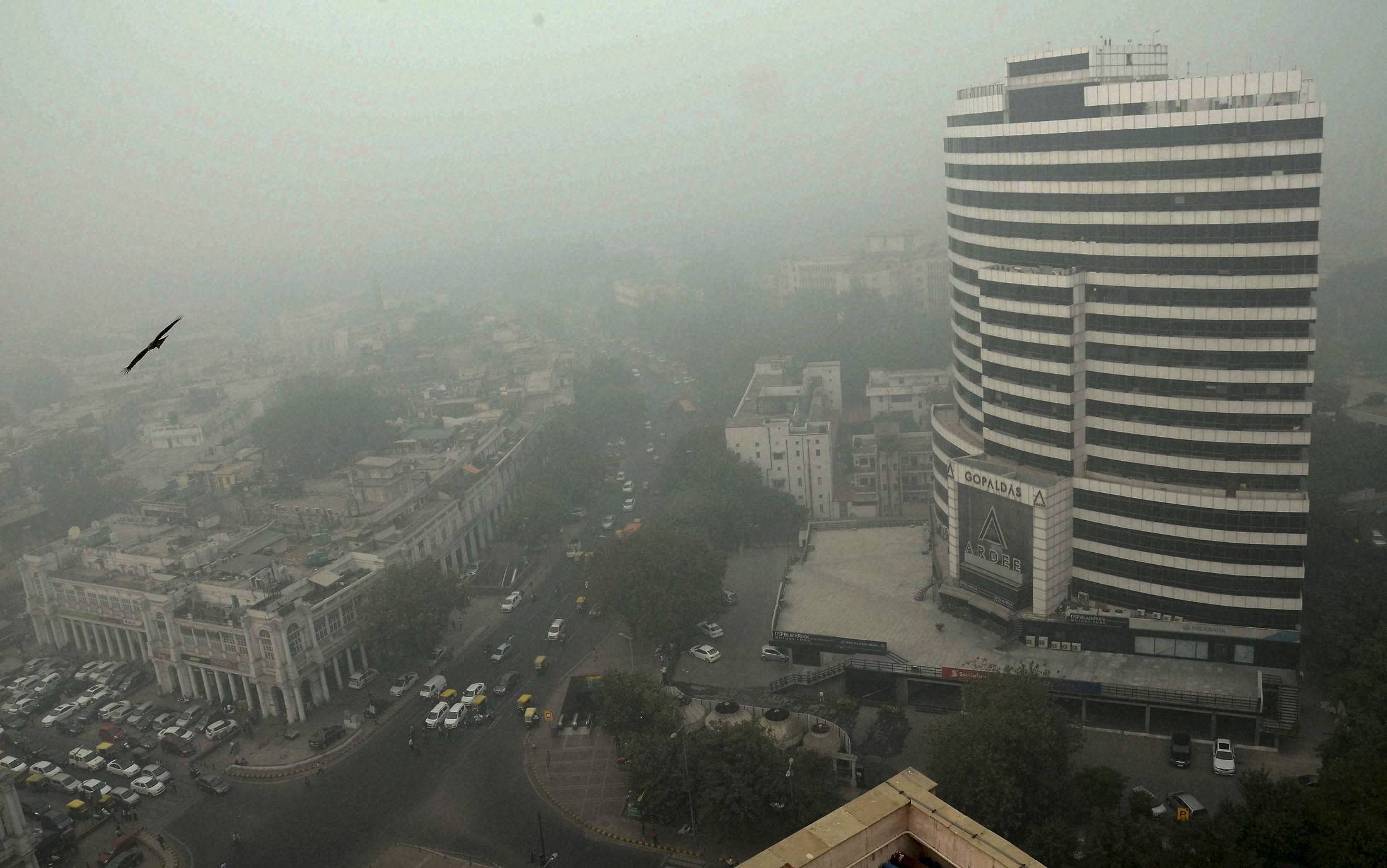
Stringent measures, including minimisation of private vehicles and shutdown of coal and biomass industries between November 1 and 10, are the measures recommended by the CPCB-led task force to deal with the alarming increase of pollution in the national capital.
The task force also advised public to avoid strenuous outdoor exercises to minimize their exposure to the toxic air, and cut down the use of private cars during the first 10 days of November.
The air quality in the city recorded the worst on the pollution index this season omf Friday, gradually inching towards the 'severe' category, with experts cautioning that the quality in Delhi-NCR might worsen from next month as wind is likely to come from the northwest direction.
In a meeting with representatives from the Environment Ministry, IMD, Uttar Pradesh Pollution Control Board, Haryana Pollution Control Board and Delhi Pollution Control Board on Friday, the Central Pollution Control Board-led task force appraised the members on levels of air pollution in Delhi NCR showing an upward trend.
Siddharth Singh, representative from the India Meteorological Department (IMD), said Delhi's air quality which has deteriorated to very poor level would continue to remain in the same condition for the next few days.
It was also informed that at the beginning of November the situation may get further deteriorated on account of localised emissions during festival and regional contribution due to stubble burning, Singh was quoted as saying in the minutes of the meeting.
In view of this and considering previous years' experience, Task Force recommends certain additional measures as proactive steps to deal with the situation for consideration of Supreme Court-appointed Environment Pollution Control Authority.
The measures include halt of all construction activities involving excavation, civil construction, stone crushers and hot mix plants in Delhi & other NCR during November 1 to 10.
Coal and Biomass based Industries (excluding thermal and Waste to Energy Plants) to remain closed in Delhi NCR from November 4– 10 and intensification of efforts by transport department to check polluting vehicles and control traffic congestion in Delhi NCR during November 1 - 10 were other measures.
The task force also recommended efforts to provide uninterrupted power supply in NCR towns to avoid requirement of operating diesel generator (DG) sets.
The pollution level in the national capital has deteriorated to alarming levels in the last two weeks. The reason behind the deterioration has been attributed to localised factors as well as stubble burning from the neighbouring states of Punjab and Haryana.
The CPCB recorded the overall Air Quality Index of Delhi at 361 Friday evening, which falls in the 'very poor' category, but not very far from the 'severe' category.
An AQI between 0 and 50 is considered 'good', 51 and 100 'satisfactory', 101 and 200 'moderate', 201 and 300 'poor', 301 and 400 'very poor', and 401 and 500 'severe'.

-
Getting To Work Costs Women More | The Reason Why

It is not just about women paying more than men. It is about women paying much more in cities than in villages.
-
AI Bias In Investing Cannot Be Eliminated, But It Can Be Governed
Framing is a particularly important example as identical financial information presented in terms of gains rather than losses can lead an LLM to reach a different assessment.
-
Joining The Dots | Dark Skies, Steady Diya: Why Hope Holds This Diwali
With war, a weak rupee and foreign outflows weighing on sentiment, policymakers at the NDTV World Summit and market veterans at NDTV Profit Ignite: Diwali Edition offered the same advice: stay invested and filter out the noise.
-
The Curious Case of Equitas Small Finance Bank And A CEO Who Quit For Stock
PN Vasudevan believes persistent investor concerns over a perceived conflict of interest had become a governance overhang on Equitas Small Finance Bank's stock, even as the lender improved profitability and asset quality.
-
Talking Points This Week: AI Cash Burn, A Tiger Comeback And An India That Still Finds Its Own Path
India is not immune to higher oil or tighter global liquidity, yet its earnings base is broader, its domestic policy levers are still available.
-
Foreign Investors Own Half Of HDFC Bank and ICICI Bank. An LTCG Cut Could Matter Most Here
Foreign portfolio investors have US$115 billion parked in HDFC Bank, ICICI Bank. If the government cuts long-term capital gains tax, Jefferies says returning foreign money could land here first.
-
'Never Seen This Level Of Negativity': Sandeep Tandon Says The Next Rally May Be Closer Than You Think
Veteran investor Sandeep Tandon says foreign selling is easing, large-caps are due a comeback and mid-caps are crowded, while he turns positive on gold, power and pharma this Diwali.
-
Indians Stay With Family, Not In Hotels | The Reason Why
India still lacks enough clean, reliable and affordable hotels for budget-conscious travellers.
-
The Economic Imperative: Analysing The Material Driving Force Behind India-Canada Strategic Reset
This economic complementarity is further reinforced by deep institutional investment ties and talent mobility, which form the bedrock of the bilateral framework.
-
Medicine Pricing: Where Must Profit Stop?
India must confront excessive margins, hidden incentives and regulatory gaps that threaten the integrity of medicine.










