SoftBank-Backed Policybazaar Eyes 2021 IPO In Indian Start-Up Debut
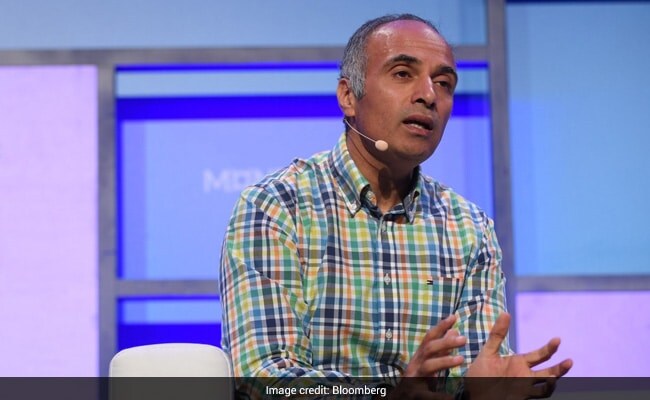
Online insurance platform Policybazaar aims to go public in 2021 at a valuation north of $3.5 billion, potentially becoming the first of India's mega-startups to debut as its digital economy booms.
The startup plans to secure about $250 million in a round of financing at a $2 billion-plus valuation before a September 2021 initial public offering, co-founder Yashish Dahiya told Bloomberg News. Policybazaar is now selecting two to three IPO lead underwriters from a roster that includes several Wall Street banks, said Mr Dahiya, chief executive officer of Policybazaar parent ETech Aces Marketing and Consulting Pvt.
"We have global interest and will raise in the coming weeks," Mr Dahiya said from London, where he is currently based.
Policybazaar, which counts SoftBank Group Corp.'s Vision Fund, Tiger Global Management and Tencent Holdings Ltd. among its largest backers, may become the first of India's digital-era upstarts to go public. Like fellow unicorns Ola, Flipkart and Paytm, the fintech firm rode an upswell of internet and mobile use that spurred digital services across the world's second-most populous nation. It may be hoping to replicate the spectacular coming-out party of another SoftBank-backed insurer, Lemonade Inc., which soared on its U.S. debut last month.
Policybazaar intends to list in Mumbai but Mr Dahiya said he'll consider a dual listing if rules change. India is tweaking regulations to help companies list overseas. Many startups have incorporated in countries like Singapore and the US because of friendlier public listing rules (among other considerations), but India currently prohibits that for sensitive sectors like financial services. SoftBank and Singaporean state investment firm Temasek Holdings Pte each hold about a 15 per cent stake each in the startup, while Tencent and Tiger Global have about 10 per cent and 8 per cent, respectively.
Policybazaar is among a clutch of fintech startups seeking to upend the stranglehold of state- and bank-backed insurers in a tightly regulated financial services segment. Like rivals Amazon.com Inc. and Alibaba Group Holding Ltd.-backed Paytm, it's trying to tap a large population of under-insured -- or non-insured -- Indians. Though the government has recently pushed health insurance plans to the less privileged, overall insurance penetration hovered at less than 4 per cent in 2017, according to the government's India Brand Equity Foundation.
Yet as economic uncertainties rise, a young insurable population, growing middle class and rising awareness about the need for retirement planning is buoying the market. The industry should touch $280 billion in revenues this year and expand by 14 per cent to 15 per cent annually over the next three to five years, according to the foundation.
Policybazaar itself helps sell about a million policies a month. The aggregator lets users compare life, health, auto, travel and property policies from 40 insurers on its website without going through conventional agents, who sell based on incentives. Policybazaar's own customer service reps help users settle claims, redeem paybacks and amend policies. Sister unit Paisabazaar facilitates loans, credit cards and sells mutual funds, tapping an adjacent Indian digital payments market forecast by Credit Suisse to cross $1 trillion by 2022.
It's in insurance where there's a pressing need. India's middle classes almost never have health or life insurance, said Mr Dahiya. Less than a fourth of the 45 million Indians who currently do subscribe to an individual health plan are adequately covered for chronic diseases like diabetes and high blood pressure.
"The rest of them have 'a' plan," said Mr Dahiya. In recent years, a government-funded program has covered half a billion of India's underprivileged. "But the middle India has no support at all."

-
Rs 50-Lakh Gold In Bank Locker, Rs 3 Lakh Of Protection: The Gap Most Families Don't Know About

The RBI ties a bank's liability to the annual locker rent and families who want to insure their jewellery face a separate question about how to prove what was inside.
-
The More Food Turns Into Fuel, The Harder It Is To Read Agricultural Markets | The Reason Why
A policy designed to reduce dependence on imported fuel can create new pressures elsewhere in the food economy.
-
Your iPhone Costs 12 Grams Of Gold, A Car About 100. What Does Your Life Weigh?
Measured in rupees, almost everything looks more expensive than it did a generation ago. Measured in grams of gold, a lot of it has become cheaper.
-
Gold Is Rs 22,000 Cheaper Than A Month Ago. Should You Buy Amid The Wedding Season?
Gold's potential slide to $3,500 could save around Rs 4,700 per 10 grams, but a soft inflation print could just as easily push prices back up. One way to split the risk is to buy in parts, some now and the rest after the Fed's Dec. 9 decision.
-
AI Agents Are Gaining Power. Who Governs Them?
Artificial intelligence agents promise to transform productivity by moving machines from assisting decisions to executing them. But as organisations delegate greater authority to these AI-agents, they must first establish who controls that authority and who remains accountable when things go wrong.
-
Why Swapping Your Old Gold Can Trigger A Rs 5 Lakh Tax Bill, And How You Can Avoid It Legally
Swapping old gold for new is taxed as a sale and a fresh purchase. Getting your own gold remade can cut most of that bill, though it has its own costs.
-
The AI Trade is Done. The Real Opportunity for Investors Starts in 2027 | Unhedged Position
As pureplay AI stocks plunge and circular, capex-led financing unwinds, 2027 is set to be a year of reckoning for AI companies. Yet the bust clears the way for a better opportunity for investors in 2027 -- shifting the spotlight from AI builders to the companies using AI.
-
Leadership As Mission: Why The Age Of AI Demands More Human Leadership
Debjani Ghosh examines how AI is changing leadership, arguing that its success must be measured by its impact on people and the accountability of those guiding its use.
-
We May Need Another Tukaram Mundhe To Fight Air Pollution | The Reason Why
Developers may install basic measures such as sprinklers and green nets, resume work, and continue violating rules when this equipment stops working.
-
Extracting Value From Battery Scrap Could Be Challenging For India | The Reason Why
A discarded lithium-ion battery still contains valuable materials such as lithium, nickel and cobalt. These can be recovered and reused. When such batteries are crushed and shredded, they produce a dark powder called black mass.









