PNB Internal Report Reveals Lapses That Led To $2 Billion Fraud By Nirav Modi
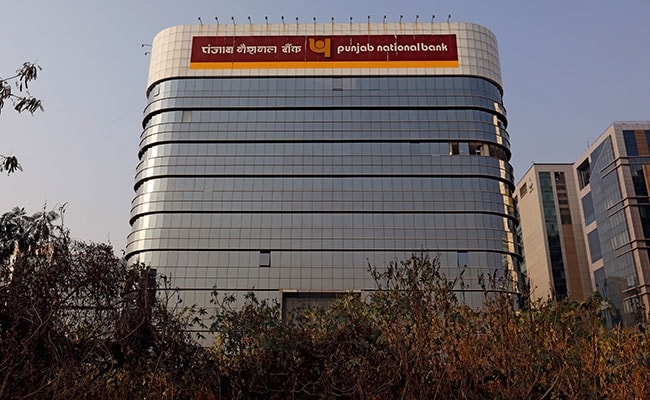
A $2 billion fraud at Punjab National Bank (PNB) may have been perpetrated by a few employees, 54 to be precise, but it couldn't be detected because of prevalent risk-control and monitoring lapses in several areas of the bank, as revealed by the PNB's internal probe India's second-biggest state-controlled lender, has previously alleged that a handful of staff at a single Mumbai branch issued fake bank guarantees over several years to help two jewellery groups - led by Nirav Modi and his uncle Mehul Choksi - raise billions of dollars in foreign credit and commit country's biggest-ever bank fraud.
The bank's CEO Sunil Mehta told Reuters in April he had suspended 21 officials and "will not spare" others found involved in lapses, but he also described the fraud as a "small turmoil".
However, a 162-page internal report, produced by PNB officials tasked with probing the fraud, lays bare lapses that go far beyond a few branch officers. The report, a copy of which was reviewed by Reuters, lays out how failings by 54 PNB officials - ranging from clerks to foreign exchange managers, and auditors to heads of regional offices, allowed the fraud to be perpetrated. Eight of the 54 are among those who have been charged by the CBI for their roles in the scandal.
The report, which the PNB officials presented to the bank's fraud risk management arm on April 5, along with dozens of pages of annexed bank records and internal e-mails, is also part of the evidence submitted by CBI in its court case against those allegedly involved in the fraud. The report's findings have not previously been made public.
Ten Lapses, If Detected, Could Have Prevented $2 Billion PNB Fraud:
1. System Violations: PNB investigators said one of the reasons the fraud went undetected for years was because of lapses within some of the bank's critical areas at its New Delhi headquarters, such as its credit review and international banking units.
"There was enough evidence to suggest failures," the team of four senior PNB investigators said in its report. "It was observed that blatant system violations/unethical practices/dereliction of responsibilities led bank to such a catastrophe."
2. Lack of Integrated Systems: Shetty escaped detection because he did not log his SWIFT transactions on the bank's internal software - something he was supposed to do because the two systems were not integrated.
3. Fake Guarantees: Deputy manager Gokulnath Shetty deployed at PNB's Brady House branch, for years, issued fraudulent credit guarantees over the SWIFT interbank messaging network, the bank and prosecutors have alleged. Using those guarantees, companies controlled by Nirav Modi and Choksi, received credit from banks overseas to fraudulently fund their businesses, PNB alleges.
4. Overlooking RBI Advisories: PNB investigators said the bank's international banking department and the IT division had delayed the integration work. They had also not complied with central bank advisories in 2016 calling for a comprehensive audit of SWIFT systems in use.
5. Lack of SWIFT Reconciliation: But more simply, the fraud could have been detected if the branch did the basic daily SWIFT reconciliation that, according to internal rules, required logs of transactions on the global payments network to be manually checked against the bank's internal system, the investigators said. "Only one activity would have nailed the whole act at the incipient stage," said the report.
6. Ignorance by Regional Office: The lapses, however, extended beyond the branch. As per protocol, the daily reconciliation reports should travel up the chain to PNB's headquarters in New Delhi. Along the way, they would be signed off by the Brady House branch head and sent each month to a Mumbai city regional office that would issue all-clear certificates for the branches it controls. But despite receiving just two of the 12 monthly reports from the Brady House branch last year, the regional office signed off on a "false" compliance certificate, signalling a clean bill of health for the branch, the report said.
7 Missing Paper Trail:. Moreover, despite a massive missing paper trail, none of the senior inspection officers, who conducted 10 visits between 2010 and 2017 to the branch, reported anything "adverse", PNB's report stated.
8. Brady House Branch Performance: The Mumbai city regional office also missed another vital red flag - the Brady House branch was a star performer, largely because of its dealings with Modi firms, the PNB report said. Its import and export transactions in the 12 months to March 2017 stood at $3.3 billion, 50 percent higher than recorded two years prior. "The exceptional growth should have been noticed," the report said. A former PNB internal audit official who declined to be identified but reviewed the growth numbers mentioned in the report for Reuters, said: "This was sufficient to raise a cause of concern and the reasons thereof should have been investigated."
9. Weak Audit Practices: Signs that audit practices at Brady House were weak were also flagged by the branch itself, according to two internal PNB documents reviewed by Reuters. In March 2012, the branch said in an internal memo that an almost 50 percent of the observations flagged in its annual inspection report - mainly auditor queries - remained "un-replied/unattended to by respective concerned officers", calling it a "critical situation".
Four years later, in 2016, the branch's assistant general manager issued an internal memo saying around 18 observations -- five described as zero-tolerance level issues -- were pending. The memo was signed by 10 bank officers, including Shetty.
10. Personal Email, Long Tenure of Gokulnath Shetty: Shetty joined the forex division at Brady House in April 2010. Over the coming years, Shetty authorized more than 1200 fraudulent credit guarantees, the report said. As a mid-level employee, Shetty should only have been able to approve transactions of up to Rs 25 lakh ($37,000) without sign-off from more senior officials. But he had been given unlimited approval powers, the investigators said without explaining how this happened.
In the few weeks before his retirement in May last year, Shetty used his personal Yahoo e-mail address to send 22 e-mails -- 18 at around midnight -- to reconcile large forex transactions involving the Modi group. The use of personal e-mail was "overlooked" by the bank's treasury department, the report said. Under PNB policy, no officer should remain in the same office for more than three years, but Shetty retired after serving in Brady House for seven years. Three transfer orders were issued for him during his tenure, but he was never moved, the investigators found.
The report said that it is "incomprehensible" that branch staff did not notice the fraud being committed.
(With Reuters Inputs)

-
AI Bias In Investing Cannot Be Eliminated, But It Can Be Governed

Framing is a particularly important example as identical financial information presented in terms of gains rather than losses can lead an LLM to reach a different assessment.
-
Joining The Dots | Dark Skies, Steady Diya: Why Hope Holds This Diwali
With war, a weak rupee and foreign outflows weighing on sentiment, policymakers at the NDTV World Summit and market veterans at NDTV Profit Ignite: Diwali Edition offered the same advice: stay invested and filter out the noise.
-
The Curious Case of Equitas Small Finance Bank And A CEO Who Quit For Stock
PN Vasudevan believes persistent investor concerns over a perceived conflict of interest had become a governance overhang on Equitas Small Finance Bank's stock, even as the lender improved profitability and asset quality.
-
Talking Points This Week: AI Cash Burn, A Tiger Comeback And An India That Still Finds Its Own Path
India is not immune to higher oil or tighter global liquidity, yet its earnings base is broader, its domestic policy levers are still available.
-
Foreign Investors Own Half Of HDFC Bank and ICICI Bank. An LTCG Cut Could Matter Most Here
Foreign portfolio investors have US$115 billion parked in HDFC Bank, ICICI Bank. If the government cuts long-term capital gains tax, Jefferies says returning foreign money could land here first.
-
'Never Seen This Level Of Negativity': Sandeep Tandon Says The Next Rally May Be Closer Than You Think
Veteran investor Sandeep Tandon says foreign selling is easing, large-caps are due a comeback and mid-caps are crowded, while he turns positive on gold, power and pharma this Diwali.
-
Indians Stay With Family, Not In Hotels | The Reason Why
India still lacks enough clean, reliable and affordable hotels for budget-conscious travellers.
-
The Economic Imperative: Analysing The Material Driving Force Behind India-Canada Strategic Reset
This economic complementarity is further reinforced by deep institutional investment ties and talent mobility, which form the bedrock of the bilateral framework.
-
Medicine Pricing: Where Must Profit Stop?
India must confront excessive margins, hidden incentives and regulatory gaps that threaten the integrity of medicine.
-
Why Amazon And Flipkart Are Struggling To Beat Meesho In India's Smaller Cities
With 274 million users and lowest-cost logistics, Meesho is defending its value commerce crown against giants like Amazon and Flipkart.










