PMC Bank Case: Why Housing Societies Got Locked Out Of Their Money
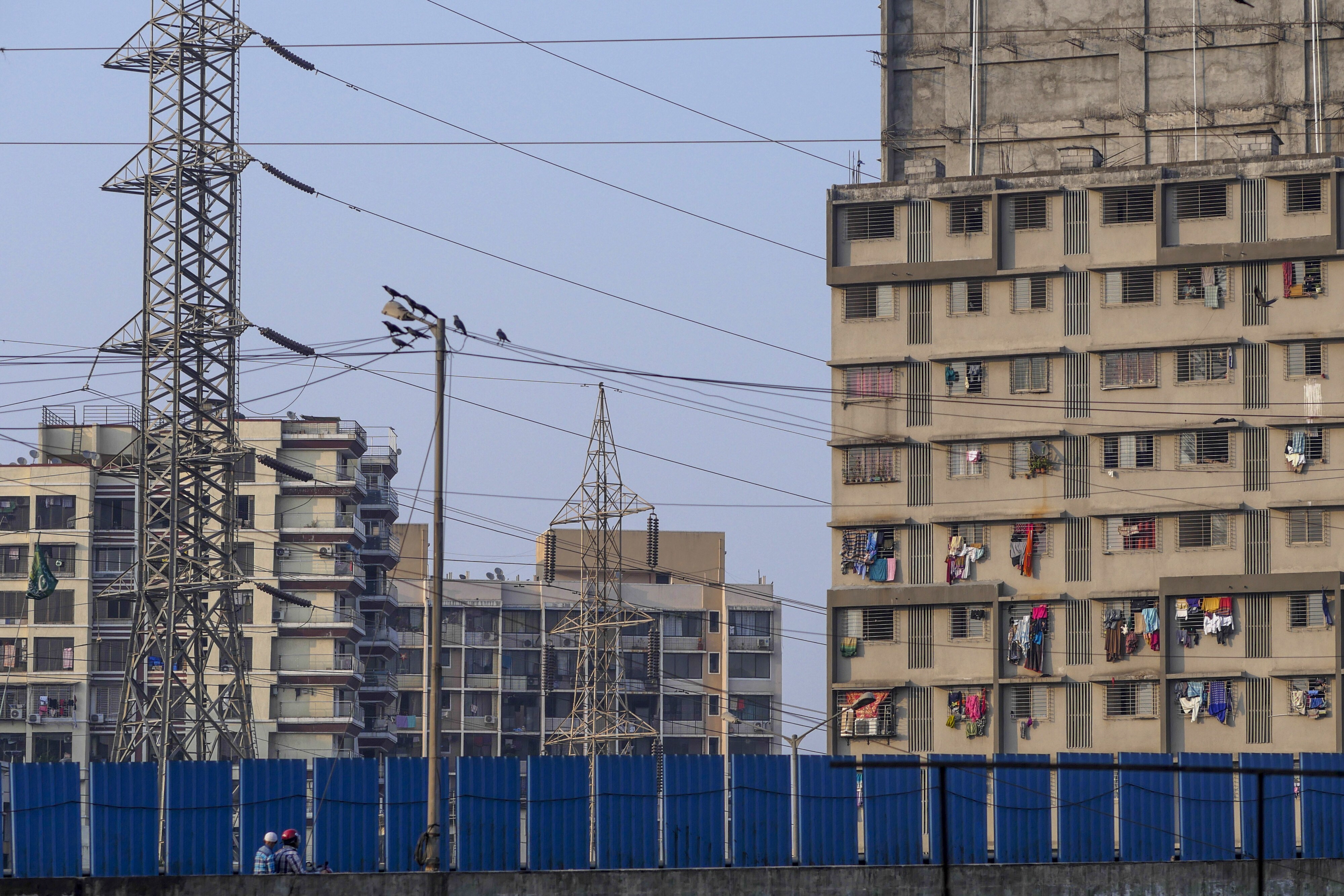
The Eden Garden Cooperative Housing Society in Mumbai's Oshiwara has no money to pay for everything from power to security. Home to 29 families, it can't access Rs 24 lakh parked in Punjab & Maharashtra Cooperative Bank Ltd. after the Reserve Bank of India imposed restrictions on the stressed lender.
“Since the inception, the society has had its account with PMC Bank. Our entire amount has been locked up now. We have absolutely no money,” Chairperson Francisca Michael told BloombergQuint. “We had kept fixed deposits, sinking fund, maintenance fees and other savings in PMC Bank. I have absolutely no idea how we are going to manage now.”
Last week, the Reserve Bank of India capped withdrawals by PMC Bank customers at Rs 1,000 each for six months citing financial irregularities, failure of internal controls and wrong or underreporting of loan exposures. While the central bank eased the limit to Rs 25,000, other restrictions on the crisis-hit lender continue.
“There's no money to pay for the utilities like electricity bill, water bill, fees of the watchman, gardener and others,” Michael said. “I have now opened an account with Dena Bank but it will take a week to be operational. Every member pays maintenance once in three months. The fees are due in November. We are not sure whether to ask them to pay it in advance or not. We are yet to figure out modalities.”
Eden Garden is among several such cooperative housing societies with money stuck in PMC Bank. And that stems from a now-withdrawn rule. Prior to December 2013, all cooperative societies, including housing societies, had to compulsorily open their accounts with cooperative banks. But the state on Dec. 5, 2013 allowed the societies to open accounts with other nationalised or regional lenders. Still, the cooperative societies continued to prefer cooperative banks.
There are 47,836 cooperative housing societies in Mumbai Metropolitan Region, according from the office of Divisional Joint Registrar of Co-operative Societies, Mumbai. Even today more than 80 percent of them keep their money in cooperative banks, said Ramesh Prabhu, chairman of Maharashtra Societies Welfare Association. “When cooperative institutes bank with a cooperative lender, they don't have to pay any income tax on the interest earned. The cooperative banks also offer a higher interest rate,” Prabhu told BloombergQuint.
Like Eden Garden, Tarapore Towers Cooperative Housing Society, Oshiwara, too, had parked most of its money in the troubled lender. It, however, also accounts with another cooperative bank and a nationalised lender.
“Most of the members in our society are retired army personnel and senior citizens who depend on pension. We have around Rs 24 lakh in PMC Bank. That money was primarily used for the day-to-day functioning of the society such as maintenance and payment of utilities,” Capt. Rakesh Coelho, secretary at Oshiwara Tarapore Towers, said. “The society has employed a security company, a gardener, house-keeping staff, a facility manager, an admin manager, and an accountant. Their salaries will get delayed till we collect maintenance fee of the coming quarter. If we do not get the money parked in PMC Bank, we are looking at a deficit of at least Rs 20 lakh.”
Oshiwara Tarapore Towers had started banking with PMC Bank from 1995. “We were quite happy with its service. The staff was quite courteous, and we had no hint of any irregularity,” Coelho said. “PMC Bank had a better reputation than other cooperative banks and we got a better interest rate on fixed deposits and no income tax was deducted from the interest earned.”
The cooperative housing society, which comprises 269 families and has five towers, is now planning to close its accounts with the cooperative bank and switch to nationalised or private lenders, Coelho said. “We will take a call in our next managing committee meeting.”
Oshiwara Tarapore Towers, Eden Garden and other housing societies with account in PMC Bank shouldn't expect immediate relief from the government.
These societies are autonomous and democratic bodies, a senior government official told BloombergQuint on the condition of anonymity as the matter is under investigation. The government had taken appropriate decision in 2013, the official said, adding the societies had a choice whether to open their accounts with cooperative banks or nationalised banks.
Bombay High Court advocate Vinod Sampat, too, said legally there's no way out for the housing societies or the individual depositors to get back their money. “This is a systematic failure which occurred because of lack of due diligence on the part of government authorities like officials from RBI, PMC Bank, auditors, among others,” he said. “For the housing societies and individual account holders, this is going to be only wait and watch situation. Chances of getting back their entire money are quite faint.”
According to housing consultant Vijay Samant, there's a lesson in this crisis. “Societies should not depend entirely on cooperative banks for a few additional benefits. They shouldn't keep all their eggs in one basket. But most societies act in a penny wise and pound foolish manner where they think more about interest that they are going to earn over keeping their principal amount secure,” Samant said. “This will be a wake-up call.”
Still, societies and individuals can take some solace from the central bank's assurance. “The Reserve Bank of India would not allow a cooperative bank to collapse,” Governor Shaktikanta Das said in a press briefing held after the Monetary Policy Committee announced a 25-basis-point cut in the benchmark repo rate on Friday. He was responding to queries on PMC Bank.
Residents like Coelho are also optimistic. “I still haven't given up. Hope and faith in our system is the only thing that we have as of now.”

-
One El Nino, India Can Handle. Two Could Break The Granary

India's grain stocks can absorb one bad year, but a second El Nino could drain the buffer in two to three years, economists say.
-
India's Troika Of Good Luck | Joining The Dots
As Jensen Huang's exit drags Nvidia down, a cooling AI trade and resilient earnings have revived investor interest in India. A likely RBI rate hike looms.
-
Talking Points This Week: Leadership Shock At Nvidia, Earnings Strength, And The Fog Over Hormuz
The Anthropic IPO pricing and first trading day, Nvidia's upcoming earnings, and any fresh signals from Iran will set the tone for the following week.
-
Signature Play: The Classic Cocktail Is Dead. Or Is It?
Classic cocktails are disappearing from India's cocktail menus. But they're still being ordered, taught to bartenders and borrowed from. So, who's really having the last drink?
-
A New Samvat Wishlist: Inclusive Prosperity And Human Development
India has strengthened its economic foundations through infrastructure, digital access and enterprise. Its next growth chapter must deepen productivity, create better livelihoods and widen participation in prosperity.
-
Love, Sex Aur Dhokha: The Audacious Plot To Spy On Jensen Huang
A Taipei dinner, a Singapore chip buyer and a suspected Chinese asset: inside the alleged spy operation that got close to NVIDIA's Jensen Huang.
-
Ten Things I Learnt This Samvat
Patience can be a trap. Cheap stocks can stay cheap. Leverage can wipe you out. What did Samvat 2082 teach us? Niraj Shah writes on 10 lessons from the year gone by.
-
Talking Points This Week: Tech Nerves, FII Buying, And A Faraway Banking Shock
The global markets are not shining this Diwali. The exception in the large markets is, India.
-
Midterm Rally Lasted A Day. The Hard Reality Of A Divided US May Last Two Years | Opinion
Between a contested AI boom, a debt ceiling that arrives in 2027 and a president with every incentive to act alone, the next two years may prove more volatile than the first day's rally suggests.
-
Blue Wave Will Derail the AI Trade but Won't Dismantle the AI Era | Unhedged Position
The Democrats' sweep of the US Congress will see politics collide with economic forces both over the long and short term.









