PM Seeks to Revive 'Zombie Factories', Not Abandon Them
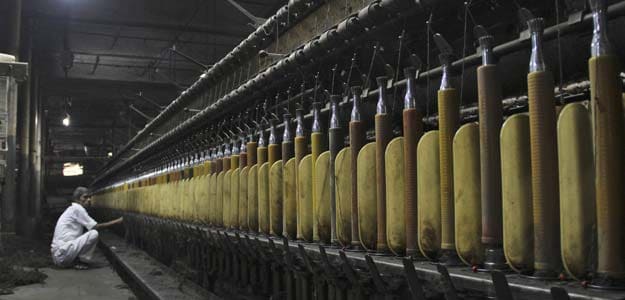
Kanpur India: At British India Corporation's textile factory in Kanpur, four men sit in a control room watching computerised gauges eight hours a day. When they are done, another group takes over, and then another, for 24 hours a day - much as they might at any major industrial plant.
The problem is, nothing is produced there.
Now Prime Minister Narendra Modi is preparing to invest more taxpayer money in ailing state-owned factories in a bid to turn them around.
While the government has announced the closure of six publicly owned companies, Minister for Heavy Industries and Public Enterprises Anand Geete said last month that about two-thirds of 64 loss-making firms can be revived with more money.
The government has set up a committee to examine ways sick public companies can be resuscitated, including using cash reserves from profit-earning state firms to provide lifelines to the loss-making ones, according to officials in New Delhi.
The committee will report its findings in two months.
The moves have disappointed those who want the PM to force through economic reforms, however painful. He might reply that past success in reviving "zombie" enterprises as chief minister of Gujarat state gives him the right to try on a national level.
However, Mr Modi may adopt a plan for the loss-making state companies he used in Gujarat, where he was chief minister. By giving boards more independence from ministers and using cash injections from the government, he was able to turn 20 publicly-owned companies into profit in his 13 years as leader of the state.
"The litmus test of whether Modi is a reformer is what he does with these companies, not what he does on allowing more foreign investment. Unfortunately, it looks like he will avoid taking unpopular decisions," said Mohan Guruswamy, chairman of the Centre for Policy Alternatives and a former official in the finance ministry
His critics say that since winning India's first parliamentary majority in three decades in May, the PM has not been aggressive enough with economic reforms.
So far, there has been little movement to roll back the previous government's subsidy programmes or repeal a law allowing retroactive taxation that has alarmed global investors.
In theory, British India Corporation sells army uniforms, rugs, blankets and tweed jackets, but it stopped manufacturing nine years ago after finishing its last order. Since then, the company, based in the gritty northern city of Kanpur, has lost about $50 million or Rs 305 crore
British India Corporation employs about 1,800 people. All the employees come to work, everyone gets paid, earns a bonus, there are overtime shifts, promotions and job changes. There are bungalows for the managers, flats for workers, a hospital, schools and a subsidised shop.
"This could easily be the worst-run company in India, maybe the world," said Satyendra Nath, 58, head of the tax department, who spends his days reading the newspaper or watching television because there is no work to do.
India put key industries in the hands of state-run monopolies in the years after independence in 1947, borrowing from Soviet thinking that late-industrialising countries needed to use state intervention to transform their economies.
A quarter of the country's 277 state-run firms, which produce everything from condoms to scooters, have lost about $16 billion or Rs 97,600 crore over the last decade, according to government records.
India's labour laws, which the World Bank says are the most restrictive anywhere, also make it hard to sack staff for any reason other than criminal misconduct. So it can take decades for a severance package to be agreed.
British India Corporation, which hasn't made a profit since 1989, is among the companies being earmarked for revival, officials in New Delhi said. To pay off its debt and buy materials to restart production, the company would need an investment of $65 million or Rs 396 crore, according to managers at the factory.
In 2005, after a $13 million or Rs 79.3 crore taxpayer rescue, the factory managers spent the money on high-end weaving machines imported from Switzerland. But the plan to raise another $21 million or Rs 128 crore by selling land to buy yarn and wool was never approved by the politicians so the machines have never been turned on.
($1= Rs 61)
Copyright: Thomson Reuters 2014

-
AI Bias In Investing Cannot Be Eliminated, But It Can Be Governed

Framing is a particularly important example as identical financial information presented in terms of gains rather than losses can lead an LLM to reach a different assessment.
-
Joining The Dots | Dark Skies, Steady Diya: Why Hope Holds This Diwali
With war, a weak rupee and foreign outflows weighing on sentiment, policymakers at the NDTV World Summit and market veterans at NDTV Profit Ignite: Diwali Edition offered the same advice: stay invested and filter out the noise.
-
The Curious Case of Equitas Small Finance Bank And A CEO Who Quit For Stock
PN Vasudevan believes persistent investor concerns over a perceived conflict of interest had become a governance overhang on Equitas Small Finance Bank's stock, even as the lender improved profitability and asset quality.
-
Talking Points This Week: AI Cash Burn, A Tiger Comeback And An India That Still Finds Its Own Path
India is not immune to higher oil or tighter global liquidity, yet its earnings base is broader, its domestic policy levers are still available.
-
Foreign Investors Own Half Of HDFC Bank and ICICI Bank. An LTCG Cut Could Matter Most Here
Foreign portfolio investors have US$115 billion parked in HDFC Bank, ICICI Bank. If the government cuts long-term capital gains tax, Jefferies says returning foreign money could land here first.
-
'Never Seen This Level Of Negativity': Sandeep Tandon Says The Next Rally May Be Closer Than You Think
Veteran investor Sandeep Tandon says foreign selling is easing, large-caps are due a comeback and mid-caps are crowded, while he turns positive on gold, power and pharma this Diwali.
-
Indians Stay With Family, Not In Hotels | The Reason Why
India still lacks enough clean, reliable and affordable hotels for budget-conscious travellers.
-
The Economic Imperative: Analysing The Material Driving Force Behind India-Canada Strategic Reset
This economic complementarity is further reinforced by deep institutional investment ties and talent mobility, which form the bedrock of the bilateral framework.
-
Medicine Pricing: Where Must Profit Stop?
India must confront excessive margins, hidden incentives and regulatory gaps that threaten the integrity of medicine.
-
Why Amazon And Flipkart Are Struggling To Beat Meesho In India's Smaller Cities
With 274 million users and lowest-cost logistics, Meesho is defending its value commerce crown against giants like Amazon and Flipkart.










