PM Modi's 'Make in India' Push Gets Thumbs Up from Moody's Analytics
The opposition may be unimpressed by Prime Minister Narendra Modi's first 100 days in office, but he has got a big thumbs up for his emphasis on making India a manufacturing hub, in a report by Moody's Analytics, a subsidiary of the global rating agency Moody's.
"Indian politicians are fond of such grandiose announcements, but in Modi's instance it may have some substance," wrote Glenn Levine, an economist with Moody's Analytics.
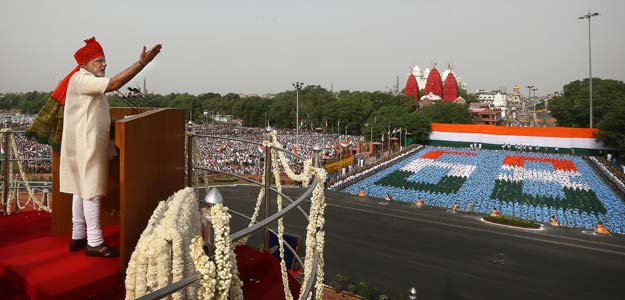
Last month, delivering his first Independence Day speech Prime Minister Modi had spoken of the need to strengthen the manufacturing sector. He has also appealed repeatedly to investors: "Come, make in India".
Glenn Levine's report, titled "India Outlook: Prospects Brighten," has drawn its optimistic conclusion from Mr Modi's 13-year tenure as Gujarat chief minister, when the state's GDP growth averaged 8.9 per cent as compared to the national average of 7.2 per cent. "As chief minister of Gujarat he helped provide a reliable electricity supply and attracted both local and foreign-owned manufacturing," the report says.
The government's push for manufacturing comes at a time when many global manufacturers are seeking an alternative to China as costs and risks there rise, the report notes.
Labour unrest has surged in China in recent months amid a slowdown in economic growth. That situation suits India and the new government, which won a historic mandate this May on the promise of faster growth and more jobs.
"Manufacturing offers the surest way to employ millions of workers in middle-income jobs, provide a stable source of foreign currency, and create a reliable path for development. India already has the cheap labour and large local market. Better infrastructure and easier regulations, especially around labour, will help propel manufacturing," the report says.
A majority of India's workforce consists of unskilled labour that has traditionally been absorbed by the manufacturing sector. However, the sector's contribution to India's GDP has remained largely stagnant at around 15 per cent of GDP for many years now.
The report also notes the "modest progress" made by the new government to liberalise labour laws -- an essential step towards becoming a manufacturing power.
The government has recently proposed changes to allow companies to make greater use of apprentices, allow workers to put in more hours more overtime, and allow women to work night shifts.
"All this adds upside to the outlook," the report notes.
According to Moody's Analytics, the Modi government has made some progress, but it should measure success by whether foreign manufacturers want to do business in the country.
"It is a difficult task, but if Modi achieves it he could lift India's long term GDP growth, which is the surest way to lift millions out of poverty," the report concludes.

-
We May Need Another Tukaram Mundhe To Fight Air Pollution | The Reason Why

Developers may install basic measures such as sprinklers and green nets, resume work, and continue violating rules when this equipment stops working.
-
Extracting Value From Battery Scrap Could Be Challenging For India | The Reason Why
A discarded lithium-ion battery still contains valuable materials such as lithium, nickel and cobalt. These can be recovered and reused. When such batteries are crushed and shredded, they produce a dark powder called black mass.
-
One El Nino, India Can Handle. Two Could Break The Granary
India's grain stocks can absorb one bad year, but a second El Nino could drain the buffer in two to three years, economists say.
-
India's Troika Of Good Luck | Joining The Dots
As Jensen Huang's exit drags Nvidia down, a cooling AI trade and resilient earnings have revived investor interest in India. A likely RBI rate hike looms.
-
Talking Points This Week: Leadership Shock At Nvidia, Earnings Strength, And The Fog Over Hormuz
The Anthropic IPO pricing and first trading day, Nvidia's upcoming earnings, and any fresh signals from Iran will set the tone for the following week.
-
Signature Play: The Classic Cocktail Is Dead. Or Is It?
Classic cocktails are disappearing from India's cocktail menus. But they're still being ordered, taught to bartenders and borrowed from. So, who's really having the last drink?
-
A New Samvat Wishlist: Inclusive Prosperity And Human Development
India has strengthened its economic foundations through infrastructure, digital access and enterprise. Its next growth chapter must deepen productivity, create better livelihoods and widen participation in prosperity.
-
Love, Sex Aur Dhokha: The Audacious Plot To Spy On Jensen Huang
A Taipei dinner, a Singapore chip buyer and a suspected Chinese asset: inside the alleged spy operation that got close to NVIDIA's Jensen Huang.
-
Ten Things I Learnt This Samvat
Patience can be a trap. Cheap stocks can stay cheap. Leverage can wipe you out. What did Samvat 2082 teach us? Niraj Shah writes on 10 lessons from the year gone by.
-
Talking Points This Week: Tech Nerves, FII Buying, And A Faraway Banking Shock
The global markets are not shining this Diwali. The exception in the large markets is, India.









