PM Modi Pushes For Investments Into Existing Infrastructure Projects
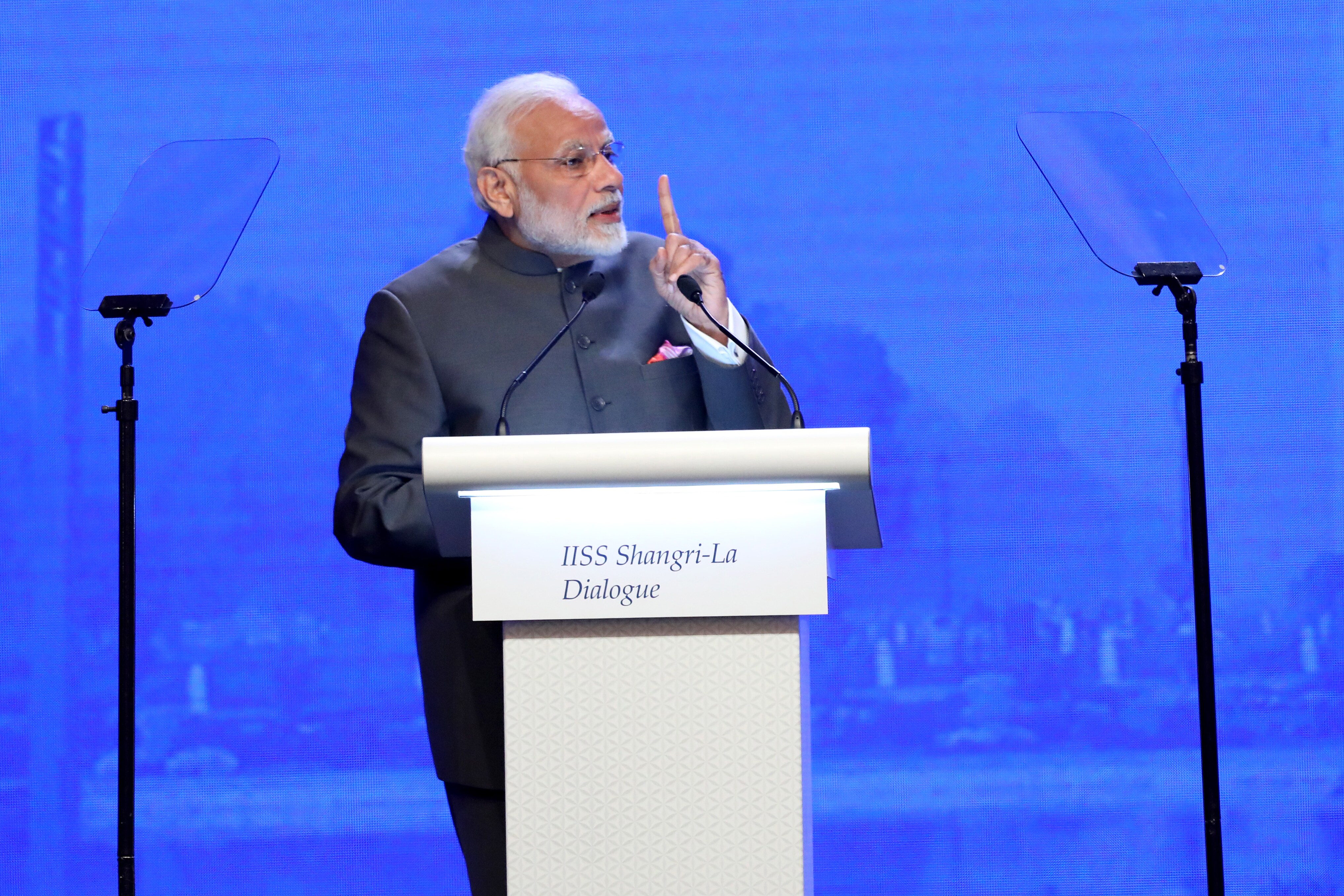
India plans to develop its existing infrastructure projects as a separate asset class—a move aimed at attracting funds from multilateral banks such as the Asian Infrastructure Investment Bank.
“Such assets having passed the stages of land acquisition and environment and forest clearances are relatively de-risked,” Prime Minister Narendra Modi said during the annual meeting of the governors of the AIIB today. “Hence, for such assets, institutional investments from pension, insurance and sovereign wealth funds are likely to be more forthcoming.”
This came after AIIB cleared a $100-million investment into the National Investment and Infrastructure Fund, which will help to mobilise private sector capital for infrastructure projects in the country.
AIIB has funded seven projects worth $1.4 billion in India and has agreed to finance the Bengaluru Metro. It has also financed a couple of electricity transmission upgrade projects.
Modi said the bank had invested $4 billion in more than 25 projects in several countries in the last two and a half years. The Prime Minister also called upon AIIB to expand its investment to $40 billion by 2020 and $100 billion by 2025.
Here are the key highlights from Prime Minister Modi's speech.
- Investments by AIIB in sustainable infrastructure can impact the lives of billions of people.
- ‘Regional multilateralism' through institutions like AIIB play a central role in raising resources.
On Indian Economy
- India has emerged as a bright spot in the global economy. With a size of $2.8 billion, it is the seventh-largest economy in the world.
- Despite rising oil prices, inflation is within the mandated range.
- The government is committed to the path of fiscal consolidation.
- India continues to be one of the top FDI destinations in the world.
- From a foreign investor's perspective, India is a very low political risk economy.
- We have liberalised the FDI regime with most sectors on automatic approval route.
- The Goods and Services Tax is one of the most significant systematic reforms in India.
- India has jumped 42 places in three years in the ease of doing business report of the World Bank.
Ongoing Plans
- In India we are upgrading connectivity at all levels.
- We have planned to set up 175 gigawatt of renewable energy by 2022.
- Bharatmala is aimed at improving road connectivity.
- Sagarmala will help improve port connectivity.
- Dedicated trade corridors are being developed to reduce congestion on rail networks.
- UDAN scheme will improve regional air connectivity.
- India is working on new-age infrastructure concepts.
- Bharat Net is working on improving last-mile connectivity through internet.
- UPI along with BHIM and Rupay cards has shown true potential of digital India.
- Digital India mission aims to bridge the rural-urban divide.
- Promoting investments in warehousing, cold storage, food processing and allied business to improve agriculture development.
- Aim to provide every poor household with affordable housing by 2022.

-
Getting To Work Costs Women More | The Reason Why

It is not just about women paying more than men. It is about women paying much more in cities than in villages.
-
AI Bias In Investing Cannot Be Eliminated, But It Can Be Governed
Framing is a particularly important example as identical financial information presented in terms of gains rather than losses can lead an LLM to reach a different assessment.
-
Joining The Dots | Dark Skies, Steady Diya: Why Hope Holds This Diwali
With war, a weak rupee and foreign outflows weighing on sentiment, policymakers at the NDTV World Summit and market veterans at NDTV Profit Ignite: Diwali Edition offered the same advice: stay invested and filter out the noise.
-
The Curious Case of Equitas Small Finance Bank And A CEO Who Quit For Stock
PN Vasudevan believes persistent investor concerns over a perceived conflict of interest had become a governance overhang on Equitas Small Finance Bank's stock, even as the lender improved profitability and asset quality.
-
Talking Points This Week: AI Cash Burn, A Tiger Comeback And An India That Still Finds Its Own Path
India is not immune to higher oil or tighter global liquidity, yet its earnings base is broader, its domestic policy levers are still available.
-
Foreign Investors Own Half Of HDFC Bank and ICICI Bank. An LTCG Cut Could Matter Most Here
Foreign portfolio investors have US$115 billion parked in HDFC Bank, ICICI Bank. If the government cuts long-term capital gains tax, Jefferies says returning foreign money could land here first.
-
'Never Seen This Level Of Negativity': Sandeep Tandon Says The Next Rally May Be Closer Than You Think
Veteran investor Sandeep Tandon says foreign selling is easing, large-caps are due a comeback and mid-caps are crowded, while he turns positive on gold, power and pharma this Diwali.
-
Indians Stay With Family, Not In Hotels | The Reason Why
India still lacks enough clean, reliable and affordable hotels for budget-conscious travellers.
-
The Economic Imperative: Analysing The Material Driving Force Behind India-Canada Strategic Reset
This economic complementarity is further reinforced by deep institutional investment ties and talent mobility, which form the bedrock of the bilateral framework.
-
Medicine Pricing: Where Must Profit Stop?
India must confront excessive margins, hidden incentives and regulatory gaps that threaten the integrity of medicine.










