PM Modi Says Won't Hesitate On Tough Decisions To Help Economy
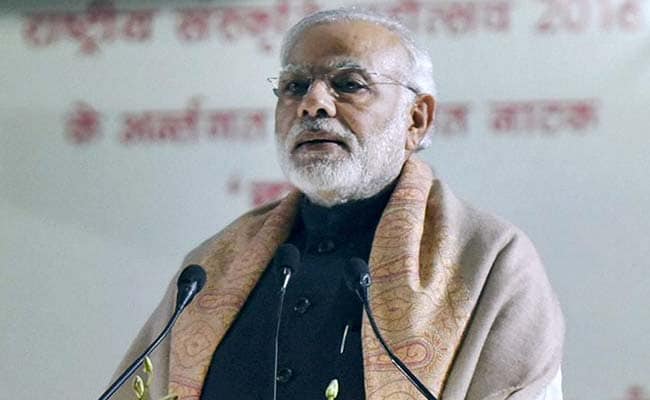
Patalganga: India will not hesitate to make tough decisions to help support its growing economy, Prime Minister Narendra Modi said on Saturday, alluding to his recent scrapping of 500 and 1,000 rupee banknotes to tackle endemic corruption.
PM Modi told an event organised by the Securities and Exchange Board of India (SEBI), India's capital markets regulator that his government would continue to follow sound and prudent economic policies to ensure that India's long-term prospects are bright.
"We will not take decisions for short-term political point scoring . . . We will not shy away from taking difficult decisions if those decisions are in the interests of the country," PM Modi said.
"Demonetisation is an example. It is a short-term pain but it will bring long-term gain."
PM Modi announced the shock move to ditch 500 and 1,000 rupee notes with a combined value of $256 billion on Nov. 8, saying the large denomination notes fuelled corruption and fraud and were even used to finance attacks by militants who target India.
With the cash economy estimated to account for a fifth of India's $2 trillion gross domestic product, the decision has disrupted the daily lives of hundreds of millions of Indians.
But economists and some businesses say it could ultimately help broaden the formal economy and improve tax compliance.
PM Modi said the government had transformed the economy in less than three years by cutting and achieving fiscal deficit targets, keeping the current account deficit low, boosting foreign exchange reserves and lowering inflation.
"Developed countries and emerging markets are both facing slow growth. Against this background, India is being seen as a bright spot. Growth is projected to remain among the highest in the world," he said.
(This story has not been edited by NDTV staff and is auto-generated from a syndicated feed.)

-
One El Nino, India Can Handle. Two Could Break The Granary

India's grain stocks can absorb one bad year, but a second El Nino could drain the buffer in two to three years, economists say.
-
India's Troika Of Good Luck | Joining The Dots
As Jensen Huang's exit drags Nvidia down, a cooling AI trade and resilient earnings have revived investor interest in India. A likely RBI rate hike looms.
-
Talking Points This Week: Leadership Shock At Nvidia, Earnings Strength, And The Fog Over Hormuz
The Anthropic IPO pricing and first trading day, Nvidia's upcoming earnings, and any fresh signals from Iran will set the tone for the following week.
-
Signature Play: The Classic Cocktail Is Dead. Or Is It?
Classic cocktails are disappearing from India's cocktail menus. But they're still being ordered, taught to bartenders and borrowed from. So, who's really having the last drink?
-
A New Samvat Wishlist: Inclusive Prosperity And Human Development
India has strengthened its economic foundations through infrastructure, digital access and enterprise. Its next growth chapter must deepen productivity, create better livelihoods and widen participation in prosperity.
-
Love, Sex Aur Dhokha: The Audacious Plot To Spy On Jensen Huang
A Taipei dinner, a Singapore chip buyer and a suspected Chinese asset: inside the alleged spy operation that got close to NVIDIA's Jensen Huang.
-
Ten Things I Learnt This Samvat
Patience can be a trap. Cheap stocks can stay cheap. Leverage can wipe you out. What did Samvat 2082 teach us? Niraj Shah writes on 10 lessons from the year gone by.
-
Talking Points This Week: Tech Nerves, FII Buying, And A Faraway Banking Shock
The global markets are not shining this Diwali. The exception in the large markets is, India.
-
Midterm Rally Lasted A Day. The Hard Reality Of A Divided US May Last Two Years | Opinion
Between a contested AI boom, a debt ceiling that arrives in 2027 and a president with every incentive to act alone, the next two years may prove more volatile than the first day's rally suggests.
-
Blue Wave Will Derail the AI Trade but Won't Dismantle the AI Era | Unhedged Position
The Democrats' sweep of the US Congress will see politics collide with economic forces both over the long and short term.









