PM Modi Launches A Talent Search In The Lok Sabha
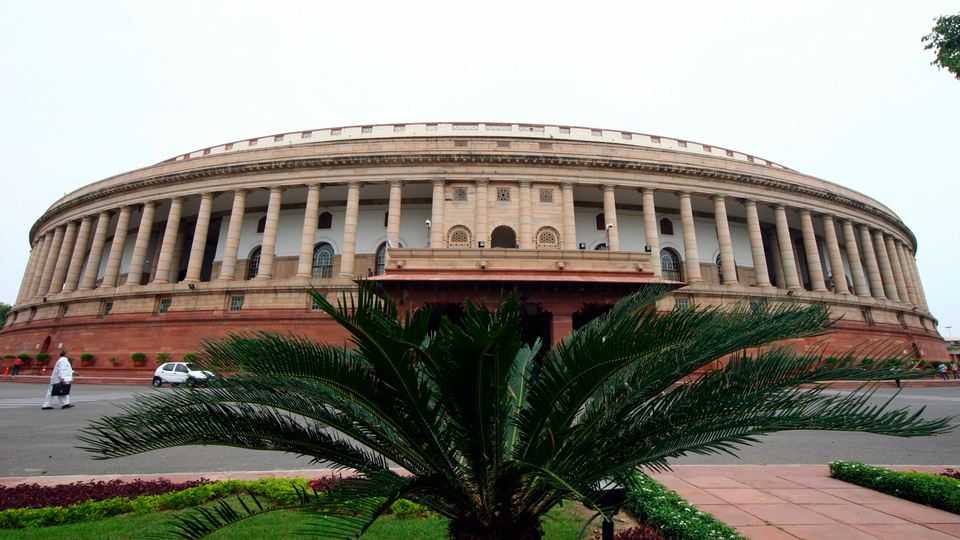
The ongoing winter session of parliament, which was expected to witness heated arguments between the opposition and the union government, has brought together the two opposing sides. In an unusual move, Prime Minister Narendra Modi's recent appeal that young Members of Parliament be given more opportunities to speak in both houses of Parliament is now receiving support from parties across the political spectrum.
Most MPs believe that the first step in this direction has been taken, and there has been a deliberate effort to allow new members to raise issues during the zero hour every day. As a second step, parliamentarians suggest that there is a need to now raise this issue for discussion in the business advisory committee of parliament, which decides what issues should be taken up for debate and deliberation in both houses of parliament.
“There is no doubt that young MPs are getting more opportunities to speak during zero hour, and there is a deliberate attempt to help young MPs speak in parliament. It is a step in the right direction that must be supported by all political parties. But while young MPs and first time members get an opportunity, there is a need to hold more debates and discussions in both houses of parliament. What is happening in the winter session is that we are only talking about government business and there is less debate,” said Kunwar Danish Ali, member of parliament of the Bahujan Samaj Party.
PM Modi met MPs from almost all political parties unofficially a few days before the start of the winter session of parliament, and during the interaction, MPs complained to the PM that when ruckus occurs in both houses, parliament proceedings are hampered, and they are unable to experience and participate in debates.
The nudge from PM Modi is also relevant because, going by the statistics, the 17th or the present Lok Sabha, has 267 first-time members, of whom only 12% are under 40 years. The data was even more startling in the 16th Lok Sabha, when PM Modi was first elected. In the 16th Lok Sabha, there were 312 first time elected members in Parliament, and a majority of them were from the ruling Bharatiya Janata Party.
“For the past three and a half years, Lok Sabha Speaker Om Birla has made it a practice to allow all new MPs to speak during zero hours. I guess PM Modi has now indicated that this practice should be furthered and that more exposure must be given by political parties to young or first time MPs. It is for all political parties to take this initiative forward now because this is a valid suggestion,” said Bhartruhari Mahtab, parliamentarian of the Biju Janata Dal.
Opposition parties argue that, while the Prime Minister's statement was broadly supported, the union government should allow more debates in both the Lok Sabha and the Rajya Sabha so that all members of Parliament, not just the young, have an opportunity to speak and raise issues in the houses.
“The initiative of Prime Minister Narendra Modi is an important step because young MPs and first time MPs must get greater opportunities to speak in Parliament. It is not just a good learning experience but it will also boost their confidence to raise questions and take part in the debate. I have witnessed that because of the appeal of PM Modi, at least BJP has made it a point to make young members take part in the debate,” said a first time MP of BJP on condition of anonymity.
Members of the ruling BJP argue that PM Modi's initiative is significant because there is an unspoken hierarchy in Parliament, and when the names of MPs for debates are finalized, it is usually the senior parliamentarians who have spent the most years who get more opportunities and preferences to speak during debates.
The message from PM Modi is also being interpreted as an opportunity by first-time legislators who believe the party's senior leadership is conducting a talent search. 136 of the BJP's 303 Lok Sabha seats are held by first-time parliamentarians, the highest number in the current Lok Sabha. This time around, the Congress Party has a fair number of first-timers in the Lok Sabha. The opposition party has 53 MPs, out of whom 31 are first timers.
“I think there is a hidden message in PM Modi's statement. It is a suggestion for BJP leaders, and I am sure the PM will be observing the performance of first time MPs in the House. I see this as PM's talent hunt initiative because he is known for giving opportunities to young and people with less experience. Most chief ministers in BJP-ruled states are first-timers because of the opportunities given by PM," the BJP parliamentarian quoted above said.
Gyan Verma was Senior Editor (Politics) at Mint. He has been a journalist for nearly two decades and writes on the politics and intersection of policy and politics.
The views expressed here are those of the author, and do not necessarily represent the views of BQ Prime or its editorial team.

-
Extracting Value From Battery Scrap Could Be Challenging For India | The Reason Why

A discarded lithium-ion battery still contains valuable materials such as lithium, nickel and cobalt. These can be recovered and reused. When such batteries are crushed and shredded, they produce a dark powder called black mass.
-
One El Nino, India Can Handle. Two Could Break The Granary
India's grain stocks can absorb one bad year, but a second El Nino could drain the buffer in two to three years, economists say.
-
India's Troika Of Good Luck | Joining The Dots
As Jensen Huang's exit drags Nvidia down, a cooling AI trade and resilient earnings have revived investor interest in India. A likely RBI rate hike looms.
-
Talking Points This Week: Leadership Shock At Nvidia, Earnings Strength, And The Fog Over Hormuz
The Anthropic IPO pricing and first trading day, Nvidia's upcoming earnings, and any fresh signals from Iran will set the tone for the following week.
-
Signature Play: The Classic Cocktail Is Dead. Or Is It?
Classic cocktails are disappearing from India's cocktail menus. But they're still being ordered, taught to bartenders and borrowed from. So, who's really having the last drink?
-
A New Samvat Wishlist: Inclusive Prosperity And Human Development
India has strengthened its economic foundations through infrastructure, digital access and enterprise. Its next growth chapter must deepen productivity, create better livelihoods and widen participation in prosperity.
-
Love, Sex Aur Dhokha: The Audacious Plot To Spy On Jensen Huang
A Taipei dinner, a Singapore chip buyer and a suspected Chinese asset: inside the alleged spy operation that got close to NVIDIA's Jensen Huang.
-
Ten Things I Learnt This Samvat
Patience can be a trap. Cheap stocks can stay cheap. Leverage can wipe you out. What did Samvat 2082 teach us? Niraj Shah writes on 10 lessons from the year gone by.
-
Talking Points This Week: Tech Nerves, FII Buying, And A Faraway Banking Shock
The global markets are not shining this Diwali. The exception in the large markets is, India.
-
Midterm Rally Lasted A Day. The Hard Reality Of A Divided US May Last Two Years | Opinion
Between a contested AI boom, a debt ceiling that arrives in 2027 and a president with every incentive to act alone, the next two years may prove more volatile than the first day's rally suggests.









