PM Modi Gives RBI Chief Urjit Patel Ammo To Finish A Major War
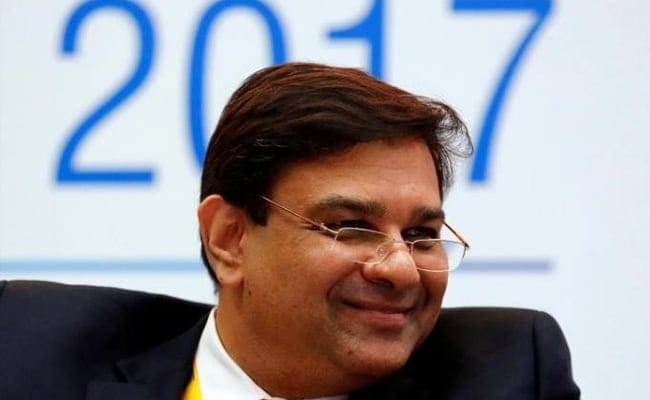
Reserve Bank of India Governor Urjit Patel has been given the ammunition to finish a war that his predecessor Raghuram Rajan started -- the fight to eliminate $180 billion of stressed assets.
After at least three proposals to reduce the world's highest bad-loan ratio failed to reduce delinquent debt, India amended a law to give the central bank power to spur lenders and borrowers to take write downs. The move is an opportunity for Patel, who has surprised the market with his monetary policy decisions, and has been criticized for his lack of communication in the wake of Prime Minister Narendra Modi's move to ban 86 percent of the nation's cash, to revive credit growth that's expanding at the slowest pace since 1992.
To help Patel build on " rock star" Rajan's success in pushing lenders to recognize and make increased provisions for soured credit, PM Modi dumped a proposal to create a so-called bad bank. Instead the amendment allows Patel, who obtained his doctorate in economics from Yale University, to kick start the stalled process of resolving delinquent debt that may help revive India's investment cycle and add jobs.
"This is the most important announcement in recent times," to address the bad loan problem, Ashutosh Khajuria, chief financial officer at Federal Bank Ltd. said in a phone interview. "While many tools were provided earlier to deal with stressed assets the new announcement will force banks to use those."
Resolutions of bad loans stalled because banks weren't able to agree on write downs while company founders balked at renegotiating loan terms that included losing control of their firms. That's where Patel's push to get the Banking Regulation Act amended will be useful. Following the change in rules, the central bank will be allowed to set up panels that will vet the non-performing loans and prompt lenders to take write downs, while reducing the risk of anti-graft probes.
The central bank also plans to set up a secretariat and expects to resolve as many has 60 bad-loan cases in nine months, a person familiar with the matter said last week. It wants to target settling as many as 100 cases by the end of 2018, the person said, asking not to be identified citing rules.
"You get a renewed sense of seriousness from the RBI in all recent communications," said Parthasarathi Mukherjee, chief executive officer at Lakshmi Vilas Bank Ltd. "The impression one gets is that Dr. Patel wants to tackle the non-performing loan issue pretty urgently. After all, the economy can not grow if the banking sector is a drag."
For PM Modi, getting rid of bad loans is crucial to revive Asia's third-largest economy and meet his election pledge of adding jobs before his party seeks re-election in 2019.
"Resolving stressed assets of this magnitude is a herculean task and none of the measures announced so far has been successful," said Madan Sabnavis, chief economist at Credit Analysis & Research Ltd. in Mumbai.
State-run banks with low capital buffers will be constrained in taking write downs. Lenders need to maintain a capital adequacy ratio of at least 9 percent.
"More recapitalization with government funds is essential" for state-run banks -- that account for more than 70 percent of the loans in the country -- to go ahead with the stressed debt resolution plan, Reserve Bank Deputy Governor Viral Acharya said in a speech in February.
The new law is the best opportunity for Patel to show his mettle in taking on a problem that's hurting the $2 trillion economy. Patel was largely absent from the public when PM Modi suddenly announced the cancellation of large-denomination notes in early November. He was criticized by former central bankers Usha Thorat and K C Chakrabarty who questioned the note ban and the independence of the central bank.
Since then, things have changed.
In a bid to burnish the central bank's image as an inflation fighting institution, Patel rebuffed pressure to cut rates in December to cushion the economy from the impact of the cash ban. He opted to change the monetary policy stance in February to neutral from accommodative to ensure inflation stayed within target. Investors cheered and sent the rupee to a 20-month high.
He has now gone on the offensive to address the problems facing the banking sector. In a rare speech last month in New York, he said the challenge he was grappling with was the large amount of stressed loans, adding that there was a need for consolidation in the sector.
"As many have pointed out, it is not clear that we need so many public sector banks," Patel said in the speech. "The system could be better off if they are consolidated into fewer but healthier banks."
To address the bad-debt problem, Rajan started a six-month audit of banks' balance sheets in October 2015, which forced lenders to improve disclosures of soured credit. Rajan also introduced measures allowing lenders to convert debt owed by companies into equity under the so-called strategic debt restructuring scheme.
Patel, who was on the board of the State Bank of India for more than three years till he became the governor "has seen the pain that banks go through," when companies default, said Deepak Parekh, chairman of Housing Development Finance Corp. had said in October.
© 2017 Bloomberg L.P
(Except for the headline, this story has not been edited by NDTV staff and is published from a syndicated feed.)

-
We May Need Another Tukaram Mundhe To Fight Air Pollution | The Reason Why

Developers may install basic measures such as sprinklers and green nets, resume work, and continue violating rules when this equipment stops working.
-
Extracting Value From Battery Scrap Could Be Challenging For India | The Reason Why
A discarded lithium-ion battery still contains valuable materials such as lithium, nickel and cobalt. These can be recovered and reused. When such batteries are crushed and shredded, they produce a dark powder called black mass.
-
One El Nino, India Can Handle. Two Could Break The Granary
India's grain stocks can absorb one bad year, but a second El Nino could drain the buffer in two to three years, economists say.
-
India's Troika Of Good Luck | Joining The Dots
As Jensen Huang's exit drags Nvidia down, a cooling AI trade and resilient earnings have revived investor interest in India. A likely RBI rate hike looms.
-
Talking Points This Week: Leadership Shock At Nvidia, Earnings Strength, And The Fog Over Hormuz
The Anthropic IPO pricing and first trading day, Nvidia's upcoming earnings, and any fresh signals from Iran will set the tone for the following week.
-
Signature Play: The Classic Cocktail Is Dead. Or Is It?
Classic cocktails are disappearing from India's cocktail menus. But they're still being ordered, taught to bartenders and borrowed from. So, who's really having the last drink?
-
A New Samvat Wishlist: Inclusive Prosperity And Human Development
India has strengthened its economic foundations through infrastructure, digital access and enterprise. Its next growth chapter must deepen productivity, create better livelihoods and widen participation in prosperity.
-
Love, Sex Aur Dhokha: The Audacious Plot To Spy On Jensen Huang
A Taipei dinner, a Singapore chip buyer and a suspected Chinese asset: inside the alleged spy operation that got close to NVIDIA's Jensen Huang.
-
Ten Things I Learnt This Samvat
Patience can be a trap. Cheap stocks can stay cheap. Leverage can wipe you out. What did Samvat 2082 teach us? Niraj Shah writes on 10 lessons from the year gone by.
-
Talking Points This Week: Tech Nerves, FII Buying, And A Faraway Banking Shock
The global markets are not shining this Diwali. The exception in the large markets is, India.









