Plunge In Asia’s AI Shares Sows Doubts Over World-Beating Rally
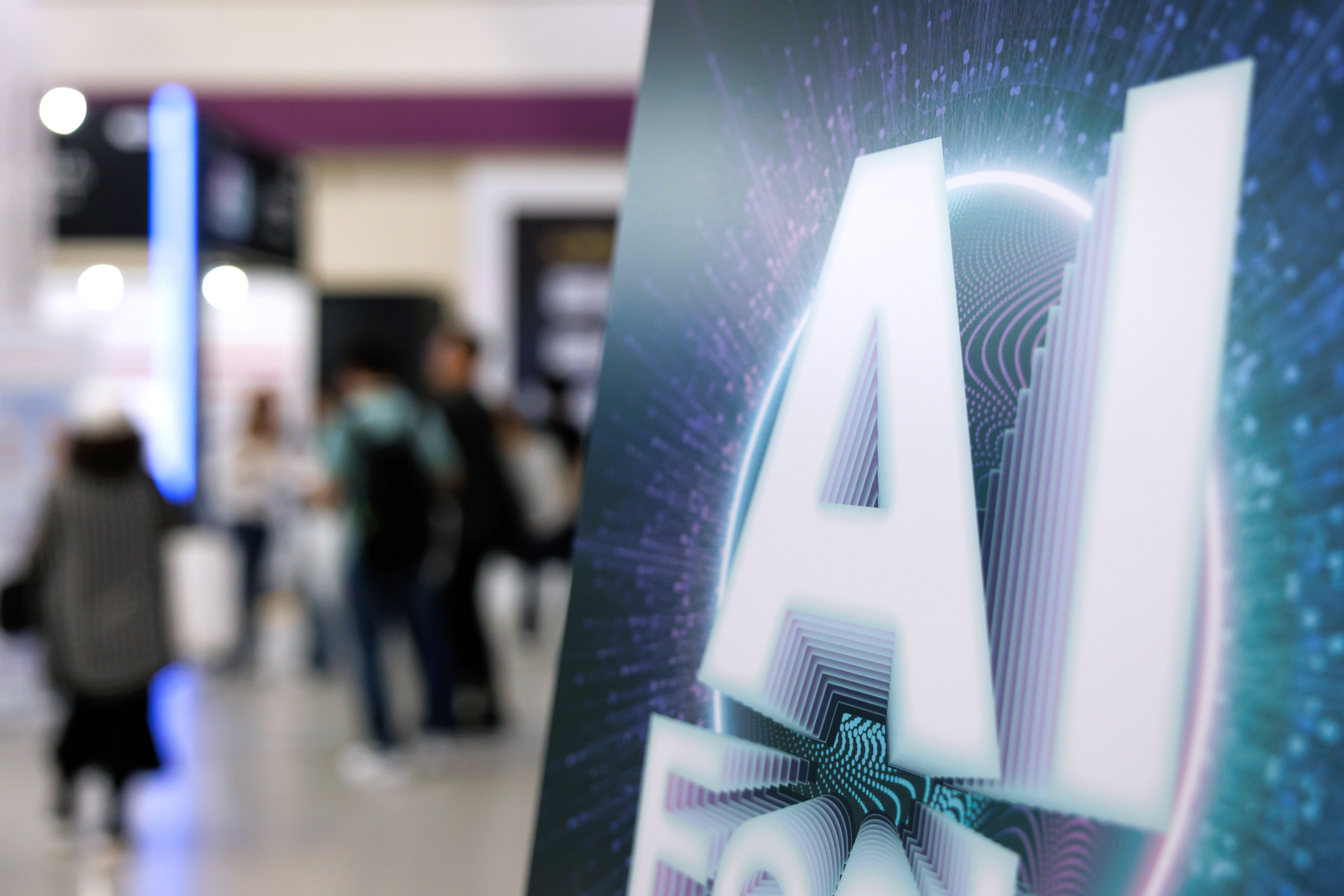
The sudden slump in Asia's technology shares last week has jolted investors, serving as a stark reminder that the world-beating rally in artificial intelligence and semiconductor stocks may be nearing a short-term crest.
The region's sharpest decline since April — triggered by a tech-led selloff on Wall Street — has refocused attention on cracks beneath the surface: the rally's narrow breadth, heavy reliance on retail traders, and growing uncertainty around the timing of Federal Reserve interest-rate cuts.
Last week's “selloff is a reminder that Asia's market structure is just more vulnerable,” said Charu Chanana, chief investment strategist at Saxo Markets in Singapore. “Further corrections will come. The trigger, in my opinion, was extended valuations and we have not corrected that. So the Asia chip market is likely to be volatile.”
Asia's tech sector has outpaced its US counterpart this year, fueled by cheaper valuations and the excitement sparked by China's AI breakthroughs, particularly that of DeepSeek. The MSCI Asia Pacific Index has climbed 24% in 2025 — on track to outperform the S&P 500 by the widest margin in 16 years.
But its meteoric rise has also stirred concern about overheating. Korea's stock exchange has even warned about the dangers posed by the more than 200% surge in SK Hynix Inc. shares this year.
Those lofty gains helped set the stage for last week's reversal. The MSCI Asia technology gauge slid as much as 4.2% on Wednesday, its biggest intraday fall since April's US tariff shock. South Korea's Kospi plunged up to 6.2%, while Japan's Nikkei 225 tumbled as much as 4.7%. Key Nvidia Corp. suppliers — including SK Hynix and Advantest Corp. — were among the hardest hit, each losing roughly 10%.
Concentration Risks
Analysts say Asia's outsized losses reflect another structural issue: the extreme concentration of tech giants in regional benchmarks. Taiwan Semiconductor Manufacturing Co. now accounts for over 40% of the Taiex, triple its share a decade ago. In South Korea, Samsung Electronics Co. and SK Hynix together make up about 30% of the Kospi.
Japan is no exception: the top five stocks in the Nikkei 225 account for about 38% of total weighting. “If anything goes wrong with the AI or semiconductor boom, the Nikkei will plunge immediately,” said Takehiko Masuzawa, head of equity trading at Phillip Securities Japan in Tokyo. “I do think we'll continue to see more corrections and heightened volatility going forward.”
The heavy involvement of retail investors in the current rally has also amplified swings, analysts say.
“With foreign investors still on the sidelines, higher retail and domestic participation is driving greater volatility and sector rotation across Asian markets,” said Peter Kim, managing director at KB Securities Co. in Seoul. “Less liquidity and institutional participation, and the high beta features of Asian stocks are especially evident in AI themes.”
Stronger Dollar
Meanwhile, a strengthening US dollar has intensified pressure on Asian chipmakers, luring funds back to American assets. Traders are also scaling back bets on imminent Fed rate cuts, removing a key tailwind for global equities.
To be sure, not everyone viewed last week's pullback as a reason for alarm.
“What we saw was taking profit, nothing more, nothing less,” said Shawn Oh, an equity trader at NH Investment & Securities Co. in Seoul. “Psychology is playing a big role rather than fundamentals. Many people probably thought there would be a correction at least once too.”
Even after the rout, valuations in Asia's chip sector remain comparatively appealing: Bloomberg's regional semiconductor gauge trades at around 18 times forward earnings, well below the Philadelphia Semiconductor Index's 28 times.
For others, the Asian tech selloff — following the warnings from Goldman Sachs Group Inc. and Morgan Stanley chief executives about the likelihood of a global stock pullback — was just another reason to turn more cautious.
“We've been sellers over the past few weeks,” said Vikas Pershad, an Asian equities portfolio manager at M&G Investments in Singapore. “We are focused on prospective returns, which is why we took profits in the sector last month. We're not at levels where we would be looking to increase our exposure to those sectors yet.”

-
The Economic Imperative: Analysing The Material Driving Force Behind India-Canada Strategic Reset

This economic complementarity is further reinforced by deep institutional investment ties and talent mobility, which form the bedrock of the bilateral framework.
-
Medicine Pricing: Where Must Profit Stop?
India must confront excessive margins, hidden incentives and regulatory gaps that threaten the integrity of medicine.
-
Why Amazon And Flipkart Are Struggling To Beat Meesho In India's Smaller Cities
With 274 million users and lowest-cost logistics, Meesho is defending its value commerce crown against giants like Amazon and Flipkart.
-
High US Salaries, No Green Card Certainty: The Financial Calculation Facing Indian H-1B Families
The suspension of PERM processing at eight technology employers does not cancel existing H-1B visas. What it does is force a question many Indian families have been avoiding: is the US salary worth tying your career and family plans to one employer?
-
Swiggy vs Eternal: Food Delivery's Two Rivals Are No Longer In The Same Race
Eternal is building a private AI assistant, dark.ai. Swiggy is still working out how to make Instamart pay, with an operating loss of Rs 895 crore in the July-September quarter while Blinkit stayed profitable.
-
Where You Live Shapes How You Get To Work | The Reason Why
Two-wheelers are the most popular way to get to work in India, accounting for nearly 43% of workplace commutes.
-
Unhedged Position: Can India See An Indonesia-Style Time Correction?
The Nifty is trading below levels it first clocked in 2024. Is there, then, as I have suggested in the headline, potential that the current time correction drags on painfully for the next three-five, even ten years?
-
Navigating Friction And Energy Realities: An Analysis Of Marco Rubio's October Visit To India
Occurring at a critical juncture marked by stalled trade negotiations and escalating geopolitical pressures over global energy supplies, the visit offers a profound window into modern US-India relations.
-
India Exports Capital. Why Not Export Trusteeship?
The big question, then, is whether India can build an institution that global borrowers, investors, banks, and lawyers can trust, even without an Indian connection.
-
France's Economy & Politics Are In Crisis | The Reason Why
Let's look at how the French economy and politics evolved under Nicolas Sarkozy, Franois Hollande and Emmanuel Macron.










