Philip Morris Says Godfrey Phillips Charges Machinery Costs; Calls It "Business Expense": Report
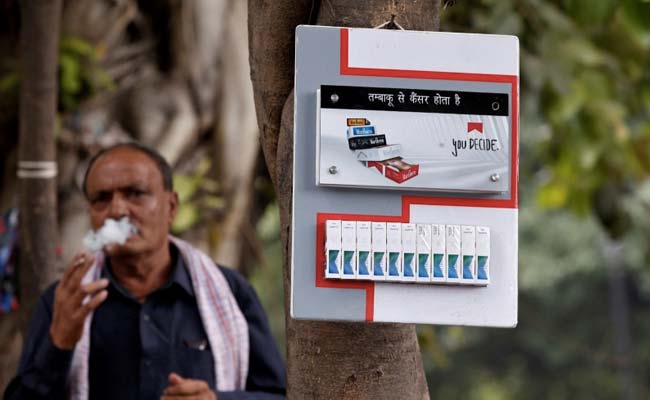
Philip Morris International Inc's Indian partner charges machinery-related costs for manufacturing its Marlboro cigarettes in the country, the company said on Wednesday, following a Reuters article that showed it may have circumvented foreign direct investment rules.
Philip Morris has for years paid manufacturing costs to Godfrey Phillips, despite a nine-year-old government ban on foreign direct investment in the industry, Reuters reported last week, based on a review of dozens of internal company documents dated between May 2009 and January 2018.
Philip Morris and Godfrey have said they comply with rules.
India prohibited foreign direct investment in cigarette manufacturing in 2010. Ahead of the ban, Philip Morris formed a new wholesale trading company with Godfrey in 2009, and the two sides signed a procurement agreement.
Philip Morris' director for corporate affairs in India, R Venkatesh, said on Wednesday that under that agreement Godfrey "manufactures Marlboro cigarettes and recharges any costs related to special machinery for the manufacture" of those cigarettes to the global tobacco giant's domestic unit.
"This recharge is simply a business expense," Venkatesh told Reuters by e-mail, adding that the arrangements were in "full compliance" with regulations.
Philip Morris had not commented on the Reuters story after it was published on March 6. On Monday, Godfrey told stock exchanges it was in compliance with laws and any suggestion it had violated foreign investment rules was "completely misconceived and misplaced".
After the Reuters report was published, a senior official at country's main financial crime-fighting agency, the Enforcement Directorate, said Philip Morris and Godfrey were being investigated for alleged violations of the country's laws. The scope of the investigation, the source added, was much broader than the issues highlighted in the Reuters story.
Three former officials and one former head of the Enforcement Directorate had reviewed the Philip Morris documents for Reuters and said the dealings should be investigated for potentially breaking the foreign investment rules.
"We remain available to discuss this matter further with the appropriate regulatory authorities," Venkatesh said in his e-mail to Reuters on Wednesday.
Philip Morris paid Godfrey for items ranging from large cigarette-making machines to costs of smaller equipment such as barcode scanners and printers deployed in Godfrey's factories, the Reuters review of documents found.
Six invoices issued by Godfrey showed billing of Rs 4.55 crore ($644,200) to Philip Morris between December 2013 and January 2018 for manufacturing-related charges.
One invoice from January 2018 sent from Godfrey to Philip Morris showed the company had spent Rs Rs 20.6 crore ($3 million) on capital expenditure for Marlboro-related manufacturing activities since 2009, though it was not clear how much of that was paid by Philip Morris.
Other than regular payments, Philip Morris also signed off on one-time expenses and refurbishment costs incurred by Godfrey on at least two occasions in 2013 and 2014. It then accounted those transactions internally under a heading "Packaging - Research", the documents showed.

-
We May Need Another Tukaram Mundhe To Fight Air Pollution | The Reason Why

Developers may install basic measures such as sprinklers and green nets, resume work, and continue violating rules when this equipment stops working.
-
Extracting Value From Battery Scrap Could Be Challenging For India | The Reason Why
A discarded lithium-ion battery still contains valuable materials such as lithium, nickel and cobalt. These can be recovered and reused. When such batteries are crushed and shredded, they produce a dark powder called black mass.
-
One El Nino, India Can Handle. Two Could Break The Granary
India's grain stocks can absorb one bad year, but a second El Nino could drain the buffer in two to three years, economists say.
-
India's Troika Of Good Luck | Joining The Dots
As Jensen Huang's exit drags Nvidia down, a cooling AI trade and resilient earnings have revived investor interest in India. A likely RBI rate hike looms.
-
Talking Points This Week: Leadership Shock At Nvidia, Earnings Strength, And The Fog Over Hormuz
The Anthropic IPO pricing and first trading day, Nvidia's upcoming earnings, and any fresh signals from Iran will set the tone for the following week.
-
Signature Play: The Classic Cocktail Is Dead. Or Is It?
Classic cocktails are disappearing from India's cocktail menus. But they're still being ordered, taught to bartenders and borrowed from. So, who's really having the last drink?
-
A New Samvat Wishlist: Inclusive Prosperity And Human Development
India has strengthened its economic foundations through infrastructure, digital access and enterprise. Its next growth chapter must deepen productivity, create better livelihoods and widen participation in prosperity.
-
Love, Sex Aur Dhokha: The Audacious Plot To Spy On Jensen Huang
A Taipei dinner, a Singapore chip buyer and a suspected Chinese asset: inside the alleged spy operation that got close to NVIDIA's Jensen Huang.
-
Ten Things I Learnt This Samvat
Patience can be a trap. Cheap stocks can stay cheap. Leverage can wipe you out. What did Samvat 2082 teach us? Niraj Shah writes on 10 lessons from the year gone by.
-
Talking Points This Week: Tech Nerves, FII Buying, And A Faraway Banking Shock
The global markets are not shining this Diwali. The exception in the large markets is, India.









