Pharma Industry In India: From Government Policies To Future Concerns
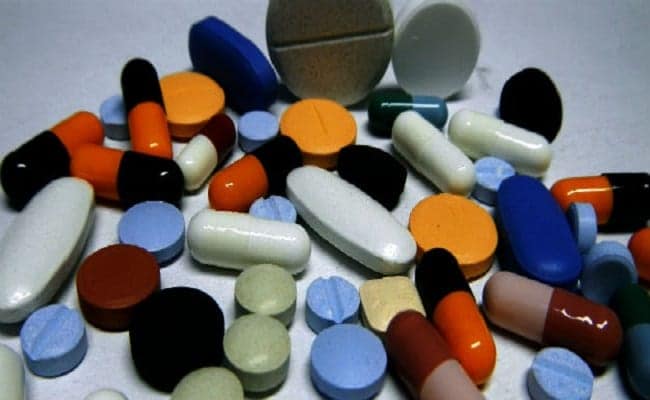
India is the largest provider of generic drugs globally with the Indian generics accounting for 20 per cent of global exports in terms of volume, according to pharma industry experts. The country is more focused on quality of drugs and medicines. Government is also working in the same context and can be seen centering more on policy making. This is overall constructive for the healthcare sector of the country, said the experts.
Current status of pharma industry
The current status of pharma industry in India is decent. However, there are ongoing changes in policy which can lead to confusion in business. "Government keeps on changing guidelines which may obscure manufacturers but it's a good sign also as we are moving towards better side of India. If we look at wider perspective, the world can be divided into three kinds of countries - highly regulated, semi-regulated and non-regulated. Every country has its own policy and way of dealing with the industry", said Sanjeev Gupta, Managing Director, Kusum Group of Companies.
The Indian pharma industry gained prominence since 1970s but manufacturers were not bothered about standards that time. The scenario was diverse, anybody came up to establish plants and manufacture them. 48 years have passed now and currently the country is concentrating more on regulation of drugs.
Government policies and pharma industry
The standard of manufacturing facilities should always be retained. According to Mr. Gupta, there are many encounters which the pharma industry often faces. In this pursuit, there may be conciliations with standard of drugs. However, the government is now working more on standards.
"Pharmaceutical industry is not a commodity. We should be focused more on standard and quality of the product. This is what the government is doing now. Government is more engrossed on policy making. They are taking resilient decisions for the concern of pharma industry. There may be ifs and buts but government is looking forward to work on criterion more which is a good symbol", added Mr. Gupta.
"There are mammoth opportunities in India. India is a good exporter of generic business and we have also taken a big jump recently. There are many people in small towns and villages who are not getting proper medicines. Government is trying to disentangle the concerns of these locations", he further said.
Threats to pharma industry
According to pharma industry experts, standard of the drugs is the only concern for the market. There are no basic threats to pharma industry in India. 70 per cent of pharma market is generic, 9 per cent is oriented and rest 21 per cent is over-the-counter (OTC) which is acceptable.
India's healthcare budget is less. The country spends only a small part of GDP (Gross Domestic Product) on healthcare while in other countries 4-5 per cent of GDP is outlaid on healthcare. There are no threats as India is working systematically.
Future concerns of pharma industry
India should become part of PIC/S (Pharmaceutical Inspection Co-operation Scheme). The Pharmaceutical Inspection Co-operation Scheme (PIC/S) is a non-binding, informal co-operative arrangement between Regulatory Authorities in the field of Good Manufacturing Practice (GMP) of medicinal products for human or veterinary use.
"All FDAs (Food and Drug Administration) are part of PIC/S which ensures that all manufacturing is part of the system as well. Small countries like Vietnam and Uzbekistan which don't even have 5 factories want to become part of PIC/S now. India is also not the part of this society. India is doing a generic business and we are contributing to around 20 per cent medicines of world. This means every fifth tablet created in India is used worldwide. In this scenario, it is important that we become part of the PIC/S. We are part of WHO (World Health Organization) reality but it is not essential for all the industry. PIC/S is more important for us. I am sure in future we will become part of the system", said Mr. Gupta.
China recently exempted import tariffs (duties) for 28 drugs, including all cancer drugs, from May 1, 2018. This may impact Indian pharma sector too. In words of Mr. Gupta, "The impact may not be immediate as people are not keen to go to China. There is language barrier and recession process is tough. It will take at least 5 years to establish."

-
Gold Is Rs 22,000 Cheaper Than A Month Ago. Should You Buy Amid The Wedding Season?

Gold's potential slide to $3,500 could save around Rs 4,700 per 10 grams, but a soft inflation print could just as easily push prices back up. One way to split the risk is to buy in parts, some now and the rest after the Fed's Dec. 9 decision.
-
AI Agents Are Gaining Power. Who Governs Them?
Artificial intelligence agents promise to transform productivity by moving machines from assisting decisions to executing them. But as organisations delegate greater authority to these AI-agents, they must first establish who controls that authority and who remains accountable when things go wrong.
-
Why Swapping Your Old Gold Can Trigger A Rs 5 Lakh Tax Bill, And How You Can Avoid It Legally
Swapping old gold for new is taxed as a sale and a fresh purchase. Getting your own gold remade can cut most of that bill, though it has its own costs.
-
The AI Trade is Done. The Real Opportunity for Investors Starts in 2027 | Unhedged Position
As pureplay AI stocks plunge and circular, capex-led financing unwinds, 2027 is set to be a year of reckoning for AI companies. Yet the bust clears the way for a better opportunity for investors in 2027 -- shifting the spotlight from AI builders to the companies using AI.
-
Leadership As Mission: Why The Age Of AI Demands More Human Leadership
Debjani Ghosh examines how AI is changing leadership, arguing that its success must be measured by its impact on people and the accountability of those guiding its use.
-
We May Need Another Tukaram Mundhe To Fight Air Pollution | The Reason Why
Developers may install basic measures such as sprinklers and green nets, resume work, and continue violating rules when this equipment stops working.
-
Extracting Value From Battery Scrap Could Be Challenging For India | The Reason Why
A discarded lithium-ion battery still contains valuable materials such as lithium, nickel and cobalt. These can be recovered and reused. When such batteries are crushed and shredded, they produce a dark powder called black mass.
-
One El Nino, India Can Handle. Two Could Break The Granary
India's grain stocks can absorb one bad year, but a second El Nino could drain the buffer in two to three years, economists say.
-
India's Troika Of Good Luck | Joining The Dots
As Jensen Huang's exit drags Nvidia down, a cooling AI trade and resilient earnings have revived investor interest in India. A likely RBI rate hike looms.
-
Talking Points This Week: Leadership Shock At Nvidia, Earnings Strength, And The Fog Over Hormuz
The Anthropic IPO pricing and first trading day, Nvidia's upcoming earnings, and any fresh signals from Iran will set the tone for the following week.









