Petrol Price Hits Four-Year High, Diesel At Highest Level
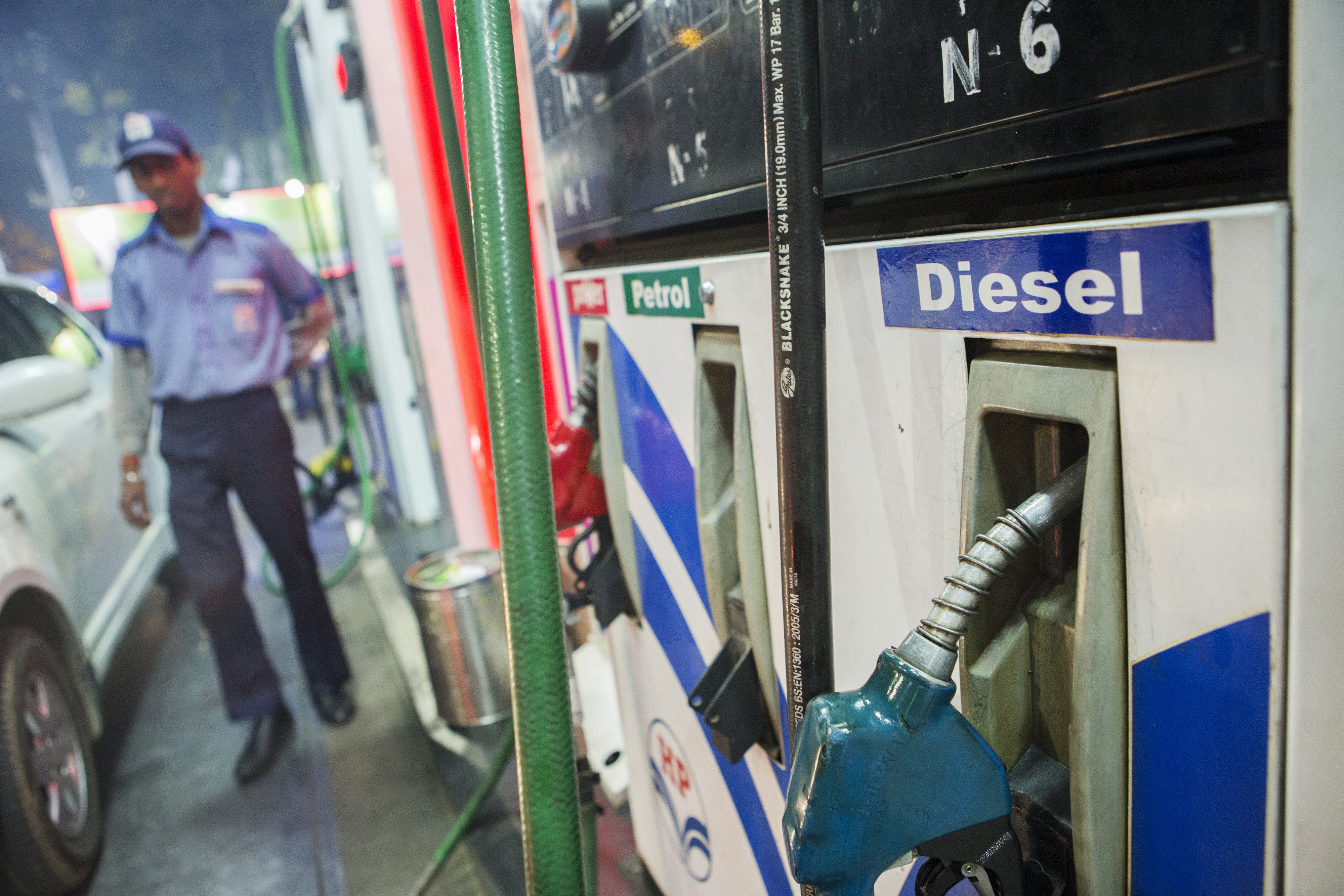
Petrol price today hit a four-year high while diesel rates touched an all-time high in the national capital, renewing calls for the government to cut excise tax rates.
State-owned oil firms, which have been since June last year revising auto fuel prices daily, today raised petrol and diesel rates by 18 paise per litre each in Delhi, according to a price notification.
Petrol in the national capital now costs Rs 73.73 a litre, the highest since September 14, 2014 when rates had hit Rs 76.06. Diesel price at Rs 64.58 is the highest ever, with previous high of Rs 64.22 on Feb 7.
The oil ministry had earlier this year sought a reduction in excise duty on petrol an diesel to cushion the impact rising international oil rates but Finance Minister Arun Jaitley in his Budget presented on Feb. 1 ignored those calls.
India has the highest retail prices of petrol and diesel among South Asian nations as taxes account for half of the pump rates.
Jaitley had raised excise duty nine times between November 2014 and January 2016 to shore up finances as global oil prices fell, but then cut the tax just once in October last year by Rs 2 a litre.
Also Read: Why The Oil Price Rise Isn't Pinching You More
Subsequent to that excise duty reduction, the Centre had asked states to also lower VAT but just four of them – Maharashtra, Gujarat, Madhya Pradesh and Himachal Pradesh – reduced rates while others including BJP-ruled ones ignored the call.
The central government had cut excise duty by Rs 2 per litre in October 2017, when petrol price reached Rs 70.88 per litre in Delhi and diesel Rs. 59.14. Because of the reduction in excise duty, diesel prices had on October 4, 2017 come down to Rs 56.89 per litre and petrol to Rs 68.38 per litre. However, a global rally in crude prices pushed domestic fuel prices far higher than those levels.
The October 2017 excise duty cut cost the government Rs 26,000 crore in annual revenue and about Rs 13,000 crore during the remaining part of the current fiscal year.
The government had between November 2014 and January 2016 raised excise duty on petrol and diesel on nine occasions to take away gains arising from plummeting global oil prices. In all, duty on petrol rate was hiked by Rs 11.77 per litre and that on diesel by 13.47 a litre in those 15 months that helped government's excise mop up more than double to Rs 242,000 crore in 2016-17 from Rs 99,000 crore in 2014-15.
State-owned oil companies – Indian Oil Corporation, Bharat Petroleum Corporation and Hindustan Petroleum Corporation – in June last year dumped the 15-year old practice of revising rates on the 1st and 16th of every month . Instead, they adopted a daily price revision system to instantly reflect changes in cost. Since then, prices are revised on a daily basis.

-
The Economic Imperative: Analysing The Material Driving Force Behind India-Canada Strategic Reset

This economic complementarity is further reinforced by deep institutional investment ties and talent mobility, which form the bedrock of the bilateral framework.
-
Medicine Pricing: Where Must Profit Stop?
India must confront excessive margins, hidden incentives and regulatory gaps that threaten the integrity of medicine.
-
Why Amazon And Flipkart Are Struggling To Beat Meesho In India's Smaller Cities
With 274 million users and lowest-cost logistics, Meesho is defending its value commerce crown against giants like Amazon and Flipkart.
-
High US Salaries, No Green Card Certainty: The Financial Calculation Facing Indian H-1B Families
The suspension of PERM processing at eight technology employers does not cancel existing H-1B visas. What it does is force a question many Indian families have been avoiding: is the US salary worth tying your career and family plans to one employer?
-
Swiggy vs Eternal: Food Delivery's Two Rivals Are No Longer In The Same Race
Eternal is building a private AI assistant, dark.ai. Swiggy is still working out how to make Instamart pay, with an operating loss of Rs 895 crore in the July-September quarter while Blinkit stayed profitable.
-
Where You Live Shapes How You Get To Work | The Reason Why
Two-wheelers are the most popular way to get to work in India, accounting for nearly 43% of workplace commutes.
-
Unhedged Position: Can India See An Indonesia-Style Time Correction?
The Nifty is trading below levels it first clocked in 2024. Is there, then, as I have suggested in the headline, potential that the current time correction drags on painfully for the next three-five, even ten years?
-
Navigating Friction And Energy Realities: An Analysis Of Marco Rubio's October Visit To India
Occurring at a critical juncture marked by stalled trade negotiations and escalating geopolitical pressures over global energy supplies, the visit offers a profound window into modern US-India relations.
-
India Exports Capital. Why Not Export Trusteeship?
The big question, then, is whether India can build an institution that global borrowers, investors, banks, and lawyers can trust, even without an Indian connection.
-
France's Economy & Politics Are In Crisis | The Reason Why
Let's look at how the French economy and politics evolved under Nicolas Sarkozy, Franois Hollande and Emmanuel Macron.










