No Reversal On Deregulation Of Petrol, Diesel Prices, Says Arun Jaitley
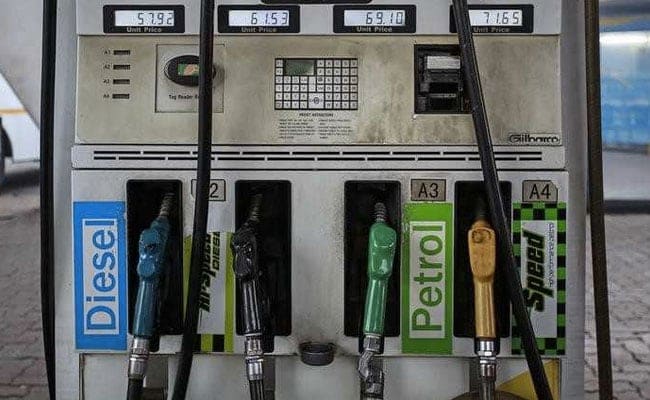
NEW DELHI: The government on Saturday sought to assure investors that it would not go back to regulating fuel prices, a day after oil company shares tumbled on concerns about a return to a regime that has hurt their profits in the past. The government said on Thursday it was cutting petrol and diesel by 2.50 rupees per litre to help people struggling to pay fuel prices that had climbed on the back of a rise in global crude prices and a weakening rupee. The move was seen as a reversal of a 2014 decision to scrap regulated fuel prices - a regime that was blamed for deterring state oil marketing firms from expanding and for choking off investment in domestic oil fields by the biggest oil producer.
"Let me categorically assure all that there is no going back on deregulation of oil prices," Finance Minister Arun Jaitley said in a Facebook post on Saturday.
Prime Minister Narendra Modi freed up the price of diesel in October 2014 after a decade of regulation, saying it would encourage competition among vehicle fuel retailers and enhance efficiency in oil company services.
Experts said it was one of his most far reaching reforms after previous governments failed to free the price of diesel, the most widely used transport fuel. Petrol prices were freed up by the former Congress party government in 2010.
The price cut reduced the government's excise duty by 1.50 rupees per litre and cut one rupee per litre on the amount charged by state-run oil marketing firms Indian Oil Corp, Bharat Petroleum Corp and Hindustan Petroleum Corp.
Shares in the companies fell more than 20 per cent to multi-year lows on Friday before recovering marginally.

-
One El Nino, India Can Handle. Two Could Break The Granary

India's grain stocks can absorb one bad year, but a second El Nino could drain the buffer in two to three years, economists say.
-
India's Troika Of Good Luck | Joining The Dots
As Jensen Huang's exit drags Nvidia down, a cooling AI trade and resilient earnings have revived investor interest in India. A likely RBI rate hike looms.
-
Talking Points This Week: Leadership Shock At Nvidia, Earnings Strength, And The Fog Over Hormuz
The Anthropic IPO pricing and first trading day, Nvidia's upcoming earnings, and any fresh signals from Iran will set the tone for the following week.
-
Signature Play: The Classic Cocktail Is Dead. Or Is It?
Classic cocktails are disappearing from India's cocktail menus. But they're still being ordered, taught to bartenders and borrowed from. So, who's really having the last drink?
-
A New Samvat Wishlist: Inclusive Prosperity And Human Development
India has strengthened its economic foundations through infrastructure, digital access and enterprise. Its next growth chapter must deepen productivity, create better livelihoods and widen participation in prosperity.
-
Love, Sex Aur Dhokha: The Audacious Plot To Spy On Jensen Huang
A Taipei dinner, a Singapore chip buyer and a suspected Chinese asset: inside the alleged spy operation that got close to NVIDIA's Jensen Huang.
-
Ten Things I Learnt This Samvat
Patience can be a trap. Cheap stocks can stay cheap. Leverage can wipe you out. What did Samvat 2082 teach us? Niraj Shah writes on 10 lessons from the year gone by.
-
Talking Points This Week: Tech Nerves, FII Buying, And A Faraway Banking Shock
The global markets are not shining this Diwali. The exception in the large markets is, India.
-
Midterm Rally Lasted A Day. The Hard Reality Of A Divided US May Last Two Years | Opinion
Between a contested AI boom, a debt ceiling that arrives in 2027 and a president with every incentive to act alone, the next two years may prove more volatile than the first day's rally suggests.
-
Blue Wave Will Derail the AI Trade but Won't Dismantle the AI Era | Unhedged Position
The Democrats' sweep of the US Congress will see politics collide with economic forces both over the long and short term.









