Paytm’s Pivot To BNPL: Bernstein On What’s Buzzing In Digital Finance
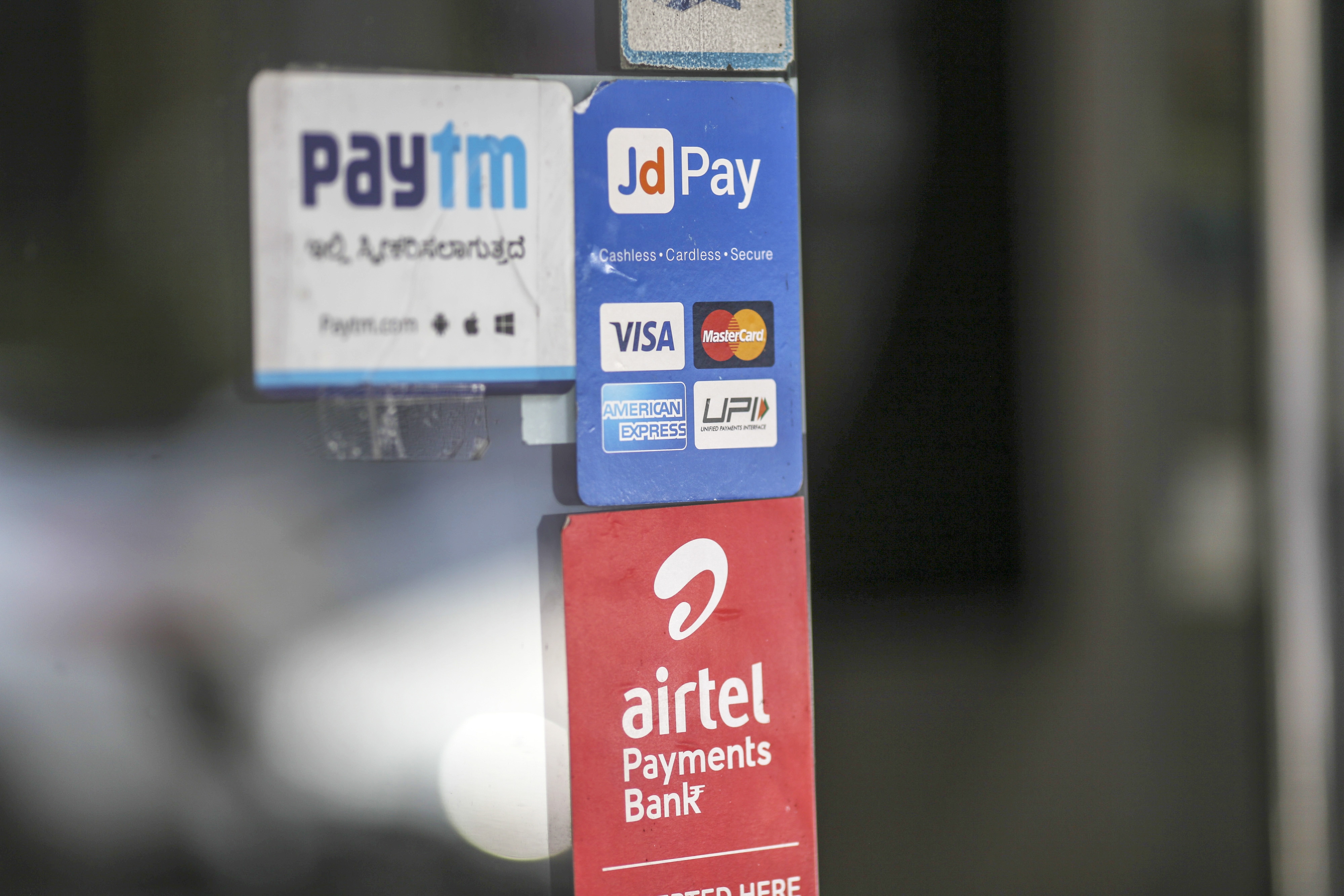
Will Vijay Shekhar Sharma-promoted Paytm finally go public? Have its large losses reduced? What businesses does it have its eyes set on? As Paytm thinks about an initial public offering, these are just some of the questions that come to mind.
Gautam Chhugani, director for India financials and fintech at Bernstein, said the 12-year-old Paytm has pivoted into being much more than just a digital wallet, which was its earliest identity. They first added Unified Payment Interface or UPI-based payments, which Chhugani said proved to be a “revenue-less cash-guzzling land grab”. Almost 83% of UPI payments are peer-to-peer and earn no revenue.
While remaining the third-largest player in UPI payments, Paytm has focused on merchant payments, distribution of financial products and now credit. “They have taken a fairly rational approach and started focusing more on the merchant side,” Chhugani said in a conversation with BloombergQuint.
Paytm has doubled down on its merchant strategy. There are multiple parts to this... They have a large payment gateway business, they have a large point-of-sale business, not just the QR-code but even the ‘soundbox' and the ‘Paytm for business' platform. Meanwhile the wallet has been integrated with large merchants.Gautam Chhugani, Director - India Financials & Fintech, Bernstein
It is unclear how much this focus has helped in improving Paytm's financials. Financials for FY21 are not available but in FY20, Paytm reported a loss of Rs 2,597 crore on a revenue of Rs 3,629 crore. In FY19, it had reported a loss of Rs 3,960 crore on a revenue of Rs 3,319 crore.
Chhugani said the merchant businesses would have reduced the cash burn.
Apart from the focus on merchant payments, Paytm has stepped up fee-based business via mutual fund and insurance distribution, along with retail broking. All these non-payment lines, including the e-commerce business, are close to 20% of the company's total revenues, Chhugani said.
“...if you have a critical mass of users, you can keep adding to the services you sell and at some point think about a manufacturer of some of these products.”
The attention to credit has also increased. While it can't lend directly, Paytm Postpaid, merchant credit and consumer credit have all been added under the group's umbrella.
The largest revenue pool in India is lending, said Chhugani, adding that the product that is evolving now is a revolving credit product, which is a like a credit card without a physical card. Paytm does this via its postpaid product.
Paytm's core value add is that it is has these users, it is able to track their expenses, provide the behavioral and transaction insights. To the extent that Paytm adds value to the credit underwriting process, it gets paid more than normal distribution commissions.Gautam Chhugani, Director - India Financials & Fintech, Bernstein
Can this small-ticket credit lead to delinquencies down the line. The credit is so small that users may not find it worthwhile to default, Chhugani said, adding that the jury is still out on the credit risk that may or may not emerge from this kind of lending.
Paytm's focus on small-ticket is part of a broader trend where ‘buy-now-pay-later' consumption credit is catching on.
It is part of this whole global trend where credit is getting bundled as part of the transaction. It is no longer an episodic personal loan that you would take at the time of a large purchase or expense. Credit is being used as part of the transaction and BNPL is part of that wave.
Many, including financial technology firms and banks, see large opportunity in this so-far unregulated market.
“From an Indian context, 60 million cards is nothing compared to addressable market. That is where the BNPL players are fitting in,” said Chhugani, adding that those providing such micro consumption-based credit are tying up e-commerce players and consumer brands to be able to offer it.
Watch the full conversation below:

-
One El Nino, India Can Handle. Two Could Break The Granary

India's grain stocks can absorb one bad year, but a second El Nino could drain the buffer in two to three years, economists say.
-
India's Troika Of Good Luck | Joining The Dots
As Jensen Huang's exit drags Nvidia down, a cooling AI trade and resilient earnings have revived investor interest in India. A likely RBI rate hike looms.
-
Talking Points This Week: Leadership Shock At Nvidia, Earnings Strength, And The Fog Over Hormuz
The Anthropic IPO pricing and first trading day, Nvidia's upcoming earnings, and any fresh signals from Iran will set the tone for the following week.
-
Signature Play: The Classic Cocktail Is Dead. Or Is It?
Classic cocktails are disappearing from India's cocktail menus. But they're still being ordered, taught to bartenders and borrowed from. So, who's really having the last drink?
-
A New Samvat Wishlist: Inclusive Prosperity And Human Development
India has strengthened its economic foundations through infrastructure, digital access and enterprise. Its next growth chapter must deepen productivity, create better livelihoods and widen participation in prosperity.
-
Love, Sex Aur Dhokha: The Audacious Plot To Spy On Jensen Huang
A Taipei dinner, a Singapore chip buyer and a suspected Chinese asset: inside the alleged spy operation that got close to NVIDIA's Jensen Huang.
-
Ten Things I Learnt This Samvat
Patience can be a trap. Cheap stocks can stay cheap. Leverage can wipe you out. What did Samvat 2082 teach us? Niraj Shah writes on 10 lessons from the year gone by.
-
Talking Points This Week: Tech Nerves, FII Buying, And A Faraway Banking Shock
The global markets are not shining this Diwali. The exception in the large markets is, India.
-
Midterm Rally Lasted A Day. The Hard Reality Of A Divided US May Last Two Years | Opinion
Between a contested AI boom, a debt ceiling that arrives in 2027 and a president with every incentive to act alone, the next two years may prove more volatile than the first day's rally suggests.
-
Blue Wave Will Derail the AI Trade but Won't Dismantle the AI Era | Unhedged Position
The Democrats' sweep of the US Congress will see politics collide with economic forces both over the long and short term.









