New-Age Tech Firms Mop-Up Rs 1.2 Lakh Crore Through IPOs In 2021: Report
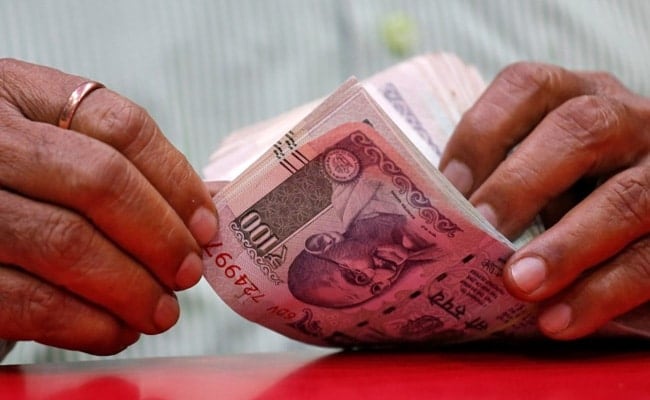
New-age technology brands like Paytm, Zomato, Nykaa and Policybazaar, led a record Rs 1.2 lakh crore mop-up through initial public offerings (IPOs) in India during 2021 even as the stock market key indices leaped to new highs shrugging off COVID concerns.
The Indian primary market was buzzing throughout the year. 63 companies collectively raised Rs 1,18,704 crore (USD 15.4 billion) through IPOs during 2021. This is the highest amount of money raised through IPOs in a calendar year.
The previous best year for IPO was 2017 when Rs 68,827 crore was raised. In fact, the money raised in the primary market in 2021 is 62 per cent more than the total amount of Rs 73,003 crore raised in the preceding three years (2018 to 2020). During 2020, the total money raised through IPOs in India stood at Rs 26,613 crore, which was nearly one-fifth of the mop-up during 2021. The average issue size during the year 2021 stood at Rs 1,884 crore.
The bullish trend at the stock markets buoyed the investors' interests in the IPOs. The benchmark indices of the Indian stock markets hit new highs during the year. Sensex of the Bombay Stock Exchange (BSE) hit a record high of 62245.43 points while Nifty 50 of the National Stock Exchange (NSE) touched its all-time high of 18,604.45 points on October 19, 2021.
The record fundraising from the Indian primary market was led by the new-age technology businesses. "IPOs from new-age loss-making technology start-ups, strong retail participation and huge listing gains were the key highlights," said Pranav Haldea, Managing Director of Prime Database Group.
One 97 Communications, the parent company of digital payments platform Paytm, raised a whopping Rs 18,300 crore (USD 2.5 billion) through IPO. This is, so far, the largest ever IPO in India. Paytm's IPO surpassed the long-standing IPO record of Rs 15,200 crore set by the state-run Coal India Limited in 2010.
Though Paytm's IPO got subscribed 1.89 times, it made a disastrous debut at the stock market crashing 27 per cent from its issue price (Rs 2,150 per share) on the first day due to lofty valuation and skepticism about its business model.
The second-largest IPO during the year was of online food delivery platform Zomato. The company raised Rs 9,375 crore through the IPO. It was a huge success with the IPO getting subscribed 38.25 times. Zomato also made a stellar debut at the stock markets making a debut at 53 per cent premium over its issue price.
PB Fintech, the parent company of online insurance aggregator Policybazaar and credit comparison platform Paisabazaar, raised Rs 5,710 crore from the primary market. It included a fresh issue of equity shares worth Rs 3,750 crore and an offer of sale of Rs 1,960 crore by existing shareholders. The parent firm of Policybazaar and Paisabazaar was earlier named Etechaces Marketing and Consulting Pvt. Ltd. The company name was changed to PB Fintech Pvt. Ltd. in September 2020 to emphasize the nature of fintech businesses.
PB Fintech IPO got subscribed 16.59 times. The company made its market debut at 17 per cent premium over its issue price.
FSN E-Commerce Ventures, which operates online beauty e-commerce platform Nykaa, raised Rs 5,352 crore through IPO. Falguni Nayar-led company's IPO was a huge success. The IPO got subscribed 81.78 times. It also made a strong debut at the stock market getting listed at 79 per cent premium over its issue price.
The first IPO of the 2021 calendar year was of Indian Railway Finance Corporation Ltd's (IRFC), a subsidiary of the Indian Railways. The IPO of IRFC was the first public issue by a railway non-banking financial company.
IRFC is the dedicated market borrowing arm of the Indian Railways. IRFC's IPO was subscribed 3.5 times. The state-run company raised Rs 4,633 crore from the primary markets. IRFC made a tepid market debut with its share getting listed at the stock exchange at 4.23 per cent discount over its issue price of Rs 26.
Another public sector firm RailTel Corporation of India (RailTel) raised Rs 819 crore from the primary market. RailTel's IPO was subscribed 42 times. The company made a strong market debut getting listed at 16 per cent premium over its issue price of Rs 94.
PowerGrid Infrastructure Investment Trust, which is sponsored by the state-owned Power Grid Corporation of India, raised Rs 7735 crore through IPO. This was the third-largest IPO of the year. The IPO was subscribed 4.83 times and the share got listed at 4 per cent premium.
Rakesh Jhunjhunwala-led Star Health and Allied Insurance Company raised Rs 7249 crore through IPO. The company got a tepid response at the stock market. Its share got listed at 6 per cent discount over the issue price of Rs.900 per share.
Painting solution firm Indigo Paints was also among the first to come up with IPO during the year. The company raised Rs 1,176 crore from the primary market. The IPO of the fifth largest firm in the Indian decorative paint industry was subscribed 117 times. The company made a bumper market debut getting listed at 75 per cent premium over its issue price of Rs 1,490.
Other prominent IPOs of 2021 include MedPlus Health Services, Data Patterns (India), Home First Finance, Laxmi Organic, Barbeque Nation, Anupam Rasayan, Kalyan Jewellers, Brookfield India REIT, Stove Kraft, Nureca, and Heranba Industries.
India's second-largest pharmacy retailer MedPlus Health Services had an impressive IPO with the issue getting subscribed 52.59 times. The company made its stock market debut at 30 per cent premium.
The simplification of rules by the Securities and Exchange Board of India (SEBI) has led to the record fundraising by the new-age technologies firms, which are mostly loss-making. Earlier regulation required a firm to have profit-making records in order to get listed at the stock exchanges.
However, SEBI has changed the regulation. Now the loss-making companies can also get listed with some conditions. SEBI's new regulation paved the way for the listing of the new-age technology firms like Paytm and Zomato that have a history of loss-making.

-
Why Swapping Your Old Gold Can Trigger A Rs 5 Lakh Tax Bill, And How You Can Avoid It Legally

Swapping old gold for new is taxed as a sale and a fresh purchase. Getting your own gold remade can cut most of that bill, though it has its own costs.
-
The AI Trade is Done. The Real Opportunity for Investors Starts in 2027 | Unhedged Position
As pureplay AI stocks plunge and circular, capex-led financing unwinds, 2027 is set to be a year of reckoning for AI companies. Yet the bust clears the way for a better opportunity for investors in 2027 -- shifting the spotlight from AI builders to the companies using AI.
-
Leadership As Mission: Why The Age Of AI Demands More Human Leadership
Debjani Ghosh examines how AI is changing leadership, arguing that its success must be measured by its impact on people and the accountability of those guiding its use.
-
We May Need Another Tukaram Mundhe To Fight Air Pollution | The Reason Why
Developers may install basic measures such as sprinklers and green nets, resume work, and continue violating rules when this equipment stops working.
-
Extracting Value From Battery Scrap Could Be Challenging For India | The Reason Why
A discarded lithium-ion battery still contains valuable materials such as lithium, nickel and cobalt. These can be recovered and reused. When such batteries are crushed and shredded, they produce a dark powder called black mass.
-
One El Nino, India Can Handle. Two Could Break The Granary
India's grain stocks can absorb one bad year, but a second El Nino could drain the buffer in two to three years, economists say.
-
India's Troika Of Good Luck | Joining The Dots
As Jensen Huang's exit drags Nvidia down, a cooling AI trade and resilient earnings have revived investor interest in India. A likely RBI rate hike looms.
-
Talking Points This Week: Leadership Shock At Nvidia, Earnings Strength, And The Fog Over Hormuz
The Anthropic IPO pricing and first trading day, Nvidia's upcoming earnings, and any fresh signals from Iran will set the tone for the following week.
-
Signature Play: The Classic Cocktail Is Dead. Or Is It?
Classic cocktails are disappearing from India's cocktail menus. But they're still being ordered, taught to bartenders and borrowed from. So, who's really having the last drink?
-
A New Samvat Wishlist: Inclusive Prosperity And Human Development
India has strengthened its economic foundations through infrastructure, digital access and enterprise. Its next growth chapter must deepen productivity, create better livelihoods and widen participation in prosperity.









