Patels, Farmers, Businessmen: Who Voted How In The Gujarat Elections?
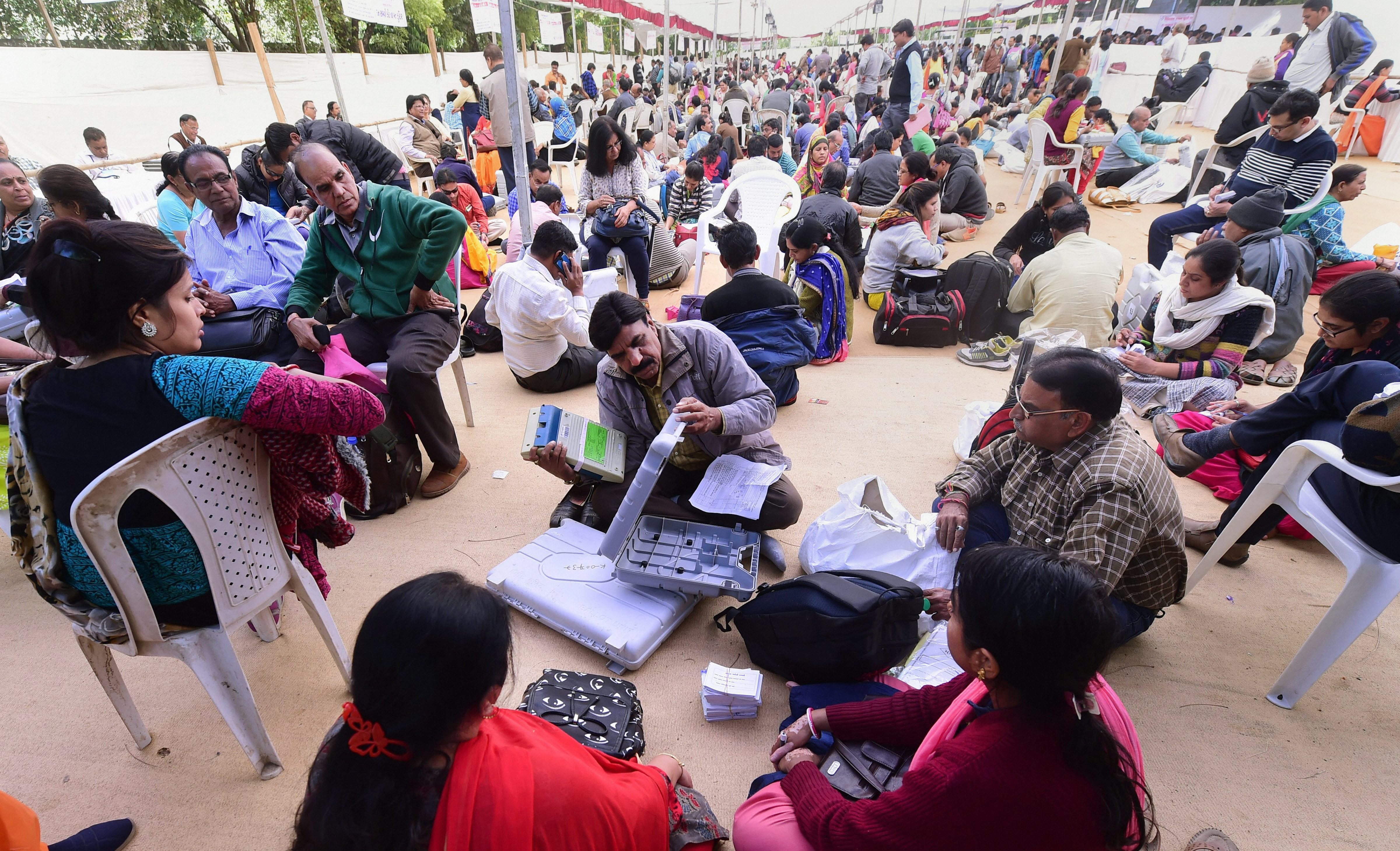
On Monday the Bharatiya Janata Party won the Gujarat state assembly elections for the sixth time in a row. A higher percentage of voters voted for the BJP this year than they did in the previous state election in 2012, but the number was lower than in the parliamentary elections of 2014. The Indian National Congress party scored a higher number of voters than in 2012 and 2014. Some might say it's a bit like India's gross domestic product data. When things are low (read Congress support), the only way is up and when things are so high (read BJP support), the only way they can go is down.
That said, it's useful to look deeper into the voter numbers to determine where BJP and Congress gained and lost. This study has categorised each assembly constituency in Gujarat on four broad parameters — urban/rural, high/low income, a high/low percentage of youth, a high/low percentage of Muslim voters.
This analysis is not based on a survey of voters but based on actual Census data collated and compiled for each constituency.
Vote Share
First, a look at broad vote shares of both parties in Gujarat since the 2009 Lok Sabha election. This helps draw a trend of how vote shares have moved.
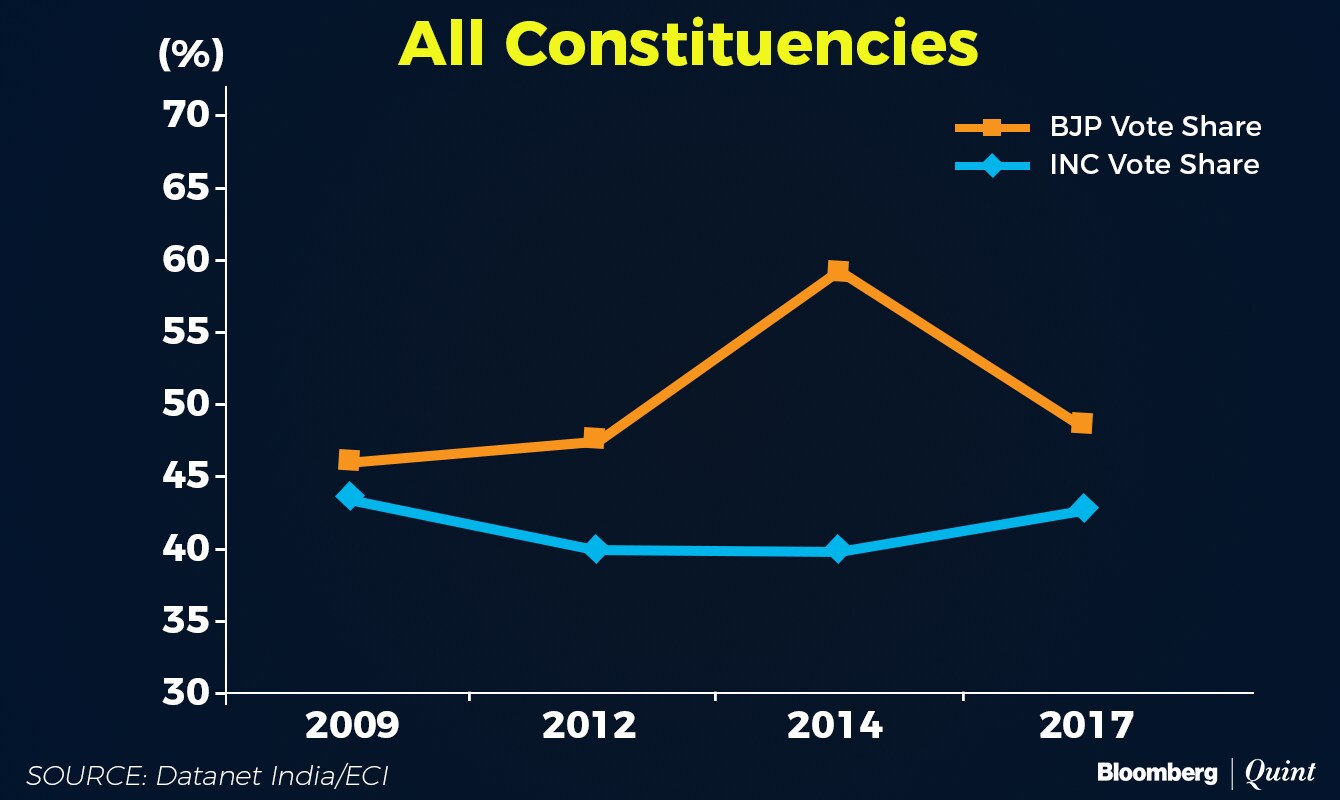
It is clear that the BJP vote share in 2017 has fallen from its high of 60 percent in the 2014 elections to 49 percent but is higher than its 2012 vote share.
This, in essence, is the saga of the BJP victory yesterday.
Its 2014 vote share was so massive that it would have taken an enormous swing for it to lose Gujarat, regardless of whether it was a state or Lok Sabha election.
Urban vs Rural
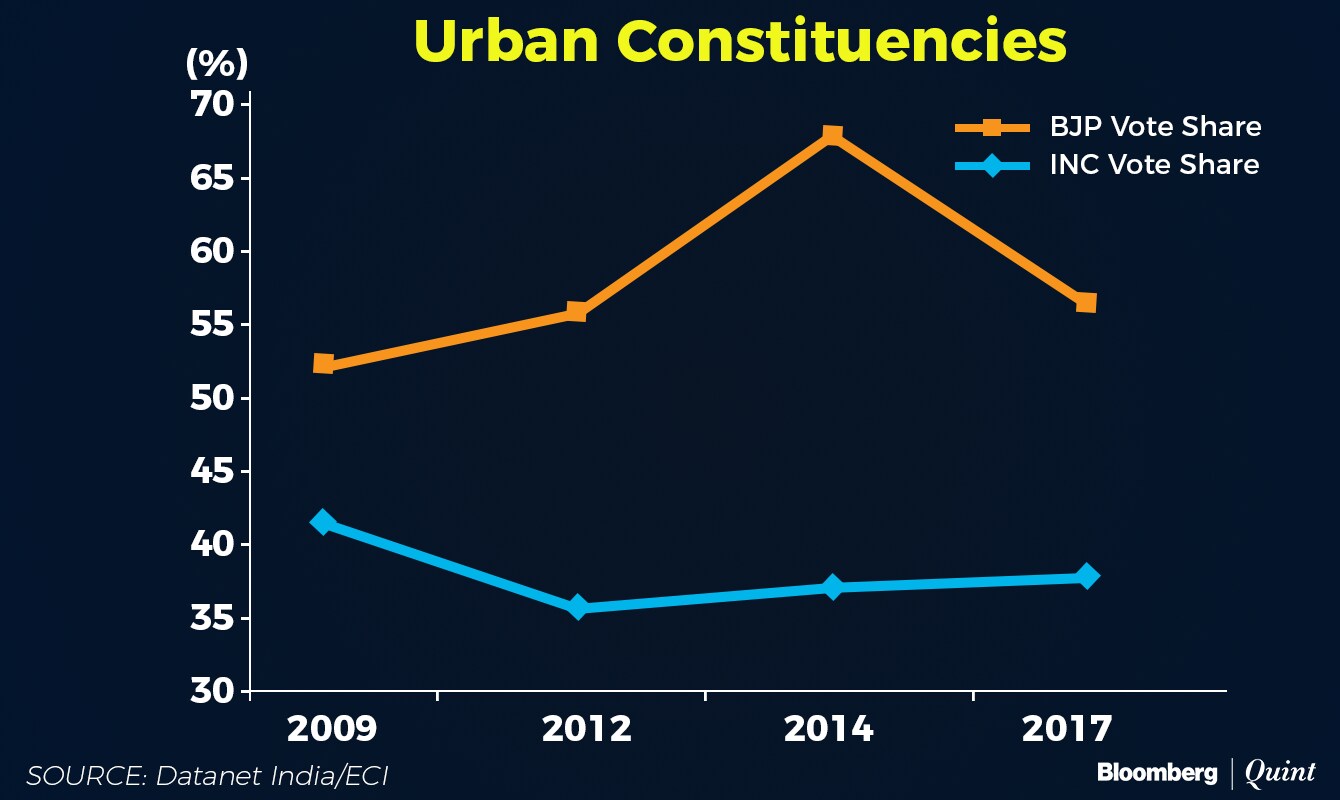
The BJP has traditionally always done better in urban, rich constituencies. The gap between the BJP and Congress is much wider in urban, rich constituencies than in rural, poor ones. Yesterday's outcome shows that the BJP continues to enjoy a big lead over the Congress in urban constituencies. Its urban vote share is 56 percent compared to the Congress' at 38 percent.
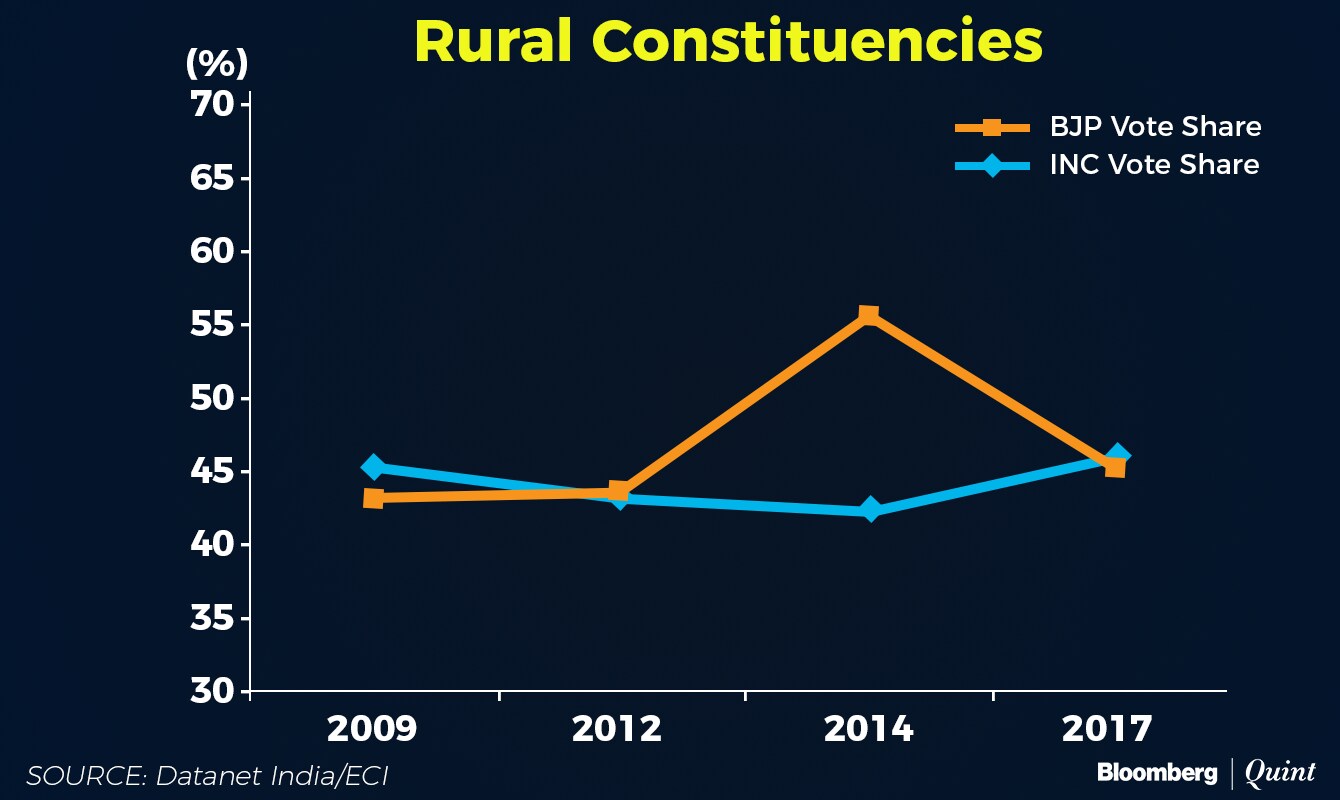
In rural constituencies, the Congress has had an edge over the BJP historically except in 2014 when the BJP gained a massive lead. In the 2017 election, the Congress garnered a 46 percent vote share in rural constituencies vis-à-vis BJP at 45 percent.
Rich vs Poor
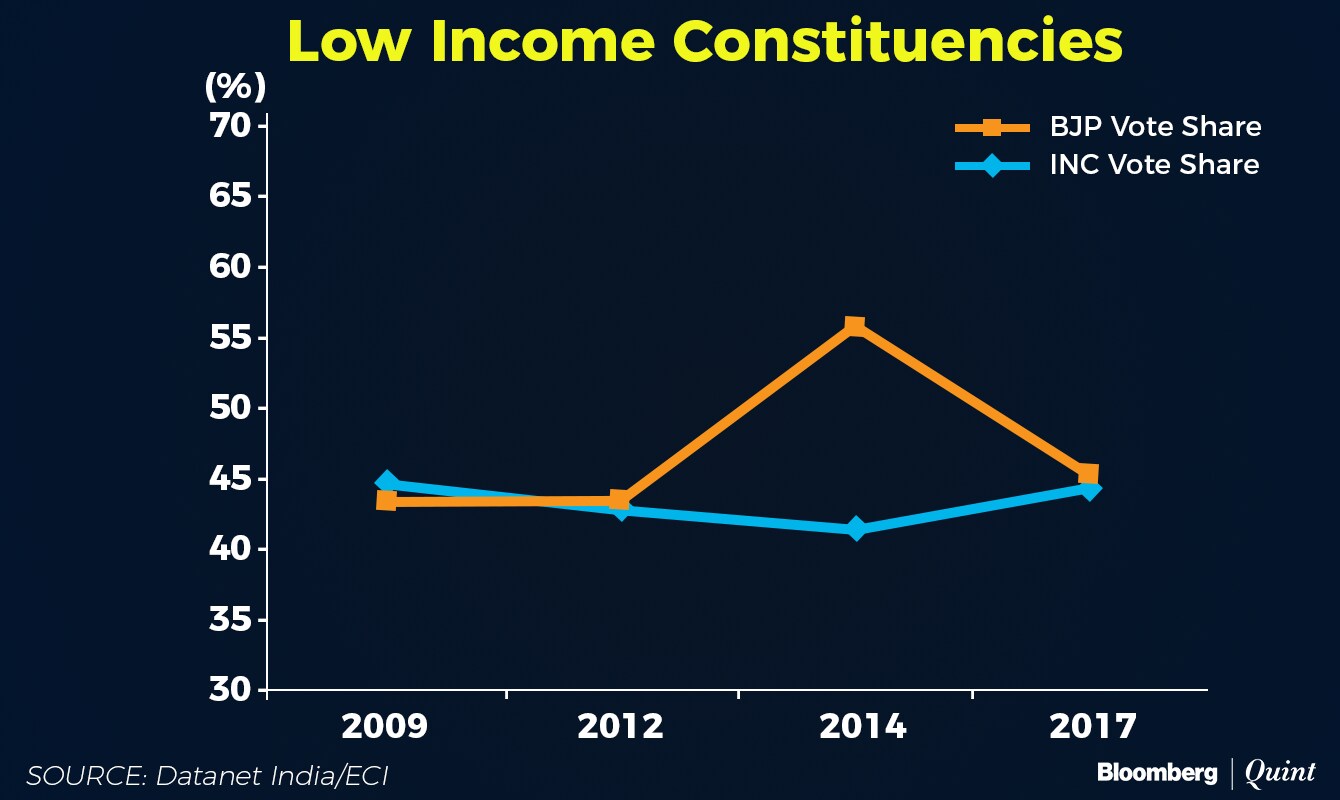
A similar trend can be observed in high-income and low-income constituencies.
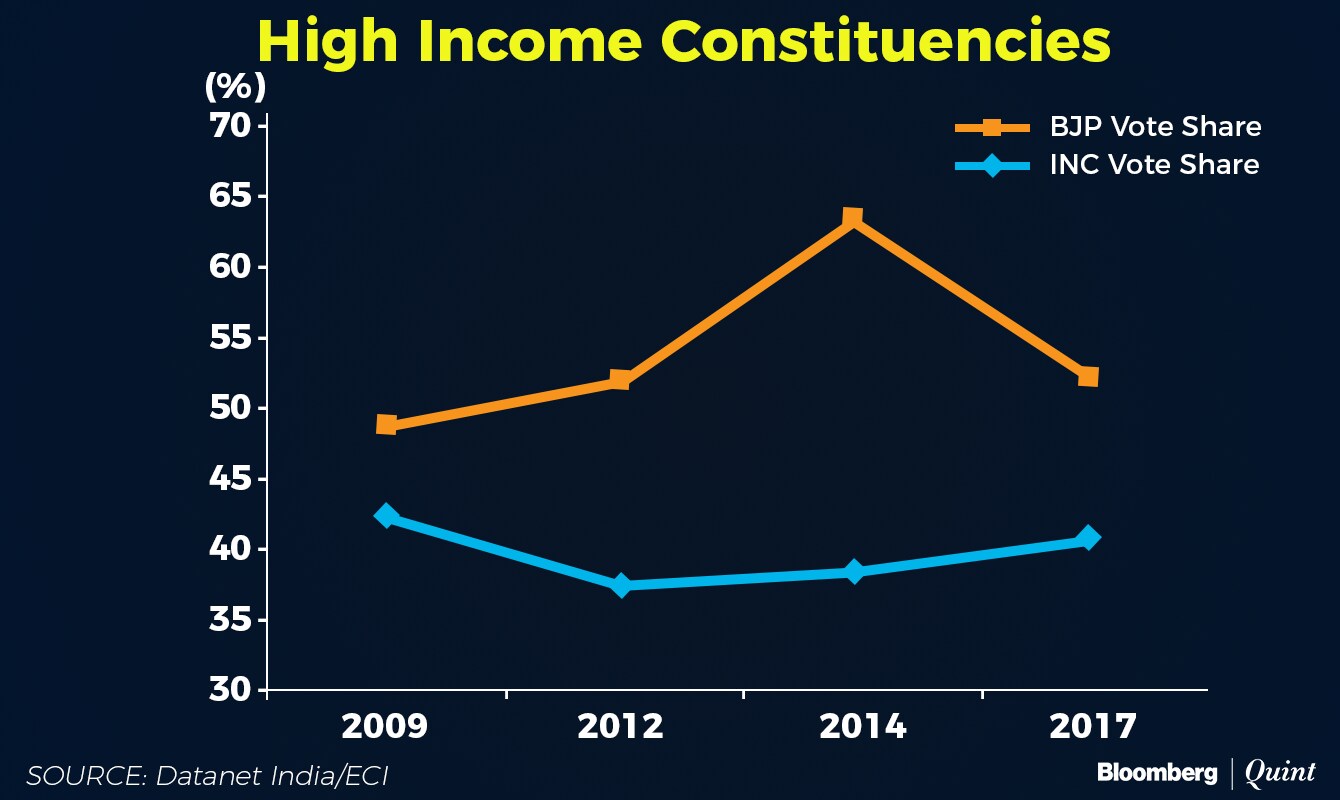
The BJP continues to have a 10 percentage point lead in high-income constituencies. However, in the low-income constituencies, the Congress has done better, but by just 1 percentage point.
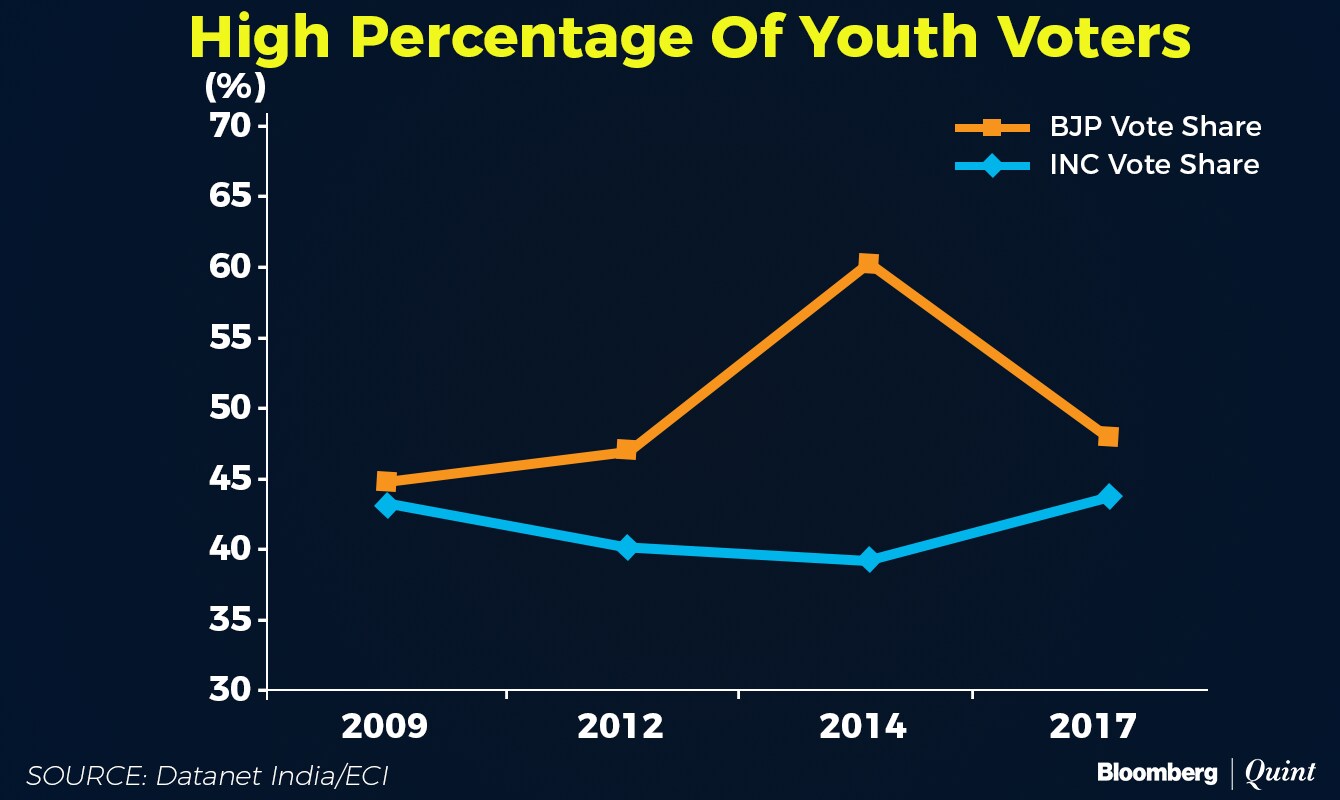
The surprising trend is in constituencies with a high percentage of youth voters. Traditionally, it is thought that the BJP does better with youth voters.
While the BJP continues to do better in constituencies with higher youth voters, the gap has narrowed considerably.
Religion
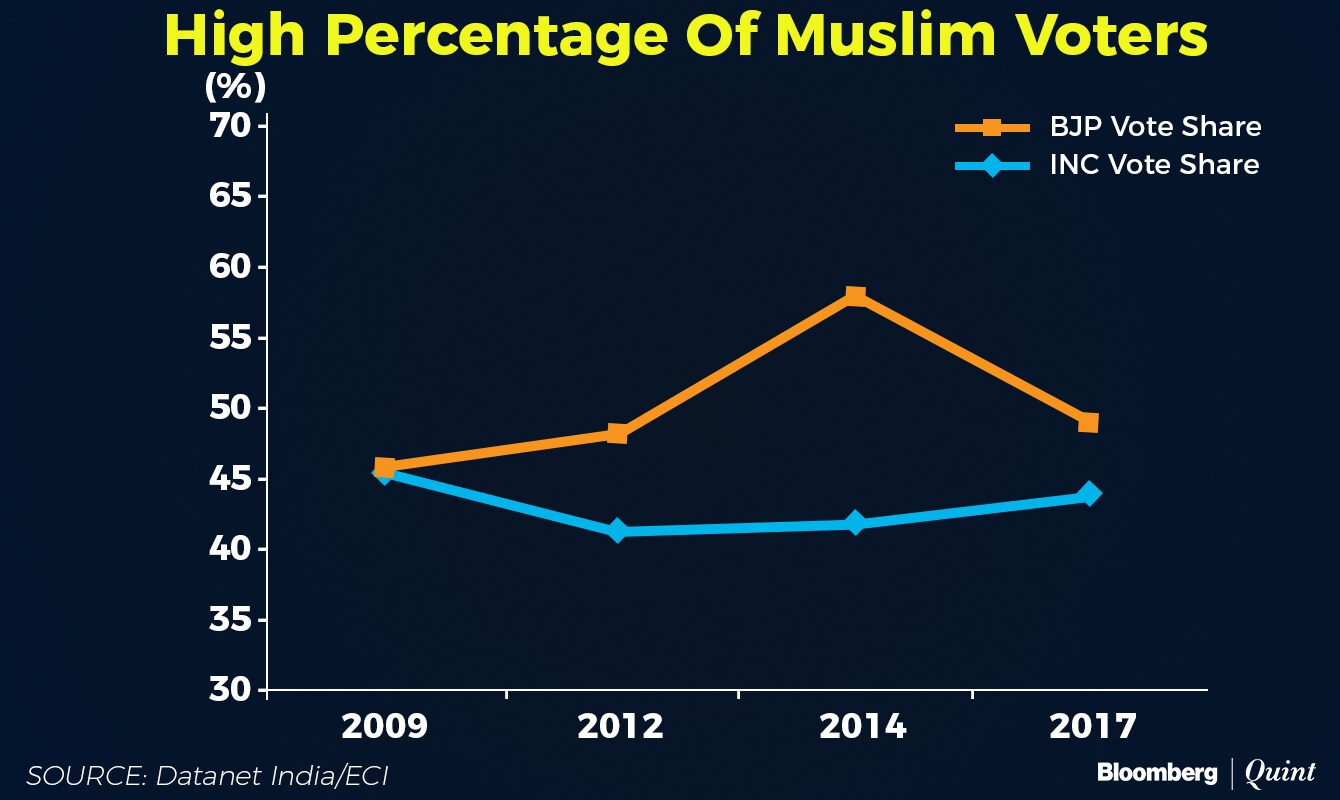
How has the BJP fared in constituencies with a higher percentage of Muslim voters? It managed to retain a lead over the Congress in constituencies with a higher-than-average Muslim voter population, even though this gap has narrowed since the 2014 election.
The BJP vote share in constituencies with a higher share of Muslim voters is 49 percent, in-line with its overall vote share across the state.
The BJP has won 99 seats in the 2017 election compared to 115 in the 2012 election, a loss of 16 seats. The Congress and its alliance have won 80 seats, compared to 61, a gain of 19 seats. Of the BJP's 99 seats, 53 are urban and 46 are rural. Essentially, BJP won 80 percent of all urban seats. The Congress and allies won 60 percent of all rural seats.
Where did the BJP and Congress lose and gain seats vis-à-vis the 2012 election?
Of the original 115 seats that the BJP won in 2012, it has lost 34 of them in 2017 - 27 rural constituencies and 7 urban.
Hence a net loss of 16 seats.
There was significant ground reporting during the elections that suggested severe voter angst, especially in the urban constituencies.
What explains this dissonance between ground reporting and actual results? It is the margin of victory for the BJP in the 2014 elections in these urban constituencies.
The BJP won urban constituencies by such a massive margin that even a seemingly big swing against the BJP was not enough to convert into seats for the Congress.
Relative To What?
The interesting trend is that compared to 2012, both the BJP and Congress have gained vote share across all segments – urban, rural, rich, poor, youth and Muslim constituencies.
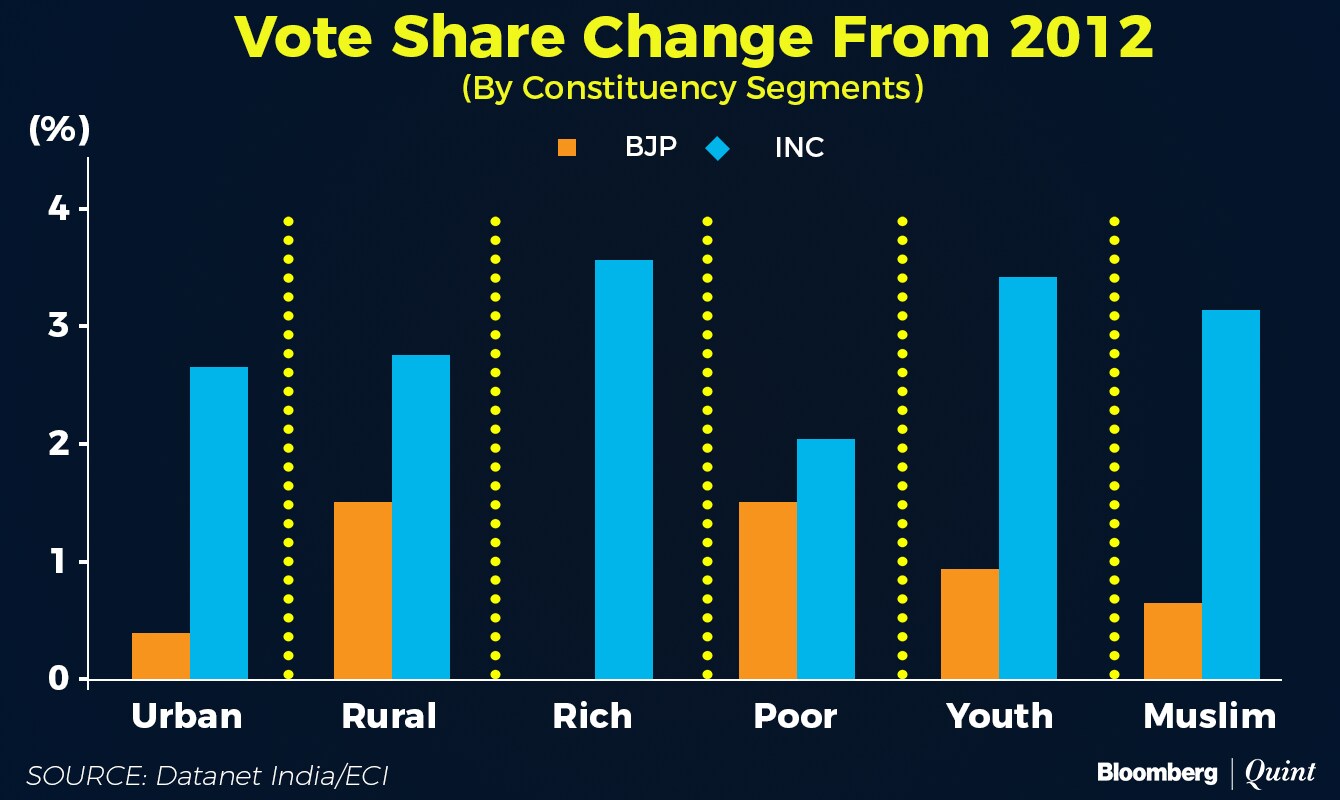
However, compared to 2014, the BJP has seen a huge fall in its vote share across these segments while the Congress has gained. So, the Congress has gained in vote share, compared to both 2012 and 2014, while the BJP has retained or gained marginally since 2012 but lost big since 2014.
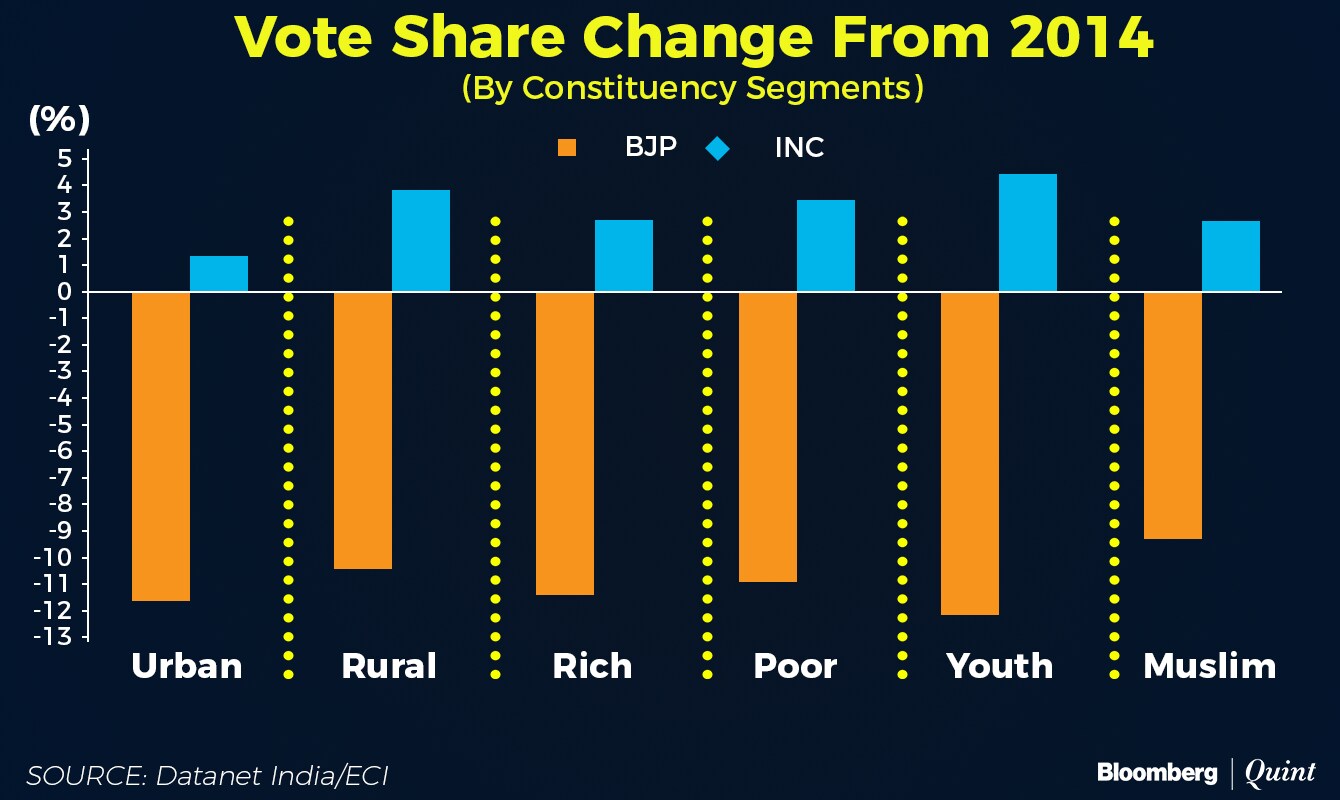
The 2017 Gujarat election has been one where, paradoxically, both the BJP and Congress have claimed victory – one electoral, the other political. The Congress claims that this is the lowest tally of seats for the BJP in 20 years and its highest in 25 years. The BJP claims that it has won Gujarat for an incredible sixth consecutive time and remains undefeated for two decades. Both are absolutely right. The real question though is what does this Gujarat state election portend for the 2019 Lok Sabha elections?
Watch the discussion below for the answer to that.
Praveen Chakravarty is Contributing Editor at BloombergQuint. He is an economist, Senior Fellow at IDFC Institute and Founding Trustee, IndiaSpend.
The author thanks Ishita Trivedi for research assistance.
The views expressed here are those of the author's and do not necessarily represent the views of BloombergQuint or its editorial team.

-
Indians Are Travelling, But Not Every Journey Is A Holiday | The Week In Whys

Pilgrims, patients and working women are the real travellers, and the system hasn't quite caught up with them.
-
Getting To Work Costs Women More | The Reason Why
It is not just about women paying more than men. It is about women paying much more in cities than in villages.
-
AI Bias In Investing Cannot Be Eliminated, But It Can Be Governed
Framing is a particularly important example as identical financial information presented in terms of gains rather than losses can lead an LLM to reach a different assessment.
-
Joining The Dots | Dark Skies, Steady Diya: Why Hope Holds This Diwali
With war, a weak rupee and foreign outflows weighing on sentiment, policymakers at the NDTV World Summit and market veterans at NDTV Profit Ignite: Diwali Edition offered the same advice: stay invested and filter out the noise.
-
The Curious Case of Equitas Small Finance Bank And A CEO Who Quit For Stock
PN Vasudevan believes persistent investor concerns over a perceived conflict of interest had become a governance overhang on Equitas Small Finance Bank's stock, even as the lender improved profitability and asset quality.
-
Talking Points This Week: AI Cash Burn, A Tiger Comeback And An India That Still Finds Its Own Path
India is not immune to higher oil or tighter global liquidity, yet its earnings base is broader, its domestic policy levers are still available.
-
Foreign Investors Own Half Of HDFC Bank and ICICI Bank. An LTCG Cut Could Matter Most Here
Foreign portfolio investors have US$115 billion parked in HDFC Bank, ICICI Bank. If the government cuts long-term capital gains tax, Jefferies says returning foreign money could land here first.
-
'Never Seen This Level Of Negativity': Sandeep Tandon Says The Next Rally May Be Closer Than You Think
Veteran investor Sandeep Tandon says foreign selling is easing, large-caps are due a comeback and mid-caps are crowded, while he turns positive on gold, power and pharma this Diwali.
-
Indians Stay With Family, Not In Hotels | The Reason Why
India still lacks enough clean, reliable and affordable hotels for budget-conscious travellers.
-
The Economic Imperative: Analysing The Material Driving Force Behind India-Canada Strategic Reset
This economic complementarity is further reinforced by deep institutional investment ties and talent mobility, which form the bedrock of the bilateral framework.










