Parliament Passes Bill To Bring Cooperative Banks Under RBI Supervision
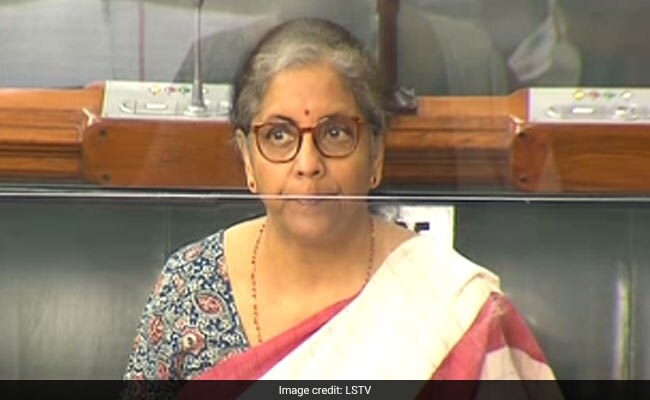
Parliament on Tuesday passed amendments to the Banking Regulation Act to bring cooperative banks under the supervision of the RBI, a move aimed at protecting the interest of depositors. The Banking Regulation (Amendment) Bill, 2020, which replaces an ordinance that was issued on June 26, was passed by a voice vote in the Rajya Sabha. The amendment had received approval from the Lok Sabha on September 16.
The bill, which comes in the backdrop of the PMC Bank scam, seeks to strengthen cooperative banks by increasing their professionalism, enabling access to capital, improving governance and ensuring sound banking through the Reserve Bank of India (RBI).
Replying to a short debate on the bill in the Rajya Sabha, Finance Minister Nirmala Sitharaman said in the last one-and-a-half to two years, "we came to know of so many cooperative banks or cooperative societies functioning as banks and calling themselves as banks falling into difficulties."
The oft-repeated example is of the Punjab and Maharashtra Co-operative (PMC) Bank, while there are also other banks, she said.
The minister said the amendments to the Banking Regulation Act have been brought to completely protect the interest of depositors.
"Amendments are coming in with a singular objective of protecting the interests of the depositors," Ms Sitharaman said.
The government was able to quickly resolve the crisis at Yes Bank as it was governed by commercial bank rules, but resolution for the PMC Bank crisis is yet to be found, she pointed out.
Within a matter of two weeks, everything was sorted out for Yes Bank which was governed by the commercial bank rules, "whereas, even till today, the PMC Bank solutions are not completely emerging, thus putting the depositors into difficulty," the minister said.
Currently, commercial banks'' rules do not extend to cooperative societies which function as banks.
The minister further said the amendments are purely to govern those cooperative societies which offer banking services and call themselves banks.
"So, the cooperative societies doing other activities are not going to be covered," she emphasised.
The amendments will not apply to Primary Agricultural Credit Societies or cooperative societies whose primary object or principal business is providing long-term finance for agricultural development, she clarified.
The minister further said during the COVID-19 period, many cooperative banks have come under stress.
"Their finances are also being closely monitored by the regulator, the RBI, which regulates them from 1965 onwards," she said.
She informed the Upper House that about 277 urban cooperative banks have reported losses. As many as 105 urban cooperative banks are unable to meet the minimum regulatory capital requirements and 47 are having negative networth. Besides, 328 urban cooperative banks have more than 15 per cent gross NPA ratio, as of March 2019.
"And, with the pandemic setting in, this stress has also increased in cooperatives with gross NPA ratios of urban cooperative banks increasing from 7.27 per cent in March 2019 to 10 per cent in March 2020," she said.
Therefore, these changes are very much required and absolutely necessary to protect the depositors, Ms Sitharaman said.

-
We May Need Another Tukaram Mundhe To Fight Air Pollution | The Reason Why

Developers may install basic measures such as sprinklers and green nets, resume work, and continue violating rules when this equipment stops working.
-
Extracting Value From Battery Scrap Could Be Challenging For India | The Reason Why
A discarded lithium-ion battery still contains valuable materials such as lithium, nickel and cobalt. These can be recovered and reused. When such batteries are crushed and shredded, they produce a dark powder called black mass.
-
One El Nino, India Can Handle. Two Could Break The Granary
India's grain stocks can absorb one bad year, but a second El Nino could drain the buffer in two to three years, economists say.
-
India's Troika Of Good Luck | Joining The Dots
As Jensen Huang's exit drags Nvidia down, a cooling AI trade and resilient earnings have revived investor interest in India. A likely RBI rate hike looms.
-
Talking Points This Week: Leadership Shock At Nvidia, Earnings Strength, And The Fog Over Hormuz
The Anthropic IPO pricing and first trading day, Nvidia's upcoming earnings, and any fresh signals from Iran will set the tone for the following week.
-
Signature Play: The Classic Cocktail Is Dead. Or Is It?
Classic cocktails are disappearing from India's cocktail menus. But they're still being ordered, taught to bartenders and borrowed from. So, who's really having the last drink?
-
A New Samvat Wishlist: Inclusive Prosperity And Human Development
India has strengthened its economic foundations through infrastructure, digital access and enterprise. Its next growth chapter must deepen productivity, create better livelihoods and widen participation in prosperity.
-
Love, Sex Aur Dhokha: The Audacious Plot To Spy On Jensen Huang
A Taipei dinner, a Singapore chip buyer and a suspected Chinese asset: inside the alleged spy operation that got close to NVIDIA's Jensen Huang.
-
Ten Things I Learnt This Samvat
Patience can be a trap. Cheap stocks can stay cheap. Leverage can wipe you out. What did Samvat 2082 teach us? Niraj Shah writes on 10 lessons from the year gone by.
-
Talking Points This Week: Tech Nerves, FII Buying, And A Faraway Banking Shock
The global markets are not shining this Diwali. The exception in the large markets is, India.









