Pandemic Hit Cooperative Banks Harder Than Other Lenders
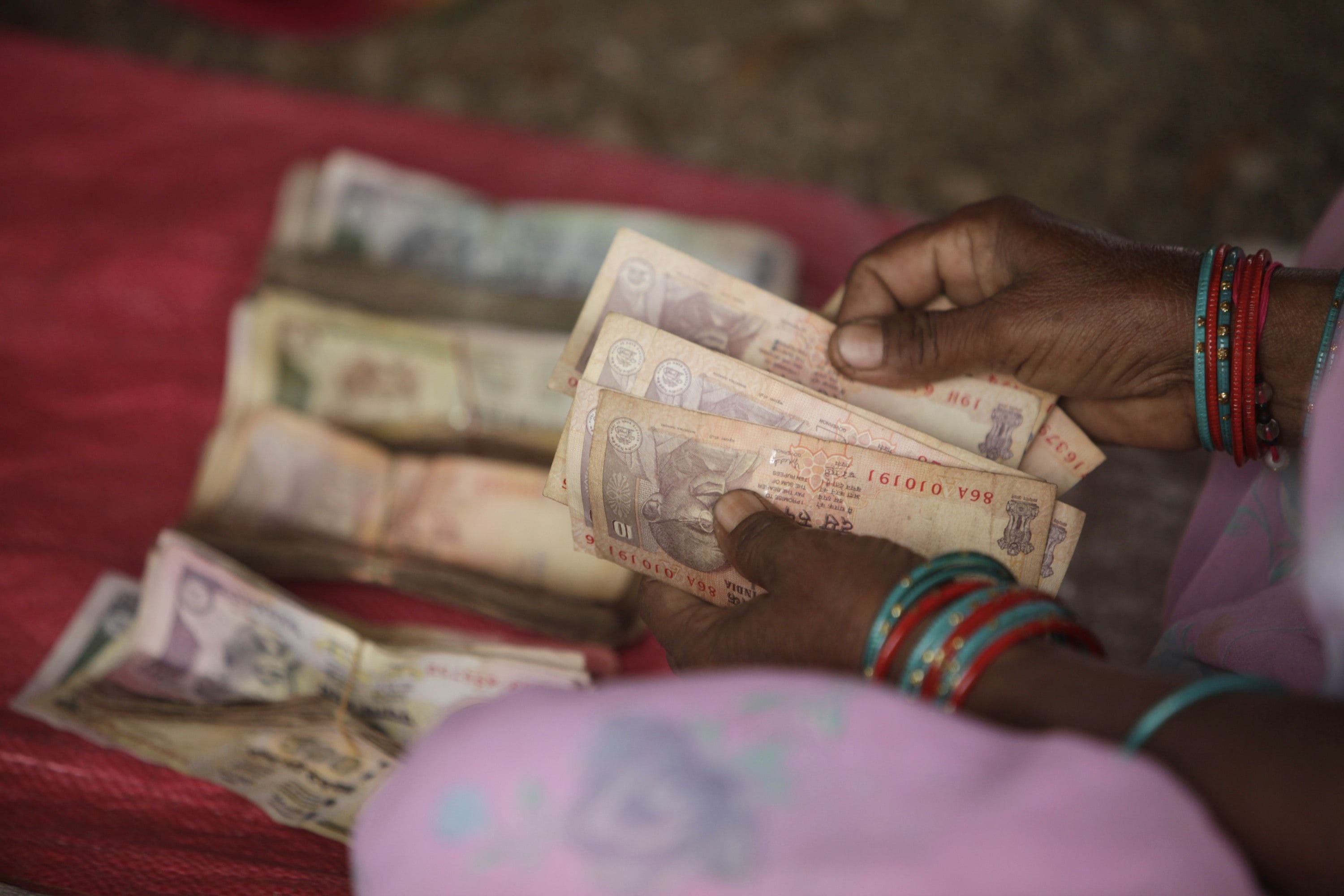
India's cooperative lenders, spread across the country's semi-urban and rural areas, are seeing greater asset quality stress compared to scheduled commercial banks.
While larger banks have seen asset quality stabilise, albeit helped by regulatory forbearance, cooperative banks have continued to see an uptick in stress loans, showed data from two reports released by the Reserve Bank of India this week.
"Urban cooperative banks appear to have been particularly impacted by the second wave of Covid-19," the RBI said in its Financial Stability Report.
The gross non-performing assets ratio of all urban cooperative banks rose to 15.4% as of September 2021, the report showed. The gross NPA ratio stood at 11.7% as of March 2021 and 10.6% as of March 2020, data published separately in the Trends & Progress of Banking in India report showed.
Scheduled UCBs saw bad loans rise to 12.4% as of September compared with 10.3% six months before. Non-scheduled UCBs saw a much sharper spike in bad loans to 18% from 12.8% over this period.
Provisions dipped for both categories of UCBs, resulting in the provision coverage ratio for the sector falling to 45.8% at the end of Q2 FY22 and the net NPA ratio rising sharply to 8.7%, the RBI report said.
Stress tests conducted by the RBI on this set of lenders further showed that few of them would fail key criteria such as the ability to manage credit risk, market risk and liquidity risk, even under a baseline scenario.
The results showed that in all the five parameters tested, a few banks failed even in the baseline scenario, the report said. "The largest number of UCBs are impacted in scenarios involving liquidity shocks; and, in general, the number of non-scheduled UCBs failing/ being impacted detrimentally in adverse scenarios is larger than that of scheduled UCBs."
The baseline scenario builds in GDP growth of 6.3% in the second half of FY22 and 12.5% in H1 of FY23. The RBI clarified that these are not forecasts but scenarios.
Divergent Performance Across Different Categories
India's cooperative bank network is wide and varied.
In total, India has 98,042 cooperative banks, including 1,534 urban cooperative banks and 96,508 rural cooperative lenders. Data on rural cooperative banks comes with a lag and information available for March 2020 suggests stress in these institutions was high even before the impact of the pandemic was fully felt.
Rural cooperative banks are categorised into four different segment. Long-term lenders, which includes state cooperative agriculture and rural development banks (SCARDBs), primary cooperative agriculture and rural development banks (PCARDBs). Short-term lenders include district central cooperative banks (DCCBs), primary agricultural credit societies (PACS) and state cooperative banks (StCBs).
The aggregate balance sheet size of the cooperative banking sector was at Rs 18.8 lakh crore at end-March 2020, was close to 10% of the scheduled commercial banks' consolidated balance sheet, down from 19.4% in 2004-05.
Urban cooperative banks account for 33% of the assets of the cooperative banking sector, while rural cooperatives account for 67%. "Rural cooperatives, especially short-term, overshadow their urban counterparts, both in terms of number and total asset size," the report said.
According to the Trends & Progress Of Banking report, a number of these categories continue to face high levels of stress.
As of March 2020:
State cooperative banks had a bad loan ratio of 6.7%.
Primary cooperative agriculture and rural development banks had a gross NPA ratio of 12.6%.
District central cooperative banks had a bad loan ratio of 31%.
Primary agricultural credit societies saw 33% of loans turn bad.
State cooperative agriculture and rural development banks saw 43.1% of outstanding loans go bad.
"State cooperative banks and district central cooperative banks weathered the first wave of the pandemic well, but early indicators suggest that the impact of the second wave has been more pronounced and stress is likely to rise in 2021-22 on account of fresh slippages," the RBI report said.

-
Getting To Work Costs Women More | The Reason Why

It is not just about women paying more than men. It is about women paying much more in cities than in villages.
-
AI Bias In Investing Cannot Be Eliminated, But It Can Be Governed
Framing is a particularly important example as identical financial information presented in terms of gains rather than losses can lead an LLM to reach a different assessment.
-
Joining The Dots | Dark Skies, Steady Diya: Why Hope Holds This Diwali
With war, a weak rupee and foreign outflows weighing on sentiment, policymakers at the NDTV World Summit and market veterans at NDTV Profit Ignite: Diwali Edition offered the same advice: stay invested and filter out the noise.
-
The Curious Case of Equitas Small Finance Bank And A CEO Who Quit For Stock
PN Vasudevan believes persistent investor concerns over a perceived conflict of interest had become a governance overhang on Equitas Small Finance Bank's stock, even as the lender improved profitability and asset quality.
-
Talking Points This Week: AI Cash Burn, A Tiger Comeback And An India That Still Finds Its Own Path
India is not immune to higher oil or tighter global liquidity, yet its earnings base is broader, its domestic policy levers are still available.
-
Foreign Investors Own Half Of HDFC Bank and ICICI Bank. An LTCG Cut Could Matter Most Here
Foreign portfolio investors have US$115 billion parked in HDFC Bank, ICICI Bank. If the government cuts long-term capital gains tax, Jefferies says returning foreign money could land here first.
-
'Never Seen This Level Of Negativity': Sandeep Tandon Says The Next Rally May Be Closer Than You Think
Veteran investor Sandeep Tandon says foreign selling is easing, large-caps are due a comeback and mid-caps are crowded, while he turns positive on gold, power and pharma this Diwali.
-
Indians Stay With Family, Not In Hotels | The Reason Why
India still lacks enough clean, reliable and affordable hotels for budget-conscious travellers.
-
The Economic Imperative: Analysing The Material Driving Force Behind India-Canada Strategic Reset
This economic complementarity is further reinforced by deep institutional investment ties and talent mobility, which form the bedrock of the bilateral framework.
-
Medicine Pricing: Where Must Profit Stop?
India must confront excessive margins, hidden incentives and regulatory gaps that threaten the integrity of medicine.










