Pakistan's Economy Contracts For First Time In 68 Years Due To COVID-19
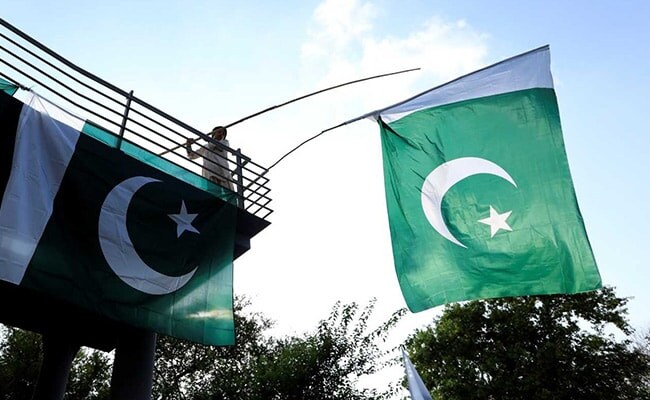
For the first time in 68 years, Pakistan's economy is set to contract in the outgoing fiscal year with a negative 0.38 per cent due to the adverse impact of the coronavirus pandemic coupled with the already weak financial situation before the pandemic hit the country, according to the economic survey unveiled on Thursday.
Advisor on Finance Abdul Hafeez Sheikh, releasing the Pakistan Economic Survey 2019-20 said the economy suffered massively due to the coronavirus pandemic which has so far infected about 120,000 people in the country, and forced the government to impose lockdown in March for several weeks.
The pandemic has badly hit the economy in the current fiscal year ending on June 30.
For the first time in 68 years, Pakistan's economy has marginally contracted by 0.38 per cent in the outgoing fiscal year due to adverse impacts of novel coronavirus coupled with economic stabilisation policies that had hit the industrial sector much before the deadly pandemic.
Except for the agriculture sector that grew 2.7 per cent, the industrial and services sectors witnessed negative growth rates, pulling the overall growth rate down to negative 0.38 per cent in the fiscal year 2019-20, ending on June 30, the economic survey said.
The per capita income in dollar terms has also dipped to 1,366 - a contraction of 6.1 per cent, but it increased in rupee terms to Rs 214,539.
Sheikh said the International Monetary Fund (IMF) had warned about the dire impact of COVID-19 on the developing countries due to drop in exports and remittance.
"Exports fell due to a fall in global demand while remittance decreased due to layoffs of Pakistanis employed abroad," he said.
The overall tax collection grew by 10.8 per cent to Rs 3,300.6 billion during July-April 2020 against Rs 2,980 billion in the comparable period last year. The tax collection estimate for this period was Rs 4,510 billion.
He said the current account deficit was reduced by 73.1 per cent to $2.8 billion (1.1 per cent of GDP) against $10.3 billion last year which was 3.7 per cent of GDP.
"The current account deficit that we inherited was around $20 billion but we have reduced that to around $3 billion. This is a huge achievement of the government," he said.
He said the government controlled state expenses and did not borrow from the State Bank of Pakistan during the outgoing fiscal year.
"This was the first time, I think, in the country's history, and our primary balance - meaning our expenses were less than our earnings - went into surplus," he said.
He said Rs 3,000 billion were set aside for payment of loans in the coming year while Rs 5,000 billion were given in the outgoing year. He promised more relief in the new budget and also reduced taxes and not imposed any new tax so that industry should be given relief and incentive to grow.
Minister for Economic Affairs Khusru Bakhtiar said that this government had $9 billion forex exchange reserve when it came to power in August 2018 and by the end of this year it would be more than $18 billion.
He said that the total external debt of Pakistan was $76.5 billion which was negatively impacting Pakistan.
He said the debt was $40 billion in 2013 and rose to $48 billion by 2013 during the tenure of Pakistan People's Party and again increased to $73 billion by 2018 in the five years of Pakistan Muslim League-Nawaz.
The economic survey is considered as the most authentic document of the government and is launched every year before the announcement of the budget of the next year.
The government has already announced that the budget for 2020-21 will be presented in parliament on June 12.

-
We May Need Another Tukaram Mundhe To Fight Air Pollution | The Reason Why

Developers may install basic measures such as sprinklers and green nets, resume work, and continue violating rules when this equipment stops working.
-
Extracting Value From Battery Scrap Could Be Challenging For India | The Reason Why
A discarded lithium-ion battery still contains valuable materials such as lithium, nickel and cobalt. These can be recovered and reused. When such batteries are crushed and shredded, they produce a dark powder called black mass.
-
One El Nino, India Can Handle. Two Could Break The Granary
India's grain stocks can absorb one bad year, but a second El Nino could drain the buffer in two to three years, economists say.
-
India's Troika Of Good Luck | Joining The Dots
As Jensen Huang's exit drags Nvidia down, a cooling AI trade and resilient earnings have revived investor interest in India. A likely RBI rate hike looms.
-
Talking Points This Week: Leadership Shock At Nvidia, Earnings Strength, And The Fog Over Hormuz
The Anthropic IPO pricing and first trading day, Nvidia's upcoming earnings, and any fresh signals from Iran will set the tone for the following week.
-
Signature Play: The Classic Cocktail Is Dead. Or Is It?
Classic cocktails are disappearing from India's cocktail menus. But they're still being ordered, taught to bartenders and borrowed from. So, who's really having the last drink?
-
A New Samvat Wishlist: Inclusive Prosperity And Human Development
India has strengthened its economic foundations through infrastructure, digital access and enterprise. Its next growth chapter must deepen productivity, create better livelihoods and widen participation in prosperity.
-
Love, Sex Aur Dhokha: The Audacious Plot To Spy On Jensen Huang
A Taipei dinner, a Singapore chip buyer and a suspected Chinese asset: inside the alleged spy operation that got close to NVIDIA's Jensen Huang.
-
Ten Things I Learnt This Samvat
Patience can be a trap. Cheap stocks can stay cheap. Leverage can wipe you out. What did Samvat 2082 teach us? Niraj Shah writes on 10 lessons from the year gone by.
-
Talking Points This Week: Tech Nerves, FII Buying, And A Faraway Banking Shock
The global markets are not shining this Diwali. The exception in the large markets is, India.









