Oyo Hotels’ Real-Time Digital Record Database Sparks Privacy Fears
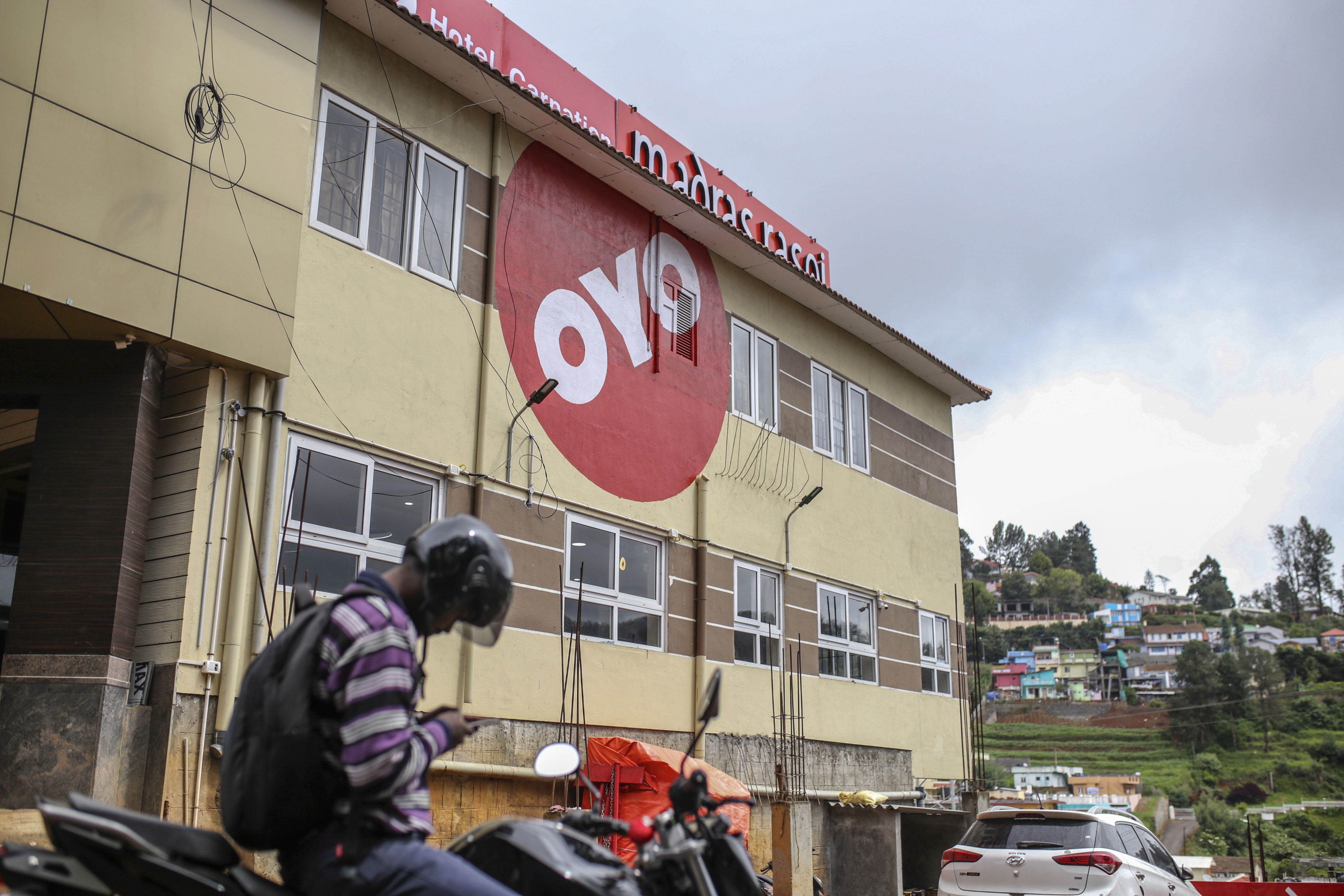
Oyo Hotels' pilot to maintain a real-time digital database of guests and plan to share it with law-enforcement agencies has triggered privacy concerns.
The digital check-in and check-out database of guests will do away with the conventional arrival and departure registers, Aditya Ghosh, chief executive India and South Asia at the hotel chain said at a CII event, according to a report in Business Standard. That will make the process efficient and transparent and the SoftBank-backed startup has received acceptance from governments of Haryana, Rajasthan and Telangana for the proposed digitisation of guest entry and departure records, the report said quoting Ghosh.
That triggered an outrage on social media, with users calling it invasion of privacy.
Oyo, in an emailed statement to BloombergQuint, said it will provide information to the law-enforcement agencies about who is staying only after an information order is issued by the police. The company said it will create “stronger data security net”. Oyo, however, didn't clarify who will maintain the data centres.
Centralisation of data of any kind isn't good and will make data more fragile, Sunil Abraham, founder of research think tank Center for Internet and Society, told BloombergQuint. “If someone manages to break into the police data, or where the data is stored then they will be able to have the access to the data. It is always good to store data locally.”
Just last year, Marriott International Inc. reported a hack in which passport numbers, emails and mailing addresses of 327 million of its 500 million Starwood guests was leaked.
To be sure, police always have access to data of customers staying at hotels, one way or the another. As per existing regulations, all hotels, bed and breakfasts and guest-houses have to make an entry of guests checking in and out in a register. This can be checked by the local police when an information order is presented.
Chances of manipulating information in such a register is high, and at times police go through the data without having an information order as well, said an industry executive requesting anonymity.
Srinivas Kodali, a cybersecurity expert, said such a centralised database makes business sense for Oyo because they will get access to data not just of people who booked through them but also of others who checked in without booking online. “Because there is no law, the entities can do it.”
Pranesh Prakash, a technology policy analyst and affiliated fellow at CIS, sees this as an invasion of privacy in the absence of law. Digitisation of data can be allowed only after there's a law on what happens in the case it's misused. There is no legal framework about how and where the data will be used, he said.

-
Indians Are Travelling, But Not Every Journey Is A Holiday | The Week In Whys

Pilgrims, patients and working women are the real travellers, and the system hasn't quite caught up with them.
-
Getting To Work Costs Women More | The Reason Why
It is not just about women paying more than men. It is about women paying much more in cities than in villages.
-
AI Bias In Investing Cannot Be Eliminated, But It Can Be Governed
Framing is a particularly important example as identical financial information presented in terms of gains rather than losses can lead an LLM to reach a different assessment.
-
Joining The Dots | Dark Skies, Steady Diya: Why Hope Holds This Diwali
With war, a weak rupee and foreign outflows weighing on sentiment, policymakers at the NDTV World Summit and market veterans at NDTV Profit Ignite: Diwali Edition offered the same advice: stay invested and filter out the noise.
-
The Curious Case of Equitas Small Finance Bank And A CEO Who Quit For Stock
PN Vasudevan believes persistent investor concerns over a perceived conflict of interest had become a governance overhang on Equitas Small Finance Bank's stock, even as the lender improved profitability and asset quality.
-
Talking Points This Week: AI Cash Burn, A Tiger Comeback And An India That Still Finds Its Own Path
India is not immune to higher oil or tighter global liquidity, yet its earnings base is broader, its domestic policy levers are still available.
-
Foreign Investors Own Half Of HDFC Bank and ICICI Bank. An LTCG Cut Could Matter Most Here
Foreign portfolio investors have US$115 billion parked in HDFC Bank, ICICI Bank. If the government cuts long-term capital gains tax, Jefferies says returning foreign money could land here first.
-
'Never Seen This Level Of Negativity': Sandeep Tandon Says The Next Rally May Be Closer Than You Think
Veteran investor Sandeep Tandon says foreign selling is easing, large-caps are due a comeback and mid-caps are crowded, while he turns positive on gold, power and pharma this Diwali.
-
Indians Stay With Family, Not In Hotels | The Reason Why
India still lacks enough clean, reliable and affordable hotels for budget-conscious travellers.
-
The Economic Imperative: Analysing The Material Driving Force Behind India-Canada Strategic Reset
This economic complementarity is further reinforced by deep institutional investment ties and talent mobility, which form the bedrock of the bilateral framework.










