Over A Decade Making: The Unsung Heroes Who Made GST A Reality
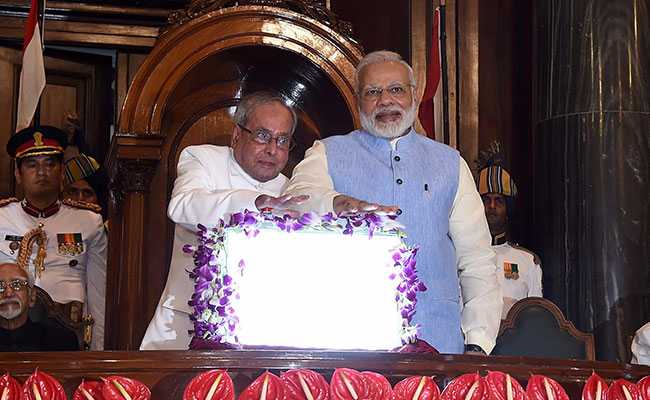
New Delhi: India ushered in a new economic reality with a 60-minute star-studded midnight gala at the imposing Central Hall of Parliament, thus becoming only the seventh country in the world to have a nationwide Goods and Services Tax (GST).
But away from the media glare and relentless public commentary, there were men and women who worked tirelessly to bring to fruition the country's biggest taxation overhaul since Independence.
The rollout of the GST was in the making for over a decade, which was effected through an amendment to the Constitution and five supporting laws being passed by Parliament and state assemblies. Since the passage of the Constitution Amendment bill in August 2016, there were over 175 officers' meetings and 18 sittings of the GST Council -- leading to 18,000-plus man hours of discussions for a smooth roll out of the new tax regime.
A battery of Central and state government officials burnt the midnight oil to meet the July 1 target for launching the GST. Official sources said as many as 30 sub-groups and committees worked tirelessly to devise rules and laws as well as fix tax rates for over 1,200 goods and services.
While the final decisions were taken by the GST Council comprising Finance Minister Arun Jaitley and his state counterparts, who met on an average twice a month in the last nine months, officials in the fitment and rate committees met thrice or four times a week to sort out differences between the Centre and states and present an acceptable proposal to the Council.
Most of the state tax officers would camp at the national capital for the entire week during the meetings, before returning to their states over the weekend to look into issues there.
The widespread deliberations of Central and state officials laid the groundwork for the new law's implementation. While Revenue Secretary Hasmukh Adhia and CBEC chairperson Vanaja Sarna were at the forefront, Commissioner GST Upendra Gupta, Consultant in the Department of Revenue P K Mohanty, Joint Secretary (TRU) Alok Shukla, Chief Commissioner CBEC P K Jain, Commissioner CBEC Manish Sinha and many other Central officers ironed out numerous issues behind the scenes.
Among state officials, sources said innovative ideas came in from Commissioner Commercial Tax (CCT) Karnataka Ritvik Pandey, CCT Gujarat P D Vaghela, CCT Maharashtra Rajiv Jalota, Additional Secretary CT Bihar Arun Mishra, and Anwar Khalid Additional Commissioner, West Bengal. All the state officers worked overtime to make the GST rates and rules as user-friendly as possible.
Joint Secretary Revenue Udai Kumawat was the man behind drafting of the GST Constitutional Amendment law as well the compensation to states law.
P K Dash (Director General-Training) manned the training academy preparing officers for the high-voltage reform which subsumes over 17 different taxes and transforms India into a unified tax market.
Nearly 55,000 state and Central officers have been trained in the academy and in-house training programmes were organised at the Commissionerate level. E-training modules were also released.
GST will reduce the cascading effect of taxes, decrease prices, create a common market that will not fuel inflation and make it easier to do business.
The self-regulating tax system and non-intrusive electronic architecture would decrease black transactions, officials said.
(This story has not been edited by NDTV staff and is auto-generated from a syndicated feed.)

-
Gold Is Rs 22,000 Cheaper Than A Month Ago. Should You Buy Amid The Wedding Season?

Gold's potential slide to $3,500 could save around Rs 4,700 per 10 grams, but a soft inflation print could just as easily push prices back up. One way to split the risk is to buy in parts, some now and the rest after the Fed's Dec. 9 decision.
-
AI Agents Are Gaining Power. Who Governs Them?
Artificial intelligence agents promise to transform productivity by moving machines from assisting decisions to executing them. But as organisations delegate greater authority to these AI-agents, they must first establish who controls that authority and who remains accountable when things go wrong.
-
Why Swapping Your Old Gold Can Trigger A Rs 5 Lakh Tax Bill, And How You Can Avoid It Legally
Swapping old gold for new is taxed as a sale and a fresh purchase. Getting your own gold remade can cut most of that bill, though it has its own costs.
-
The AI Trade is Done. The Real Opportunity for Investors Starts in 2027 | Unhedged Position
As pureplay AI stocks plunge and circular, capex-led financing unwinds, 2027 is set to be a year of reckoning for AI companies. Yet the bust clears the way for a better opportunity for investors in 2027 -- shifting the spotlight from AI builders to the companies using AI.
-
Leadership As Mission: Why The Age Of AI Demands More Human Leadership
Debjani Ghosh examines how AI is changing leadership, arguing that its success must be measured by its impact on people and the accountability of those guiding its use.
-
We May Need Another Tukaram Mundhe To Fight Air Pollution | The Reason Why
Developers may install basic measures such as sprinklers and green nets, resume work, and continue violating rules when this equipment stops working.
-
Extracting Value From Battery Scrap Could Be Challenging For India | The Reason Why
A discarded lithium-ion battery still contains valuable materials such as lithium, nickel and cobalt. These can be recovered and reused. When such batteries are crushed and shredded, they produce a dark powder called black mass.
-
One El Nino, India Can Handle. Two Could Break The Granary
India's grain stocks can absorb one bad year, but a second El Nino could drain the buffer in two to three years, economists say.
-
India's Troika Of Good Luck | Joining The Dots
As Jensen Huang's exit drags Nvidia down, a cooling AI trade and resilient earnings have revived investor interest in India. A likely RBI rate hike looms.
-
Talking Points This Week: Leadership Shock At Nvidia, Earnings Strength, And The Fog Over Hormuz
The Anthropic IPO pricing and first trading day, Nvidia's upcoming earnings, and any fresh signals from Iran will set the tone for the following week.









